Saud Shakeel denied DRS despite being wrongly given out LBW vs England
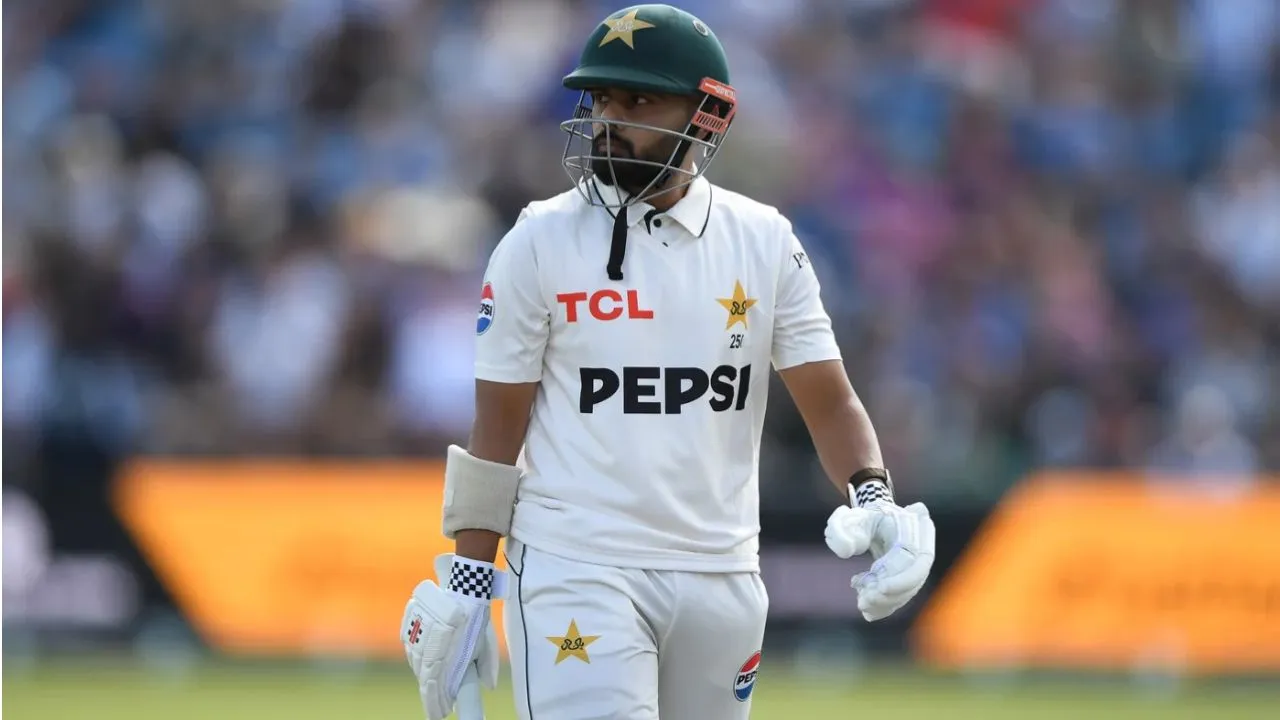
Saud Shakeel Misses DRS Review as 15-Second Timer Runs Out
Saud Shakeel suffered a heartbreak on the opening day of the first Test match against England at Headingley in Leeds. The left-handed batter missed a chance to overturn an LBW decision after failing to signal for a Decision Review System (DRS) review within the 15-second limit, ultimately leading to his dismissal.
The Incident
The crucial moment occurred on the fifth delivery of the 36th over when Ollie Robinson bowled a good-length ball that angled into the stumps. Shakeel, attempting to defend, played down the wrong line and was struck high on the front pad, prompting a loud appeal from the English players.
After some deliberation, on-field umpire Allahudien Paleker raised his finger, indicating that Shakeel was out. The batter then engaged in a discussion with his partner about taking a review. However, before Shakeel could make the ‘T’ signal for the review, umpire Chris Gaffaney informed him that the 15-second review timer had expired.
Had Shakeel managed to signal for the review in time, the ball tracking system showed that the delivery would have passed over the leg stump, resulting in Shakeel surviving at the crease.
Pakistan’s Batting Struggles
Pakistan endured a challenging opening day after being bowled out for 171 in 48.1 overs by England’s pace attack. Ollie Robinson and Josh Tongue wreaked havoc, with each picking up five wickets to dismantle the Pakistani batting lineup.
After opting to bowl first, England’s decision paid off as Robinson dismissed Azan Awais for a golden duck on the first ball of the Test. Despite a partnership between Imam-ul-Haq and Abdullah Shafique, Pakistan’s lower order crumbled under the pressure from the English bowlers.
England’s Response
In response, England got off to a strong start with Emilio Gay and Ben Duckett attacking the Pakistani bowlers. However, Pakistan fought back by dismissing both openers in quick succession, leaving England at 48/2. Jordan Cox, stepping in for the injured Jacob Bethell, joined captain Joe Root at the crease.
Root and Cox steadied the ship for England, with Root showcasing his composure and Cox settling into his innings. The pair forged an unbeaten 64-run partnership by the end of the day, with Root finishing on 36* and Cox on 23*. England closed the day at 112/2, trailing Pakistan by just 59 runs.
With Shakeel’s missed review dominating the headlines on a day of fluctuating fortunes, both teams will be looking to capitalize on their positions as the Test match progresses.
Importance of Timely DRS Reviews
The incident involving Saud Shakeel missing out on a DRS review due to the 15-second timer expiring highlights the critical importance of making quick and informed decisions on the field. In high-stakes matches such as Test cricket, where every run and wicket counts, utilizing the DRS effectively can significantly impact the outcome of the game.
Players need to be not only aware of the rules and regulations surrounding the DRS but also be able to assess the situation swiftly to make the right call within the time limit. This incident serves as a reminder to teams and players about the need for clear communication, quick decision-making, and strategic use of reviews to maximize their chances of success.
Impact on Shakeel and the Team
For Saud Shakeel, missing the opportunity to review the LBW decision could have been a turning point in his innings and the match as a whole. As a batsman, being given out incorrectly can disrupt one’s rhythm and confidence, affecting subsequent performances. Shakeel and the team management will likely review the incident to understand what led to the delay in signaling for the review and work on improving their decision-making process in similar situations in the future.
Furthermore, the Pakistan team’s batting struggles in the first innings emphasize the need for the middle and lower order to show more resilience and application against quality bowling attacks. Learning from the mistakes made in the first innings will be crucial for Pakistan to bounce back in the match and put up a competitive performance in the remaining days.
England’s Bowling Dominance
England’s pace duo of Ollie Robinson and Josh Tongue displayed exceptional skill and control to dismantle the Pakistani batting lineup quickly. Their ability to exploit the conditions and extract movement off the pitch troubled the Pakistani batsmen throughout the innings. The early breakthroughs provided by Robinson set the tone for England’s bowling performance, putting pressure on the opposition from the outset.
With a strong bowling unit at their disposal, England will be looking to continue their momentum into the next innings and build on their advantage. The team’s depth in bowling options gives them flexibility and the ability to rotate their bowlers effectively to maintain pressure on the Pakistani batsmen.
Root and Cox’s Partnership
Captain Joe Root and Jordan Cox’s partnership at the end of the day’s play showcased their ability to weather the storm and stabilize England’s innings after the early wickets. Root’s experience and composure at the crease, combined with Cox’s youthful exuberance, formed a solid foundation for England’s response.
The partnership between Root and Cox will be crucial for England’s chances in the match, as they look to build a substantial lead over Pakistan in the first innings. The team will rely on their top order to continue their good work and capitalize on the solid platform set by the duo to put pressure on the Pakistani bowlers.
As the Test match progresses, both teams will need to adapt to the changing conditions, make strategic decisions, and execute their plans effectively to gain the upper hand. The missed DRS review incident serves as a reminder of the fine margins that can determine the outcome of a match and the importance of making the right decisions under pressure in cricket.
Latest News
Top 10 highest run-chases in T20 cricket history, ft. West Indies’ Ranchi win vs India
Aaryavir Sehwag and Anvay Dravid set to make headlines at U19 Asia Cup 2026
Longest ducks in Test cricket history ft. Nic Maddinson, Shoaib Akhtar
ECB to offer 39 central contracts to England players after Ben Stokes, Mark Wood’s retirement
Steve Smith surpasses Steve Waugh in all-time Test run-scorers’ list
Shane Watson identifies Gautam Gambhir’s biggest problem as India struggle for consistency
Is Bhuvneshwar Kumar in India’s 2027 World Cup plans? Ajinkya Rahane makes revelation
BCCI’s big ₹127 Crore move after injury crisis raises concerns over Team India
Parthiv Patel reveals RCB ignored his Jasprit Bumrah recommendation in IPL 2014 Auction
“Never spoke ill of any faith”: Irfan Pathan hits back at fake news using his name
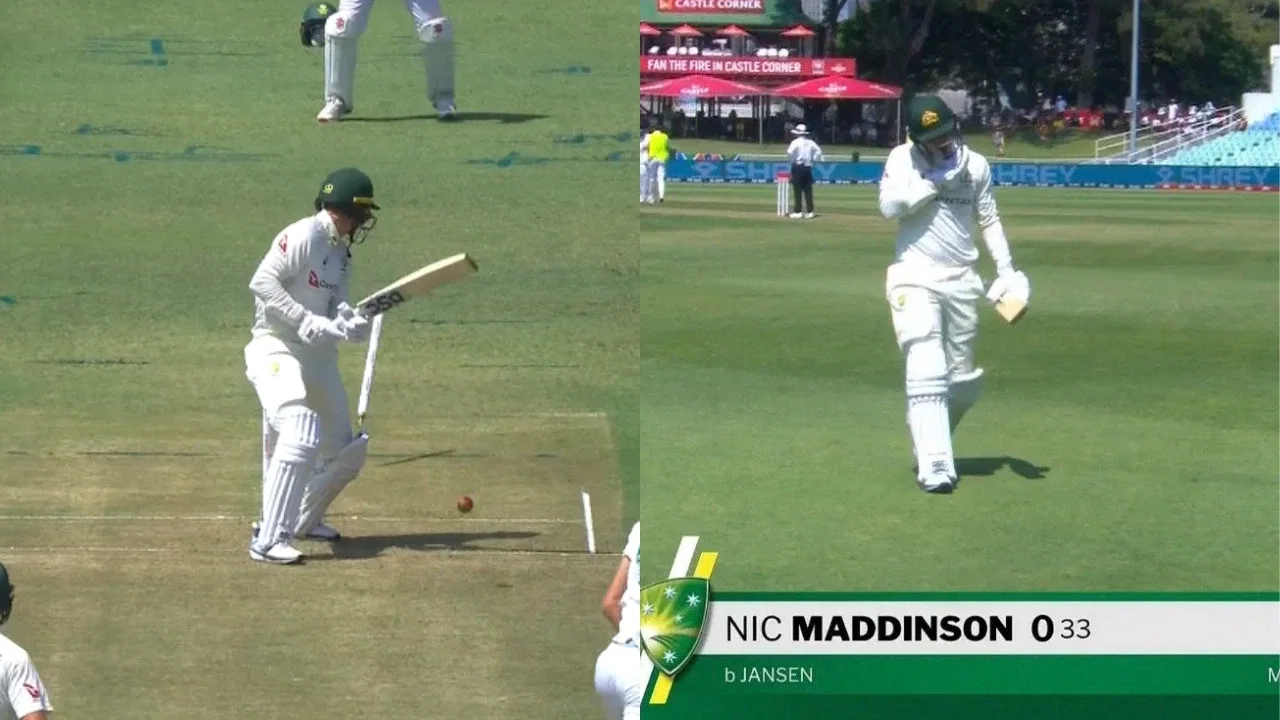
Nic Maddinson bags 33-ball duck on Test comeback, disappoints George Bailey
Imran Tahir predicts 2027 ICC ODI World Cup Semi-Finalists, snubs India for title
Australia create unwanted history with first all-30-plus Test XI
Ravindra Jadeja returns to Ranji Trophy as Saurashtra announce squad