

Shreyas Iyer’s batting stats as India T20I captain: Full record
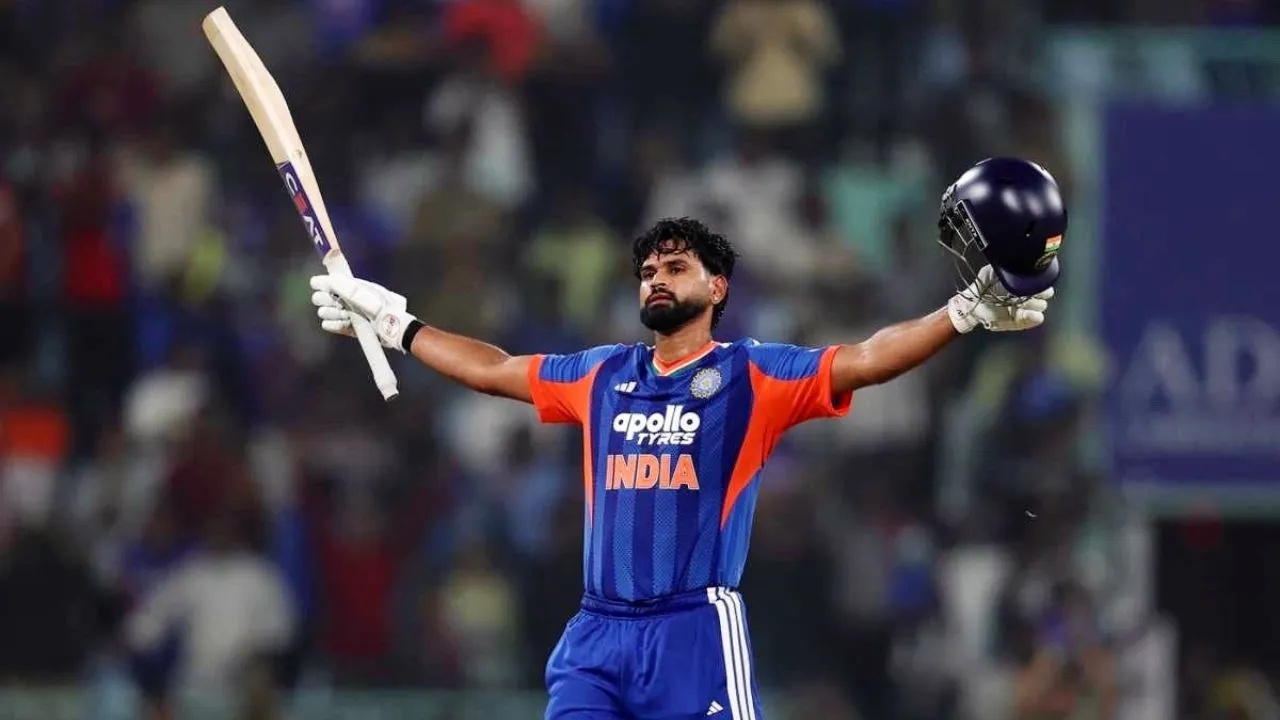
Shreyas Iyer Falls for Seven as Santner Tightens New Zealand’s Grip in Christchurch
India captain Shreyas Iyer endured a brief stay at the crease in the second T20I against New Zealand, scoring just seven runs from 11 deliveries as the visitors chased a target of 181 at Hagley Oval in Christchurch on Saturday, October 24. Mitchell Santner broke through in the 11th over, leaving India at 69/4 and adding pressure to an already demanding pursuit.
Iyer’s dismissal was a significant moment in the chase, particularly given his record as India’s T20I captain. The right-hander has scored 639 runs in 23 matches in the role at an average of 33.63, including an unbeaten century against the West Indies and an unbeaten 80 against England. His leadership record also features a 10-match winning streak and gold at the 2026 Asian Games.
Santner’s Flight Deceives Iyer
New Zealand captain Santner delivered the key breakthrough with a well-flighted ball on a good length. Iyer attempted to work it across the line but misjudged the delivery’s trajectory. The ball beat his bat and struck leg stump, ending his innings and leaving India four wickets down before the chase had gathered momentum.
The wicket capped a difficult passage for India. Sanju Samson was the first batter dismissed, falling for 14 from 17 balls in the sixth over when Jacob Duffy found a way through. Abhishek Sharma followed in the ninth over for 27 off 21 deliveries, caught by Nathan Smith in the deep off Santner. Sharma had earlier benefited from a reprieve when a catch by Duffy was ruled out because of a no-ball, but he could not convert the second opportunity into a longer innings.
With three wickets falling in quick succession, India’s middle order faced the challenge of rebuilding while keeping the required scoring rate under control. The match prediction remained difficult to call at that stage: India still had time to recover, but New Zealand’s spinners had created a clear opening by disrupting the top order.
A Mixed Record, With Standout Contributions
Iyer’s seven-run innings stood in contrast to the stronger performances he has produced during his captaincy. His unbeaten 102 against the West Indies was the headline achievement, while his 80 not out against England and 68 during the England tour further demonstrated his ability to anchor an innings and accelerate when conditions allow.
His captaincy record also includes several useful contributions across tours and tournaments. Against Ireland and England, Iyer had a difficult start, scoring three and 10 in Belfast before responding with 68 in Chester-le-Street. He later added 37 in Manchester, an unbeaten 80 in Bristol and 28 in Southampton.
He recorded a run of steady scores against Zimbabwe, including 28 not out, 25 and 27, and contributed 8 not out, 11 and 29 against Afghanistan. During the Japan tour and Asian Games, he made 16 against Japan, 13 against Sri Lanka and 21 against Pakistan. His unbeaten century against the West Indies in Lucknow was followed by scores of 40, one, 16 and 22 in subsequent matches against the same opposition.
Iyer began the New Zealand series with 42, making his low score in Christchurch a sharp change from the opening match. One innings does not define a player’s form, but his dismissal highlighted how quickly a T20 chase can shift when a batter misreads a spinner’s pace and flight.
Phillips and Jacobs Rescue New Zealand
New Zealand’s total of 180/5 was built on a strong recovery after India’s fast bowlers struck early. Arshdeep Singh dismissed Tim Seifert for seven, while Bhuvneshwar Kumar removed Daryl Mitchell for six, claiming his first international wicket in four years. Prince Yadav then bowled Finn Allen for 16, reducing the hosts to 41/3 inside the powerplay.
Glenn Phillips and Bevon Jacobs steadied the innings with a fourth-wicket partnership worth 116 runs. Phillips made 70 from 43 balls, hitting four boundaries and four sixes, while Jacobs contributed 50. Their stand transformed New Zealand’s position, turning an early collapse into a competitive total and giving the lower order a platform for a late push.
India eventually removed both set batters, but Michael Bracewell added momentum with consecutive boundaries near the end of the innings. New Zealand finished on 180/5 after 20 overs, a total shaped as much by the partnership’s resilience as by the late scoring burst.
India’s Bowling Effort and the Chase Ahead
Arshdeep finished as India’s leading wicket-taker with figures of 2/33. Bhuvneshwar, Prince and Nitish Kumar Reddy claimed one wicket apiece, although Bhuvneshwar conceded 50 runs in his four overs. The early breakthroughs had put New Zealand under pressure, but Phillips and Jacobs ensured the hosts recovered before the innings closed.
For India, the task in the chase was to balance urgency with the need to preserve wickets. At 69/4, the visitors needed a substantial partnership to keep the target within reach. New Zealand, meanwhile, had gained control through disciplined bowling and timely strikes, with Santner’s dismissal of Iyer proving especially valuable.
The second T20I offered a reminder that a competitive total can become more challenging when wickets fall in clusters. India’s prospects depended on whether the remaining batters could rebuild without allowing the asking rate to climb too sharply. As the innings developed, the match prediction hinged on that balance: New Zealand had the advantage, but a steady partnership could still change the contest.
Latest News

SA vs BAN Playing 11 Today, Live Streaming, Pitch & Weather: South Africa tour of Bangladesh 2026, 2nd Test

AUS vs ENG Playing 11 Today, Live Streaming, Pitch & Weather: England tour of Australia 2026, 2nd T20I

Blair Tickner ruled out of 2nd Test vs India, replacement named

Tim Paine and Justin Langer face fresh questions over Australia’s ball-tampering scandal

India tour of Bangladesh gets fresh hope as BCB confirms talks with BCCI

Tom Latham opens up on soft ball problem and saliva ban after draw against India

Ajinkya Rahane slams Tilak Varma for publicly criticising Shahbaz Ahmed after India A’s defeat

ICC to introduce IPL-style bat checks in international cricket

“Smiling Laughing doesn’t happen”: R Ashwin’s dig at India’s approach after draw vs New Zealand

“Not good enough for Test cricket”: Scott Styris, Sunil Gavaskar slam Wellington pitch

Dodda Ganesh declares India ‘out of WTC final race’ after Wellington Test draw

Ajinkya Rahane criticises Shubman Gill for abusing Akash Deep in 1st Test vs New Zealand

‘Why so many boundary riders?’ Dinesh Karthik questions Shubman Gill’s captaincy after Wellington Test

“I just want to enjoy my life”: Yash Dayal reflects on his return to cricket


