

Shreyas Iyer’s terrible post-2025 Champions Trophy numbers raise concerns ahead of 2027 World Cup
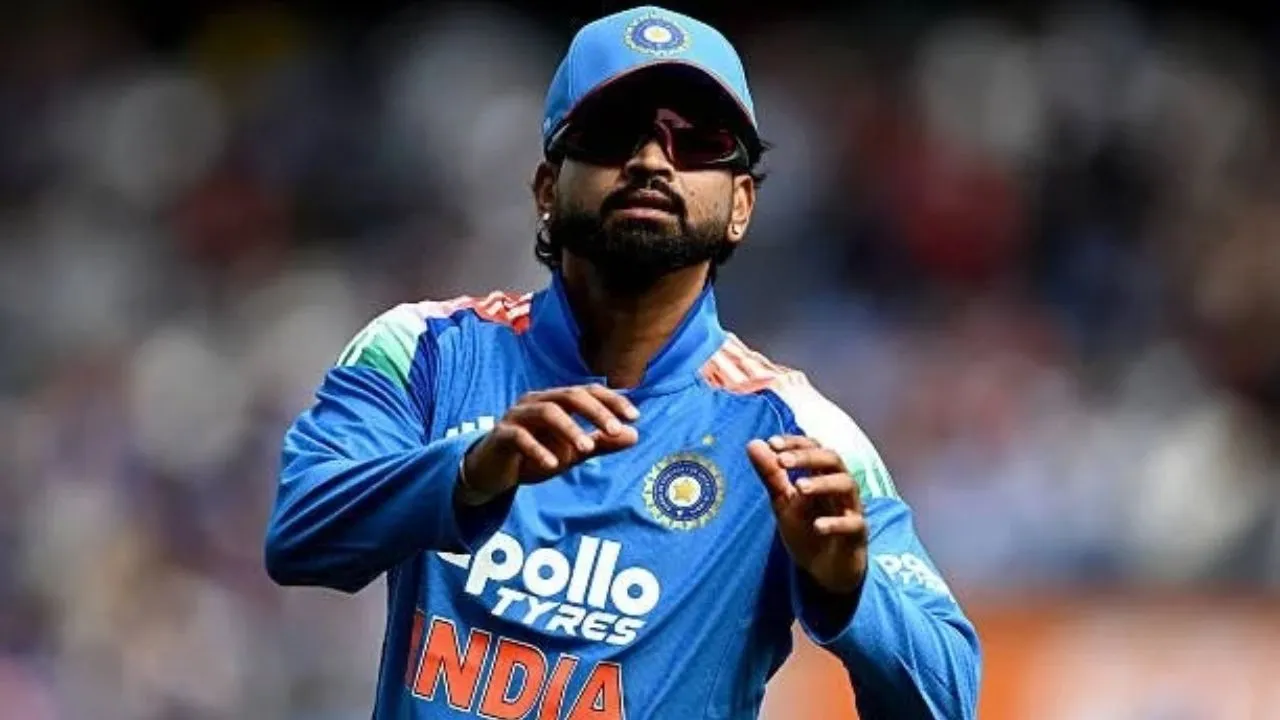
Shreyas Iyer’s ODI Form Under Scrutiny After Another Setback Against New Zealand
Shreyas Iyer’s difficult run in one-day internationals continued in the fifth and final ODI against New Zealand at Bay Oval, Mount Maunganui, on Sunday, November 15. India’s stand-in captain made 22 from 26 balls before falling to Blair Tickner, adding to growing questions about his consistency since the 2025 Champions Trophy.
Iyer has previously shown he can be a major force in the middle order, most notably during India’s successful campaigns at the 2023 ODI World Cup and the Champions Trophy. But his recent returns have been modest, and New Zealand’s fast bowlers have repeatedly found a way to test him with short deliveries and movement off the pitch. For selectors and supporters alike, the central question is whether this is a temporary dip or a pattern that needs to be addressed.
Tickner’s Short Ball Ends Iyer’s Stay
New Zealand captain Mitchell Santner won the toss and elected to bowl, putting India in to bat in the series finale. India brought Mohammed Siraj back into the side, while Yash Thakur made his ODI debut. Kuldeep Yadav and Gurnoor Brar were left out. New Zealand also made two changes, with Jacob Duffy and Blair Tickner replacing Kyle Jamieson and Matt Henry.
India lost early wickets, leaving the innings in need of a stabilising partnership. Axar Patel helped provide one, joining Iyer in a 52-run stand for the fourth wicket. Iyer, however, could not turn his start into a substantial contribution. In the 18th over, Tickner sent down a short delivery that Iyer tried to pull. He mistimed the shot, sending the ball towards mid-on, where Matt Fisher took the catch.
The dismissal left India at 86/4 and ended a partnership that had begun to repair the damage. Iyer’s 22 was not a scoreless failure, but it was another missed opportunity to take control of an innings when his team needed experience and composure.
Recent Numbers Point to a Dip in Production
Iyer’s returns across his recent ODI appearances have been uneven. Since the 2025 Champions Trophy, he has scored 358 runs in 15 innings at an average of 25.57 and a strike rate of 80.26. Those figures are a considerable distance from the standards he set during his best international tournaments.
His recent series-by-series record shows that the runs have come in patches: 72 in two innings against Australia, 60 in three against New Zealand, 58 in three against Afghanistan and 101 in three against England. A further 67 runs came across four innings in the latest New Zealand series, including his 22 in the final match. The overall total suggests that Iyer has had useful contributions, but has not consistently produced the commanding innings expected from a senior middle-order batter.
His earlier results in the New Zealand tour also underline the problem. Iyer scored 15 in the first ODI in Auckland and 30 in the second in Wellington. He then fell for a golden duck in the fourth match, which was his debut as India’s ODI captain. The final ODI offered a chance to respond, but the 22-run innings again ended before he could build a major score.
Short-Ball Challenge Remains a Key Concern
The manner of Iyer’s dismissal has attracted attention because it fits a recurring pattern. New Zealand’s pace attack has used short and hard-length deliveries to restrict his scoring options and provoke mistakes. In the second ODI, Kyle Jamieson dismissed him with a rising delivery. Tickner used a similar plan in the final match, and Iyer’s attempt to pull ended in a catch.
The fourth ODI exposed a different but related vulnerability. Matt Henry beat Iyer with a sharp in-seamer and trapped him leg before wicket for a golden duck. Iyer made little movement across his crease, leaving him unable to get into a strong position to play the ball. Together, those dismissals suggest that bowlers have been able to challenge him both with bounce and with deliveries that move back into the batter.
Short-pitched bowling is a routine part of international cricket, particularly in conditions that offer pace and bounce. The challenge for Iyer will be to show that he can respond with a clearer plan: choosing when to attack, when to sway or defend, and how to keep his balance while playing the pull shot. Adjustments in footwork and shot selection could help him turn a predictable target into a scoring opportunity.
Why His Earlier Record Still Matters
The current dip should be considered alongside Iyer’s broader ODI record. He has scored 3,181 runs in 79 innings across 84 matches, averaging 44.18 at a strike rate of 97.43. His record includes five centuries and 24 half-centuries, numbers that reflect his ability to make substantial contributions when in form.
Iyer was one of India’s standout batters at the 2023 ODI World Cup. He finished with 530 runs at an average of 66.25 and a strike rate of 113.24, becoming the first Indian middle-order batter to pass 500 runs in a single edition of the tournament. His performances included an unbeaten 128 from 94 balls against the Netherlands and a 70-ball century against New Zealand in the semi-final. He also scored 82 against Sri Lanka and 77 against South Africa.
At the 2025 Champions Trophy, Iyer again delivered in a major tournament, making 243 runs at an average of 48.60. He was India’s leading run-scorer and finished second overall behind Rachin Ravindra. Captain Rohit Sharma called him India’s “silent hero” during the team’s title-winning campaign—recognition of the valuable work Iyer did in the middle order.
What the Form Dip Could Mean for India
Iyer’s performances in SENA conditions—South Africa, England, New Zealand and Australia—have also drawn scrutiny. Since the 2023 World Cup, his average in these countries has been around 30, a figure that strengthens the case for closer attention to how he handles pace, bounce and seam movement away from home.
That statistic is a point of context, not a complete prediction of what comes next. A batter’s form can change quickly, and Iyer’s record in major tournaments shows that he is capable of recovering and producing at a high level. But with India relying on stability through the middle overs, his next opportunities will matter. A longer innings, particularly against fast bowling, would help ease concerns and restore confidence in his role.
For now, the fifth ODI has added another entry to a run of starts that have not become match-shaping scores. Iyer’s experience and past achievements give him a strong case to respond, but the recurring short-ball challenge is clear. How he adapts to that approach may shape both his immediate prospects and India’s plans for the middle order in upcoming ODI assignments.
Latest News

SA vs BAN Playing 11 Today, Live Streaming, Pitch & Weather: South Africa tour of Bangladesh 2026, 2nd Test

AUS vs ENG Playing 11 Today, Live Streaming, Pitch & Weather: England tour of Australia 2026, 2nd T20I

Blair Tickner ruled out of 2nd Test vs India, replacement named

Tim Paine and Justin Langer face fresh questions over Australia’s ball-tampering scandal

India tour of Bangladesh gets fresh hope as BCB confirms talks with BCCI

Tom Latham opens up on soft ball problem and saliva ban after draw against India

Ajinkya Rahane slams Tilak Varma for publicly criticising Shahbaz Ahmed after India A’s defeat

ICC to introduce IPL-style bat checks in international cricket

“Smiling Laughing doesn’t happen”: R Ashwin’s dig at India’s approach after draw vs New Zealand

“Not good enough for Test cricket”: Scott Styris, Sunil Gavaskar slam Wellington pitch

Dodda Ganesh declares India ‘out of WTC final race’ after Wellington Test draw

Ajinkya Rahane criticises Shubman Gill for abusing Akash Deep in 1st Test vs New Zealand

‘Why so many boundary riders?’ Dinesh Karthik questions Shubman Gill’s captaincy after Wellington Test

“I just want to enjoy my life”: Yash Dayal reflects on his return to cricket


