

Shubman Gill, Mitchell Santner reveal which opposition players they would love to steal
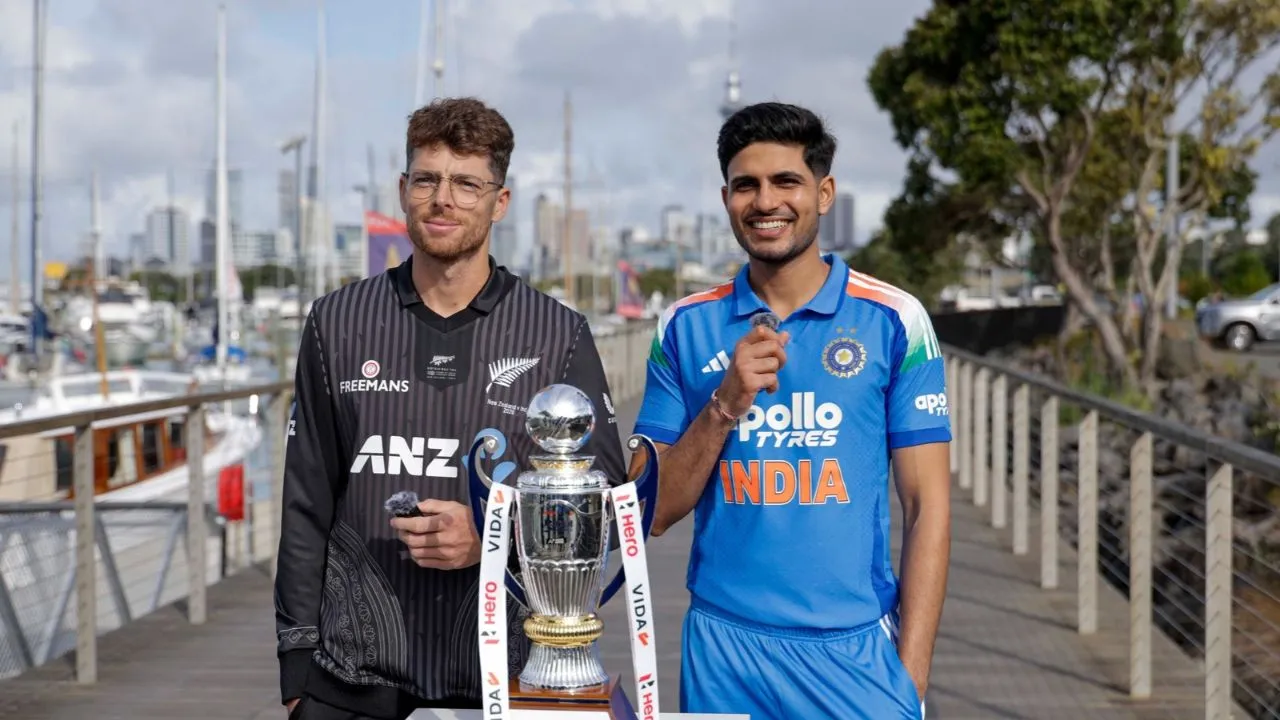
India vs New Zealand ODI Series: Gill and Santner Share Their Picks Ahead of Auckland Opener
India and New Zealand begin a five-match ODI series on November 4 at Eden Park in Auckland, setting up another chapter in a competitive rivalry between the two sides. Ahead of the opening match, captains Shubman Gill and Mitchell Santner took part in a light-hearted photoshoot, answering questions about the players they would most like to borrow from the opposition—and the opponents they least enjoy facing.
The exchange offered a playful preview of the contest, but the series carries serious significance for both teams. India will be looking to build on a successful T20I campaign, while New Zealand will aim to repeat the success it achieved in the previous ODI meeting between the sides. With unfamiliar conditions, a demanding schedule and a five-match format, the opening game could provide an important early indication of how the series will unfold.
Gill Chooses Matt Henry, While Santner Picks India’s Captain
Asked which opposition player they would like to add to their own team, Santner selected Gill, highlighting the Indian captain’s value as a dependable top-order batter. Gill, meanwhile, chose New Zealand fast bowler Matt Henry, whose accuracy and ability to take wickets with the new ball make him a valuable option in one-day cricket.
The captains were also asked to name a player from the opposing team they dislike facing. Gill pointed to Santner, whose left-arm spin can challenge right-handed batters by changing the pace and angle of attack. Santner named India fast bowler Arshdeep Singh, a left-armer capable of creating problems with movement, variations and pressure at the death.
When asked to describe playing against one another in a single phrase, Gill called it “fierce competition.” Santner agreed with the competitive spirit of the description, while adding that the contests are enjoyable as well. Their answers reflected the balance between respect and rivalry that has become a feature of India-New Zealand cricket.
Why the Series Matters to India
India enter the ODI series after winning the T20I contest, having taken the first three matches in convincing fashion. That result will give the visitors confidence, although the shift to the 50-over format brings different demands. Batters must manage longer innings, bowlers need to sustain pressure across more overs, and captains have more time to adjust their plans as conditions change.
India have also named separate squads in view of a two-match Test series against New Zealand scheduled within a short period. Managing workloads and keeping players fit will therefore be an important part of the team’s strategy. The schedule could create opportunities for squad members to make an impact, while also requiring the leadership group to balance immediate results with the demands of the wider tour.
For Gill, the series represents an opportunity to make a statement as captain in overseas conditions. India have not won an ODI series in New Zealand in recent years, with their most recent series victory there coming in 2018–19 under Virat Kohli. A strong performance would give Gill’s side a chance to end that wait and strengthen its record in challenging conditions.
Gill vs Santner: A Key ODI Matchup
The contest between Gill and Santner is likely to be one of the defining individual battles of the series. The two have met repeatedly in ODIs, but the figures cited ahead of the series favour the Indian batter. Across 21 overs against Santner, Gill has scored 125 runs at a strike rate close to 100, and Santner has dismissed him only once in the format.
That wicket came in the 2025 ICC Champions Trophy final in Dubai, when Glenn Phillips produced a remarkable one-handed catch to complete the dismissal. The moment showed that even when Gill appears settled, New Zealand can create a breakthrough through sharp fielding and disciplined bowling.
Santner’s challenge will be to prevent Gill from controlling the middle overs. He may look to vary his pace, use the angle across the right-hander and encourage Gill to take risks against the turn. India, in turn, will want Gill to set the tempo, build a substantial innings and give the middle order a stable platform. If the pair meet during the first powerplay, Santner could also be used early to disrupt Gill’s rhythm.
New Zealand’s Recent ODI Success Adds Pressure
India will not be able to rely on home advantage or reputation alone. The previous ODI series between the teams took place in India in early 2026, when a young New Zealand side recovered after losing the opening match to win the series 2–1. That result marked a major achievement for the Black Caps, who claimed their first ODI series victory over India on Indian soil.
The comeback demonstrated New Zealand’s ability to adapt, remain composed and target weaknesses over the course of a series. It also gives Santner’s team a psychological boost heading into the new contest. India, meanwhile, will be motivated to respond and prevent the earlier result from becoming a pattern.
Prediction: A Competitive Start at Eden Park
The opening match at Eden Park is likely to test both teams’ adaptability. New Zealand’s familiarity with local conditions could help its seamers, while India’s batting depth gives the visitors the tools to recover from early setbacks. The result may depend on which side handles the new ball more effectively and whether its leading batters can turn promising starts into match-defining scores.
Gill’s form and his matchup with Santner will attract particular attention, but the series is unlikely to be decided by one contest alone. Henry’s opening spell, Arshdeep’s ability to strike at key moments and the performances of the middle orders could all shape the outcome. India will be seeking a series win and a measure of revenge; New Zealand will be aiming to prove that its earlier success was no one-off. With five matches ahead, the captains’ friendly photoshoot may soon give way to a fiercely contested battle on the field.
Latest News

SA vs BAN Playing 11 Today, Live Streaming, Pitch & Weather: South Africa tour of Bangladesh 2026, 2nd Test

AUS vs ENG Playing 11 Today, Live Streaming, Pitch & Weather: England tour of Australia 2026, 2nd T20I

Blair Tickner ruled out of 2nd Test vs India, replacement named

Tim Paine and Justin Langer face fresh questions over Australia’s ball-tampering scandal

India tour of Bangladesh gets fresh hope as BCB confirms talks with BCCI

Tom Latham opens up on soft ball problem and saliva ban after draw against India

Ajinkya Rahane slams Tilak Varma for publicly criticising Shahbaz Ahmed after India A’s defeat

ICC to introduce IPL-style bat checks in international cricket

“Smiling Laughing doesn’t happen”: R Ashwin’s dig at India’s approach after draw vs New Zealand

“Not good enough for Test cricket”: Scott Styris, Sunil Gavaskar slam Wellington pitch

Dodda Ganesh declares India ‘out of WTC final race’ after Wellington Test draw

Ajinkya Rahane criticises Shubman Gill for abusing Akash Deep in 1st Test vs New Zealand

‘Why so many boundary riders?’ Dinesh Karthik questions Shubman Gill’s captaincy after Wellington Test

“I just want to enjoy my life”: Yash Dayal reflects on his return to cricket


