

Shubman Gill reveals latest update on neck injury after prolonged fitness concerns
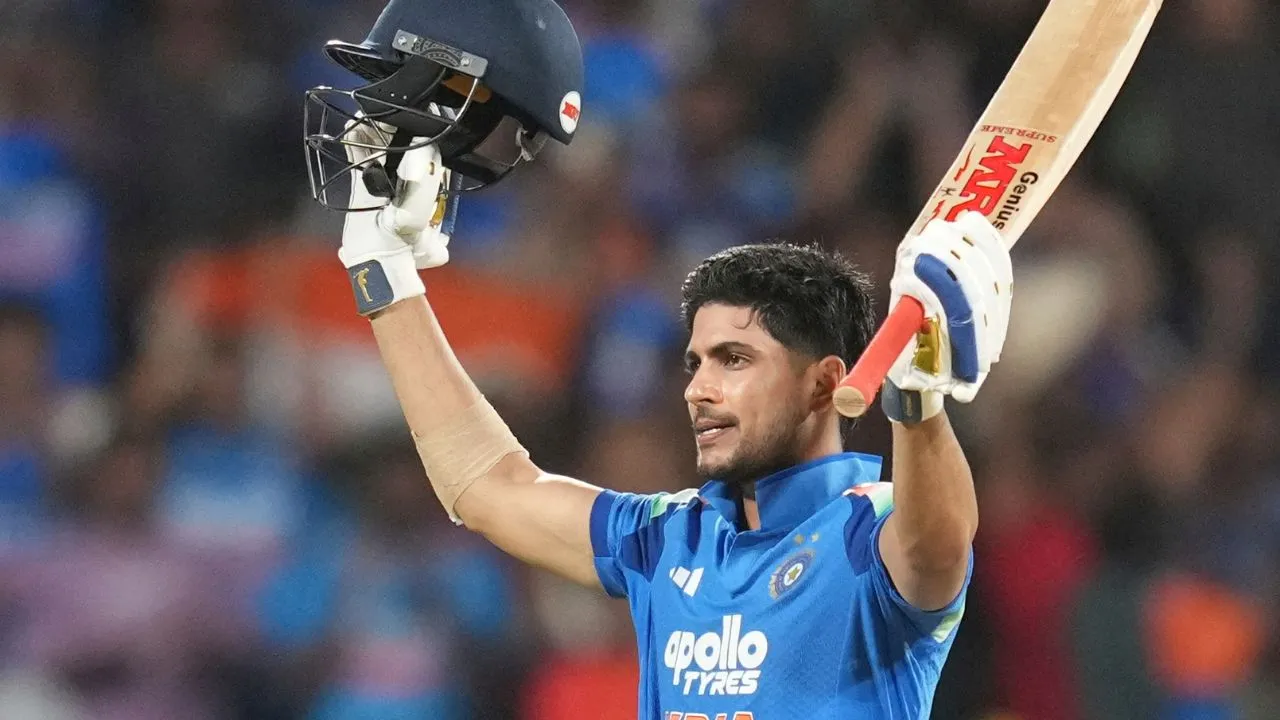
Shubman Gill Offers Positive Neck-Injury Update Before India’s ODI Series Against New Zealand
India captain Shubman Gill has eased concerns about his recurring neck problem ahead of the three-match ODI series against New Zealand, saying he completed an extended batting session and fielding drills without discomfort during training in Auckland.
Gill’s fitness is an important talking point as India prepare for the opening match. The right-handed batter has dealt with neck symptoms at several points in recent seasons, including an episode that forced him to leave a Test against South Africa in 2025. His latest update, however, suggests he is currently able to train normally.
Gill reports no discomfort during training
Speaking at a pre-match press conference, Gill was asked about reports that he had received a massage after a training session. The India captain said the treatment had not reflected any limitation in his cricket work, and that he had completed both batting and fielding practice without trouble.
“No issue… I batted for close to one and a half hours and did my fielding without any trouble too. No issue at all,” Gill said.
The update will reassure India supporters, but it also leaves the team’s medical staff with the usual task of monitoring a player who has experienced similar symptoms before. Neck problems can be difficult to assess from a single training session: workload, recovery and how a player responds after practice all matter. Gill’s comments nevertheless provide a positive indication ahead of the series.
For India, his availability carries significance beyond the captaincy. Gill is a central part of the top order, and his ability to set the tempo can shape how the side approaches both the powerplay and the middle overs. A fit captain also helps the team maintain continuity while managing a busy international schedule.
India to keep No. 5 and No. 6 flexible
Gill also outlined India’s thinking around the middle order, indicating that the team may use a flexible batting arrangement at No. 5 and No. 6. Axar Patel and KL Rahul could be moved up or down depending on the match situation, rather than being assigned fixed positions for every innings.
India’s top four are all right-handed, making a left-handed batter a potentially useful option against particular bowling match-ups. Gill said Axar could be promoted when the team wants to introduce a left-hander, while Rahul may also move up if the circumstances call for it.
“We will have a floating approach for No. 5 and No. 6. Our top four is set, all right-handers. So if a lefty is needed, Axar bhai goes and depending on the match situation even KL bhai can go. So, a bit flexible,” Gill explained.
The strategy gives India room to respond to factors such as the fall of wickets, the opposition’s bowling changes and the condition of the pitch. A left-right combination can disrupt a bowler’s rhythm and field settings, while Rahul’s experience offers the team another option if an innings needs stabilising or accelerating.
Such flexibility can be especially valuable in ODI cricket, where teams may need to shift quickly between rebuilding and scoring at a higher rate. The approach also allows India to make better use of the skills within the squad instead of relying on a rigid batting order.
Why India may not field a full-strength side throughout
Gill acknowledged that India’s strongest possible combination may not be available for every match in the series. The scheduling gap between formats has left the team balancing recovery and preparation, while the World Test Championship standings remain a significant consideration.
He suggested that the ODI series might have looked different had it been played before the T20Is, but the short turnaround after the Tests has influenced the team’s planning. India must weigh the immediate demands of the New Zealand fixtures against the longer-term workload of its players and the importance of upcoming Test commitments.
That balance is a familiar challenge for international teams. A packed calendar can require careful rotation, particularly for players who contribute across formats. The aim is not simply to select the biggest names for every game, but to manage fitness while maintaining a competitive and well-balanced XI.
A history of recurring neck symptoms
Gill’s latest reassurance comes against a background of neck-related setbacks dating back to 2024. He missed India’s second T20I against Sri Lanka in July that year because of a neck spasm. A few months later, neck stiffness ruled him out of the first Test against New Zealand in Bengaluru.
The most serious incident came during the first Test against South Africa at Eden Gardens in November 2025. Gill experienced discomfort while batting in India’s second innings and retired hurt after facing only three deliveries. He was taken to hospital for assessment, then missed the second Test and India’s subsequent ODI series against South Africa.
In December 2025, Gill described the underlying issue as a cervical disc bulge pressing against nerves. He underwent rehabilitation at the BCCI Centre of Excellence before returning to international cricket. The explanation helped clarify why the problem required more than a brief rest and why careful recovery was necessary.
The symptoms resurfaced during IPL 2026, when Gill missed a Gujarat Titans match against Rajasthan Royals because of a neck spasm. He returned for the next game against Delhi Capitals and described the issue as “something similar” to his previous problem.
What Gill’s update means for the series
Gill’s statement is encouraging, but India will likely continue to manage his workload carefully as the ODI series progresses. His ability to bat for an extended period and complete fielding drills is a positive sign; continued comfort during match preparation and recovery will be equally important.
For now, the captain’s own assessment is clear: he felt no discomfort during training in Auckland. That offers India a welcome boost before the opening ODI and gives the team greater confidence as it finalises its combination. The prediction for the series will depend on several factors—including player availability, conditions and how effectively India’s flexible middle order adapts—but Gill’s fitness remains one of the key storylines to watch.
Latest News

SA vs BAN Playing 11 Today, Live Streaming, Pitch & Weather: South Africa tour of Bangladesh 2026, 2nd Test

AUS vs ENG Playing 11 Today, Live Streaming, Pitch & Weather: England tour of Australia 2026, 2nd T20I

Blair Tickner ruled out of 2nd Test vs India, replacement named

Tim Paine and Justin Langer face fresh questions over Australia’s ball-tampering scandal

India tour of Bangladesh gets fresh hope as BCB confirms talks with BCCI

Tom Latham opens up on soft ball problem and saliva ban after draw against India

Ajinkya Rahane slams Tilak Varma for publicly criticising Shahbaz Ahmed after India A’s defeat

ICC to introduce IPL-style bat checks in international cricket

“Smiling Laughing doesn’t happen”: R Ashwin’s dig at India’s approach after draw vs New Zealand

“Not good enough for Test cricket”: Scott Styris, Sunil Gavaskar slam Wellington pitch

Dodda Ganesh declares India ‘out of WTC final race’ after Wellington Test draw

Ajinkya Rahane criticises Shubman Gill for abusing Akash Deep in 1st Test vs New Zealand

‘Why so many boundary riders?’ Dinesh Karthik questions Shubman Gill’s captaincy after Wellington Test

“I just want to enjoy my life”: Yash Dayal reflects on his return to cricket


