

Sitanshu Kotak reveals India’s Test preparation plans, confirms retention of Auqib Nabi & 2 others
India to Split Coaching Staff Ahead of New Zealand Test Series
India are preparing to divide their coaching staff between the ongoing ODI campaign and the upcoming Test series against New Zealand, with the schedule demanding attention to both formats at once. After the third ODI in Hamilton, members of the support team are expected to travel to Wellington to begin preparations for the first Test, while other coaches remain with the one-day squad.
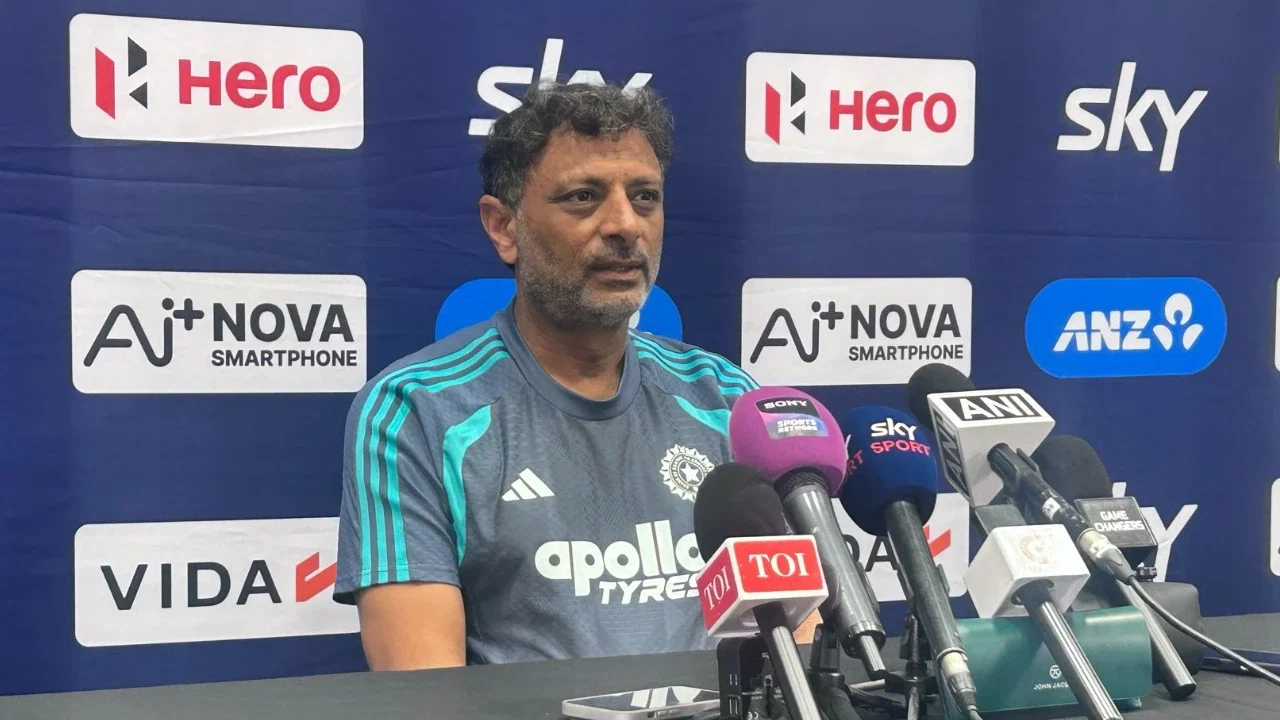
India batting coach Sitanshu Kotak outlined the tentative arrangement ahead of the third ODI, scheduled for November 10. Head coach Gautam Gambhir is expected to stay with the ODI group, alongside spin-bowling coach Sairaj Bahutule. Kotak and fast-bowling coach Morne Morkel are likely to move to Wellington with other support staff to work with the Test players.
The plan is not final, Kotak stressed, and Gambhir will make the ultimate decision. The split would allow India to maintain continuity in the ODI series while giving the Test squad focused preparation before its opening match on November 19.
Gambhir’s focus may remain on the ODI team
India’s coaching arrangements reflect the challenge of managing two formats on a tight international schedule. The ODI series requires ongoing tactical work, while the Test team must prepare for a different style of cricket and the specific demands of New Zealand conditions.
“The plan can still change,” Kotak said at a press conference in Hamilton. He added that Gambhir would likely remain with the one-day side, noting the importance of the ODI programme and the long-term build-up to the 2027 World Cup. Bahutule is also expected to stay with the squad, while Kotak, Morkel and several other staff members could head to Wellington.
Such a division can help ensure that neither group is left without specialist support. The ODI coaches can concentrate on the remaining fixtures, while the Test staff can begin assessing conditions, planning training sessions and working with players on the technical adjustments required for the longer format.
India’s Test preparation camp begins on November 11
The Test squad is expected to start its preparation camp on November 11, giving the players approximately five or six practice sessions before the first Test at Wellington’s Basin Reserve. That is a relatively short window, making the quality and organisation of each session especially important.
Kotak said the camp would give the players an opportunity to prepare ahead of the series. The work is likely to include batting practice, bowling spells, fielding drills and fitness sessions, with coaches also needing to manage workloads after a demanding run of international cricket.
New Zealand conditions can present particular challenges for visiting batters and bowlers. The ball may move in the air and off the surface, while wind and weather can influence how quickly players settle into a match. Practising with those factors in mind can help India’s players build confidence before the first Test, although training alone cannot fully reproduce the pressure of a match environment.
Three fast bowlers could assist as net bowlers
Three fast bowlers from India’s ODI group—Gurnoor Brar, Auqib Nabi and Arshdeep Singh—are expected to remain in New Zealand and assist the Test squad during its training sessions. Their primary role will be to bowl in the nets, helping the batters face a variety of pace, angles and movement as they prepare for the series.
Their presence could also provide additional depth if the team needs cover, though their availability and specific responsibilities will depend on the final squad plans. Kotak indicated that the three quicks were likely to stay behind, while making clear that arrangements could still be adjusted.
Having extra fast bowlers available for practice is useful in a country where seam movement is often a major part of the contest. It allows the Test batters to face repeated spells without overburdening the bowlers expected to play in the match. It also gives India’s coaches more flexibility when organising sessions around recovery and workload management.
Kotak highlights KL Rahul’s value to India
Kotak also spoke positively about KL Rahul, pointing to the batter’s experience as a Test opener and his ability to adapt to different team requirements. Rahul’s flexibility has made him a useful option across formats and positions, particularly when India need a player capable of adjusting his approach to the situation.
“The biggest advantage is he opens in Test cricket,” Kotak said, describing Rahul as someone who plays according to the team’s needs. He praised the batter’s performances since joining the coaching group, highlighting his composure, ability to rotate the strike and capacity to score boundaries, including sixes.
That range of skills can be valuable in New Zealand, where patience may be essential during periods of movement, but scoring opportunities still need to be taken when conditions ease. Rahul’s experience at the top of the Test order could also help him judge when to defend, when to build an innings and when to put pressure back on the bowlers.
Team balance remains central to selection decisions
Kotak also addressed India’s use of all-rounders, explaining that selection depends on the role each player is expected to perform and the balance required in a particular XI. Choosing an extra batter instead of a bowler is not simply a matter of adding more runs to the lineup: it can affect the team’s ability to sustain pressure and manage a full bowling workload.
In Test cricket, selectors and coaches must weigh several factors, including pitch conditions, the likely length of the match, the workload of the frontline bowlers and the contributions an all-rounder can make in both innings. The final combination may therefore depend on what the team learns during its training sessions and from the conditions at the Basin Reserve.
Diwali celebration offers a break before a demanding schedule
Amid the preparations, India’s players also marked Diwali in New Zealand with a team dinner featuring live music. The gathering offered the squad an opportunity to spend time together away from training and competition, an important consideration during a busy tour.
India’s immediate focus remains the ODI series, but the coaching split signals that Test preparations are already moving forward. The key prediction for the coming days is that the final staff arrangement will be shaped by the needs of both squads, with Gambhir’s decision determining how responsibilities are divided. For the Test group, the short camp, support from additional fast bowlers and careful workload planning will be crucial as India look to arrive in Wellington ready for a challenging opening match.
Latest News

SA vs BAN Playing 11 Today, Live Streaming, Pitch & Weather: South Africa tour of Bangladesh 2026, 2nd Test

AUS vs ENG Playing 11 Today, Live Streaming, Pitch & Weather: England tour of Australia 2026, 2nd T20I

Blair Tickner ruled out of 2nd Test vs India, replacement named

Tim Paine and Justin Langer face fresh questions over Australia’s ball-tampering scandal

India tour of Bangladesh gets fresh hope as BCB confirms talks with BCCI

Tom Latham opens up on soft ball problem and saliva ban after draw against India

Ajinkya Rahane slams Tilak Varma for publicly criticising Shahbaz Ahmed after India A’s defeat

ICC to introduce IPL-style bat checks in international cricket

“Smiling Laughing doesn’t happen”: R Ashwin’s dig at India’s approach after draw vs New Zealand

“Not good enough for Test cricket”: Scott Styris, Sunil Gavaskar slam Wellington pitch

Dodda Ganesh declares India ‘out of WTC final race’ after Wellington Test draw

Ajinkya Rahane criticises Shubman Gill for abusing Akash Deep in 1st Test vs New Zealand

‘Why so many boundary riders?’ Dinesh Karthik questions Shubman Gill’s captaincy after Wellington Test

“I just want to enjoy my life”: Yash Dayal reflects on his return to cricket


