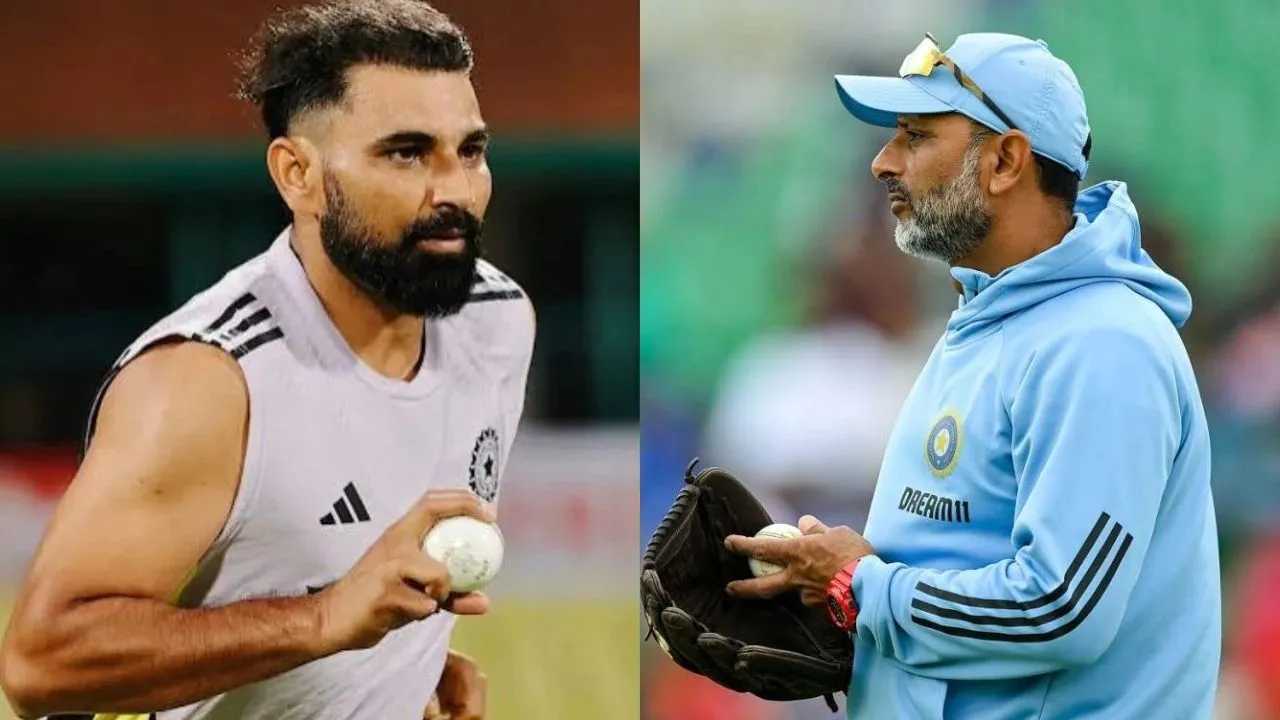
Sri Lanka’s bowling coach breaks silence on Dhruv Jurel’s controversial catch in 1st Test
Controversy Strikes: Lahiru Udara’s Disputed Catch Shakes Sri Lanka vs. India Test Match
During the ongoing Test match between the India National Cricket Team and the Sri Lanka National Cricket Team at the Galle International Cricket Stadium in Galle, a contentious incident unfolded on Day 4, revolving around a catch claimed by the Indian team’s Dhruv Jurel against Sri Lankan batter Lahiru Udara.
As the match progressed, the Men in Blue maintained a dominant position with Sri Lanka struggling at 84/4 by the end of Day 4, requiring a challenging 288 runs to secure victory in the first match. The pitch conditions, conducive to spin, posed a formidable challenge for the home team’s batsmen attempting to chase down the mammoth total of 372 runs set by India.
Controversial Catch:
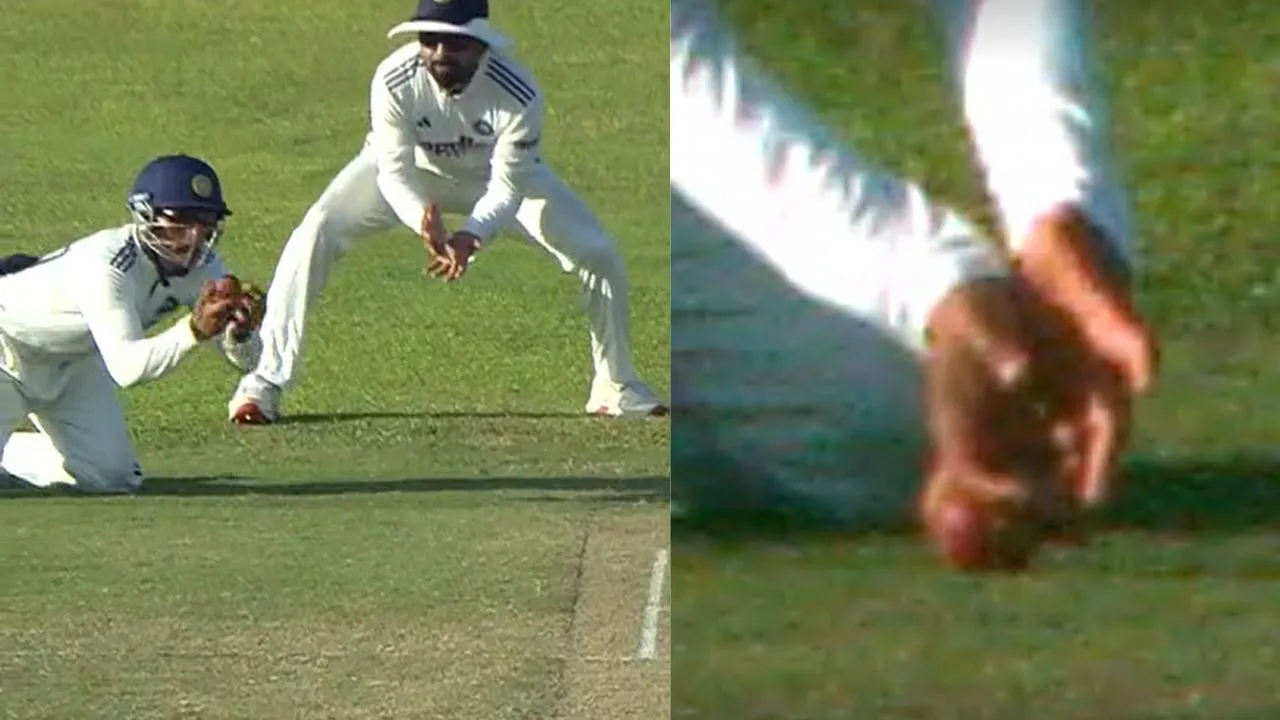
The pivotal moment occurred during the 21.4 over of the match, with bowler Manav Suthar delivering a ball that saw Lahiru Udara edging it to Dhruv Jurel positioned at short gully. Jurel, appearing to take a low catch, led to the on-field umpires referring the decision to the third umpire, Raveendra Wimalasiri.
While initial visuals suggested the ball may have touched the ground before being caught, the third umpire controversially ruled in favor of the Indian team, declaring Udara out based on the belief that Jurel maintained control of the catch with his hands beneath the ball. This decision left the Sri Lankan batter stunned as he departed the field after scoring 16 runs off 58 balls.
Reaction and Acceptance:
Addressing the media in a post-match press conference, Sri Lanka’s bowling coach, Ryan van Niekerk, emphasized the importance of accepting umpires’ decisions in cricket, acknowledging the inherent subjectivity in such moments. Van Niekerk highlighted the need for players to focus on the larger context of the game rather than fixating on individual decisions.
“It’s hard Test cricket,” noted van Niekerk. “You’ve got to accept umpires’ decisions and you’ve got to move forward. If you sit there and you worry too much about what is going your way versus what not, then you lose focus of what you’re trying to do with a Test match as a whole.”
India’s Firm Grip:
India’s commanding performance throughout the Test match was evident from the outset, with a formidable first innings total of 462 runs led by standout performances from Devdutt Padikkal, who scored 167 runs, and KL Rahul, who contributed 82 runs. The Sri Lankan team, in response, managed 284 runs in their first innings, giving India a significant 178-run lead.
With India adding 193 runs in their second innings before being bowled out, the target of 372 runs proved insurmountable for the Sri Lankan Lions as they lost early wickets, finding themselves in a precarious position with an inevitable victory for India on the horizon.
Stay tuned for further updates as the Test match continues to unfold, showcasing intense competition and gripping moments on the cricket field.
The Impact of Controversial Decisions in Cricket
The incident involving Lahiru Udara’s disputed catch underscores the significant impact that contentious decisions can have on the outcome of a cricket match. In a sport where margins are often razor-thin, a single disputed catch or umpiring call can potentially alter the course of the game, leading to heated debates and intense scrutiny.
Controversies surrounding catches, LBW decisions, and run-outs have been part and parcel of cricket since its inception. The introduction of technologies like Hawk-Eye, Snickometer, and UltraEdge has helped reduce human errors in decision-making, yet debates and disagreements persist, adding to the drama and excitement of the sport.
The Role of Technology in Umpiring Decisions
While the decision-making process in cricket has evolved with the integration of technology, controversies like the one involving Lahiru Udara’s catch highlight the challenges that umpires and officials face in making split-second judgments. The reliance on slow-motion replays and zoomed-in camera angles can sometimes provide inconclusive evidence, leaving room for interpretation and debate.
Umpires, both on-field and in the third umpire’s booth, play a crucial role in upholding the integrity of the game and ensuring fair play. Their decisions, though subject to scrutiny and criticism, are binding and must be accepted by players and teams, as emphasized by Sri Lanka’s bowling coach in the aftermath of the disputed catch incident.
The Mental Resilience of Players in High-Stake Matches
In high-stakes Test matches like the ongoing contest between India and Sri Lanka, the mental resilience and focus of players are tested under pressure situations. Handling setbacks, such as controversial decisions or early dismissals, requires a strong mindset and the ability to refocus on the larger objectives of the game.
The ability to accept unfavorable decisions, regroup as a team, and execute game plans with precision is essential for success in Test cricket. Players must demonstrate composure and adaptability, turning challenges into opportunities to showcase their skills and determination on the field.
The Significance of Sportsmanship in Cricket
At the heart of cricket lies the spirit of sportsmanship, fair play, and mutual respect between competitors. While the intensity of competition can sometimes lead to heated moments and disagreements, it is essential for players and teams to uphold the values of the game and maintain decorum on and off the field.
Moments of controversy, like the disputed catch involving Lahiru Udara, provide an opportunity for players to demonstrate grace under pressure, accepting outcomes with dignity and moving forward with a focus on the game’s broader objectives. Displays of sportsmanship and camaraderie contribute to the beauty and allure of cricket, fostering a spirit of mutual admiration among players and fans alike.
As the India vs. Sri Lanka Test match unfolds with its share of gripping moments and unforeseen twists, the essence of sportsmanship and resilience will continue to shape the narrative of the game, highlighting the enduring appeal and magic of cricket as a sport.
Latest News

Top 10 highest run-chases in T20 cricket history, ft. West Indies’ Ranchi win vs India

Aaryavir Sehwag and Anvay Dravid set to make headlines at U19 Asia Cup 2026

Longest ducks in Test cricket history ft. Nic Maddinson, Shoaib Akhtar

ECB to offer 39 central contracts to England players after Ben Stokes, Mark Wood’s retirement

Steve Smith surpasses Steve Waugh in all-time Test run-scorers’ list

Shane Watson identifies Gautam Gambhir’s biggest problem as India struggle for consistency
Is Bhuvneshwar Kumar in India’s 2027 World Cup plans? Ajinkya Rahane makes revelation

BCCI’s big ₹127 Crore move after injury crisis raises concerns over Team India
Parthiv Patel reveals RCB ignored his Jasprit Bumrah recommendation in IPL 2014 Auction
“Never spoke ill of any faith”: Irfan Pathan hits back at fake news using his name
Nic Maddinson bags 33-ball duck on Test comeback, disappoints George Bailey
Imran Tahir predicts 2027 ICC ODI World Cup Semi-Finalists, snubs India for title
Australia create unwanted history with first all-30-plus Test XI
Ravindra Jadeja returns to Ranji Trophy as Saurashtra announce squad