Steve Smith achieves rare milestone in second SA vs AUS Test
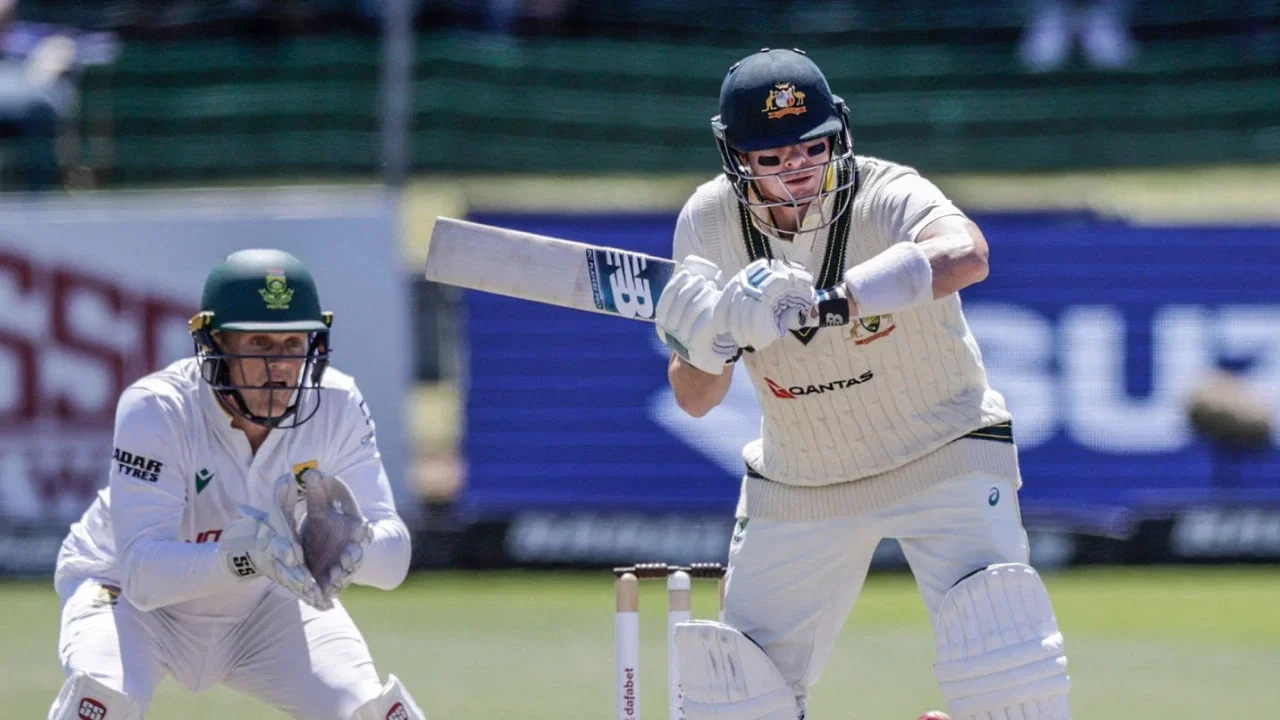
Steve Smith Reaches 11,000 Test Runs in Landmark South Africa Match
Steve Smith has added another milestone to an already remarkable Test career, becoming only the third Australian batter to score 11,000 runs in the longest format. The former captain reached the mark during the second Test against South Africa at St George’s Park in Gqeberha, joining an exclusive group of players whose achievements have helped define modern Test cricket.
Smith completed the feat on Day 4 when he nudged a short-of-a-length delivery from Marco Jansen towards cover and took a single. The moment was significant, but it came during a difficult innings: Smith was battling neck pain, had received repeated treatment, and was unable to move as freely as usual. His milestone therefore carried both statistical weight and a reminder of the physical demands placed on elite cricketers.
Smith Joins Australia’s Test Run-Scoring Greats
With 11,000 Test runs to his name, Smith became the 12th player overall to reach the landmark and the third Australian to do so. Only Ricky Ponting, with 13,378 runs, and Allan Border, with 11,174, have scored more Test runs for Australia.
Smith’s achievement is especially notable because of the consistency behind it. He has maintained a Test batting average above 55, a figure that compares favourably with the records of many of Australia’s most celebrated batters. Across his career, Smith has moved past former teammates and national greats including Steve Waugh, David Warner, Michael Clarke and Matthew Hayden on Australia’s all-time Test run list.
Run totals provide one measure of a batter’s longevity, but Smith’s average points to a deeper strength: he has regularly converted opportunities into substantial contributions. His unusual technique, intense concentration and ability to adjust between conditions have made him one of the most difficult batters to dismiss across different countries and bowling attacks.
How the 11,000-Run Milestone Was Reached
The single against Jansen was a modest scoring shot, yet it marked the culmination of years of high-level performance. Smith’s Test career has included major series victories, prolific home seasons and innings under pressure overseas. Reaching 11,000 runs in a match against South Africa added another chapter to a rivalry in which he has repeatedly been tested by pace, bounce and movement.
For supporters following the series, the milestone also offered a point of comparison with Australia’s past. Ponting and Border set the standard for generations of Australian batters; Smith’s entry into their company underlines his place among the country’s leading Test performers. Any prediction about where he may finish on the all-time list will depend on his health, form and how long he continues playing, but his record already places him in rare company.
Neck Pain Complicates Smith’s Historic Innings
The milestone did not come in comfortable circumstances. Smith appeared to be struggling with neck pain during his stay at the crease and received attention from the Australian team physiotherapist more than once. The discomfort seemed to restrict his movement, particularly when turning his head towards the bowler, a small but important part of a batter’s preparation and balance.
At one point, Smith reportedly dropped a medicinal tablet while attempting to pick it up. There was also concern that his symptoms could include vertigo, although the match-day reports centred on his neck discomfort. Such issues can make batting especially challenging: even a slight restriction can affect a player’s ability to track the ball, settle into a stance and respond quickly to deliveries around the body.
Smith’s innings ended when Wiaan Mulder produced a delivery that moved back in and found the gap between bat and pad. The ball struck the top of the stumps, dismissing him for 28 from 88 deliveries. Australia were left in a difficult position at 96 for eight, and the wicket brought a testing passage for the visitors to a close.
While Smith’s score was not a large one, the circumstances made his time at the crease notable. He had to manage discomfort while facing a South African attack on a surface that demanded close attention. His dismissal also showed how quickly a carefully constructed innings can end in Test cricket, where one delivery can undo extended periods of concentration.
Another South Africa Record: 1,000 Test Runs Against the Proteas
Smith also reached a separate career landmark during the match, passing 1,000 Test runs against South Africa. He needed 15 runs at the start of the contest and achieved the total during his 15th Test against the Proteas, becoming the ninth Australian to score 1,000 Test runs against the country.
He joined an accomplished list that includes Ponting, Neil Harvey, Michael Clarke, Matthew Hayden, David Warner, Steve Waugh, Mark Waugh and Michael Hussey. The milestone reflects Smith’s sustained contribution in a challenging matchup, rather than success in a single series or venue.
His record against South Africa spans contrasting conditions. Smith has scored 443 Test runs against the Proteas in Australia across six matches, averaging 49.22. He has also made more than 480 runs in eight Tests played in South Africa, with an average above 38. A further 79 runs came in a Test at a neutral venue.
A Milestone That Adds to Smith’s Test Legacy
Smith’s 11,000-run achievement arrived amid a demanding match, with his fitness, Australia’s position and South Africa’s bowling all shaping the story. It was not a conventional landmark innings, but the broader accomplishment speaks to the durability and quality of his career. Reaching this total requires more than a brief stretch of form: it demands years of selection, adaptation and performance at the highest level.
As the series continues, attention will turn to Smith’s recovery and Australia’s response in the match. For now, the former captain has secured another place in the record books. His name sits alongside Ponting and Border among Australia’s 11,000-run Test scorers, while his strong average and record against South Africa provide further context for why he remains one of the defining batters of his era.
Latest News

Amit Mishra joins Delhi Capitals as coach: IPL records, coaching history, wickets and career stats
BCCI clarifies stance on Indian players in foreign leagues, explains VVS Laxman’s role
Nat Sciver-Brunt and England stars allowed to miss Sri Lanka T20Is for WPL 2027
Steve Smith achieves rare milestone in second SA vs AUS Test
SL vs ENG Dream11 Prediction Today Match, Dream11 Team Today, Fantasy Cricket Tips, Playing XI, Pitch Report, Injury Update- ODI Tri Series in Pakistan 2026, Match 3
Sri Lanka to host England ahead of inaugural Women’s Champions Trophy

Shreyas Iyer explains why Bhuvneshwar Kumar’s India return makes sense

Watch: Harry Brook totally surprised after learning Pakistan star Arafat Minhas’ age
Gujarat Titans officials question Ashish Nehra over backing Rahul Tewatia and 2 others before IPL Auction

Anrich Nortje’s injury rocks South Africa during 2nd Test against Australia
IND vs NZ Playing 11 Today, Live Streaming, Pitch & Weather: India tour of New Zealand 1st T20I, 2026

Watch: Smriti Mandhana snubs handshake with Harmanpreet Kaur, rift rumours resurface

Vaibhav Sooryavanshi can’t walk straight into India team, says Shreyas Iyer

Rishabh Pant injury update arrives before NZ Tests, Prasidh Krishna’s medical bulletin issued