

Steve Smith expected to return for New Zealand Tests as Andrew McDonald breaks silence on injury concern
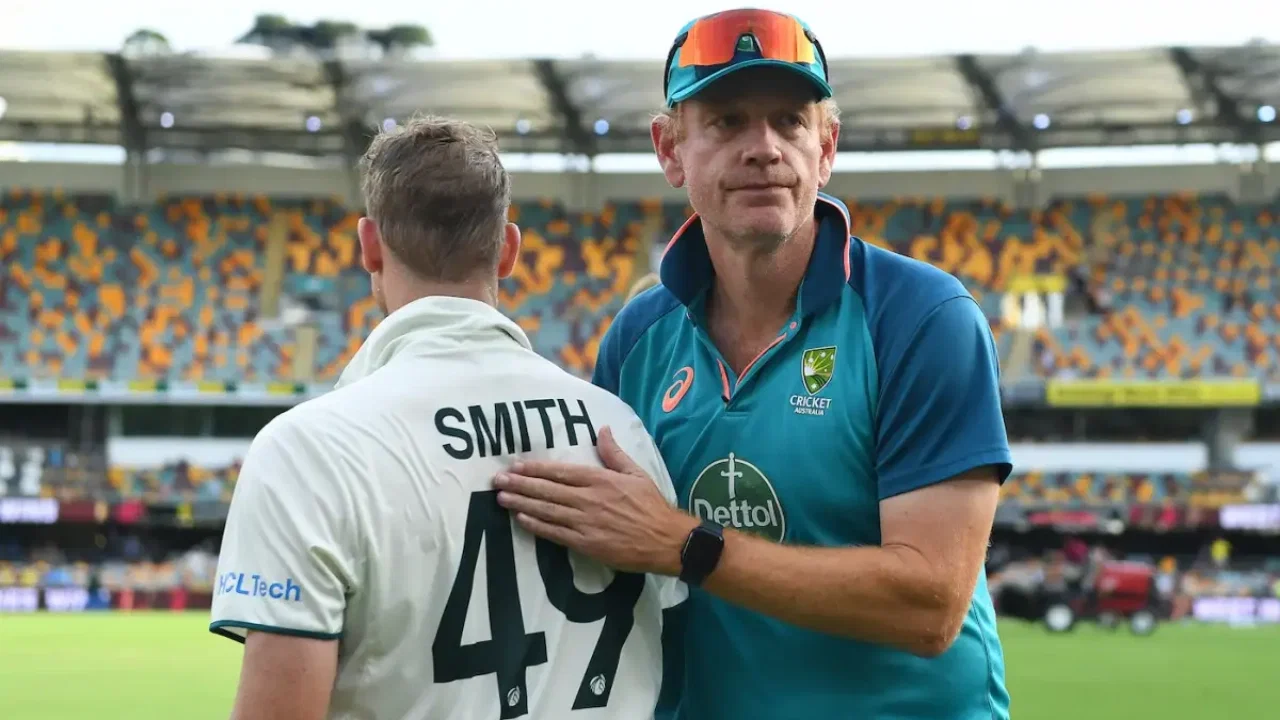
Andrew McDonald Backs Steve Smith for Australia’s New Zealand Test Series
Australia coach Andrew McDonald expects Steve Smith to return for the upcoming Test series against New Zealand, despite the veteran batter’s withdrawal from the decisive third Test against South Africa because of a neck injury. McDonald said the team is planning for Smith to be available for the opening match in Perth, while stressing that his recovery and preparation must be managed carefully.
Smith’s absence was felt during Australia’s heavy defeat at Newlands in Cape Town. South Africa won by 176 runs to claim the series 2-1 and move ahead of Australia in the 2025–27 World Test Championship standings. Chasing 288 on the final day, Australia were dismissed for 111 after a devastating spell from Kagiso Rabada and a career-best match performance from Simon Harmer.
Australia’s Prediction: Smith to Be Ready for Perth
Speaking after the loss, McDonald said Australia’s current prediction is that Smith will be fit to play the first Test against New Zealand. He described the discussions around the batter’s health as ongoing, with the immediate focus on understanding the neck problem and reducing the risk of it returning.
“We are planning for him to play against New Zealand, Test one in Perth,” McDonald said. He added that Australia would assess what treatment and preparation Smith needs, with domestic Sheffield Shield cricket among the possible opportunities to build match readiness before the series.
The coach’s confidence is encouraging for Australia, but it does not amount to a guarantee. A neck injury can affect a batter’s ability to track the ball, rotate comfortably and maintain a stable position at the crease. Smith’s availability will therefore depend on how he responds to treatment, training and any competitive cricket he plays before the Test.
Neck Injury Forced a Late Decision
Smith’s neck issue flared up in the week before the Cape Town decider. After the Australian squad arrived in South Africa, an MRI scan confirmed the injury. Smith received a pain-relieving injection on the morning of the match, but it did not provide enough relief for him to take the field.
The decision came after Smith had appeared comfortable during an early net session the previous day. McDonald said that practice offered a positive sign, but it could not show how the batter would feel after resting overnight or whether he would be fit for the demands of a Test match.
According to the coach, Smith and the medical staff gave the injury every opportunity to settle. When the batter still did not feel ready on match morning, the team accepted his assessment. McDonald said senior players often understand their own bodies particularly well, and he supported Smith’s decision not to risk playing while compromised.
Pat Cummins Supports Smith’s Withdrawal
Australia captain Pat Cummins described Smith’s absence as a significant disappointment, given his importance to the batting order and his experience in high-pressure Tests. However, Cummins said Smith had remained hopeful of playing until late in the decision-making process.
“He wanted to give it right to the last minute,” Cummins said, explaining that Smith believed he might recover in time. The captain added that Smith ultimately did not feel right and was best placed to judge whether he could perform safely and effectively.
Smith’s withdrawal meant a reshuffle for Australia. Josh Inglis came into the XI and made a century in the first innings, while Cameron Green returned from injury at No. 4, scoring 65 and 27. Their contributions offered individual positives, but they could not prevent Australia’s batting from collapsing in the fourth innings.
Rabada and Harmer Seal South Africa’s Series Win
Australia’s chase began in the worst possible fashion. Rabada struck with the first ball, dismissing Matt Renshaw for a golden duck, then removed Marnus Labuschagne for four shortly afterwards. His opening spell left Australia reeling at 42 for six, with the visitors struggling to cope with pace, movement and pressure on a difficult final-day surface.
Rabada finished with three wickets for 14 runs from five overs, setting the tone for South Africa’s defence. The collapse continued after lunch, when Australia had slipped to 60 for seven. Harmer then took control, exploiting the deteriorating pitch with accurate off-spin and sharp turn.
The spinner claimed six wickets for 16 runs in 21.1 overs, finishing with match figures of 10 for 120—his best performance in a Test. Australia were eventually bowled out for 111, completing a 176-run defeat. The result gave South Africa a 2-1 series victory and a valuable boost in the early stages of the 2025–27 World Test Championship cycle.
What Smith’s Return Could Mean for Australia
Smith remains one of Australia’s most influential Test batters, and his return would provide experience and stability to a middle order that has struggled during the South Africa series. His technique, patience and record in challenging conditions make him a key figure as Australia look to respond against New Zealand.
Still, Australia will need more than one player’s return to address the broader batting concerns exposed in Cape Town. The team was dismissed for 99 in the previous Test and then failed to chase a manageable target in the decider. Improving starts, building partnerships and adapting to changing pitch conditions will be central to the side’s preparation.
For now, McDonald’s message is one of cautious optimism. Australia are planning for Smith to play in Perth, but his recovery will be monitored rather than assumed. Sheffield Shield cricket could help him regain match rhythm, provided his neck responds well and he can train without discomfort.
The upcoming New Zealand series will offer Smith a chance to return to the Test side and help Australia regain momentum. Whether he is ready for the opening match will depend on the medical assessment and his progress in the weeks ahead. Australia’s prediction is positive—but after the late withdrawal in Cape Town, the priority will be ensuring Smith is genuinely fit before he takes the field again.
Latest News

SA vs BAN Playing 11 Today, Live Streaming, Pitch & Weather: South Africa tour of Bangladesh 2026, 2nd Test

AUS vs ENG Playing 11 Today, Live Streaming, Pitch & Weather: England tour of Australia 2026, 2nd T20I

Blair Tickner ruled out of 2nd Test vs India, replacement named

Tim Paine and Justin Langer face fresh questions over Australia’s ball-tampering scandal

India tour of Bangladesh gets fresh hope as BCB confirms talks with BCCI

Tom Latham opens up on soft ball problem and saliva ban after draw against India

Ajinkya Rahane slams Tilak Varma for publicly criticising Shahbaz Ahmed after India A’s defeat

ICC to introduce IPL-style bat checks in international cricket

“Smiling Laughing doesn’t happen”: R Ashwin’s dig at India’s approach after draw vs New Zealand

“Not good enough for Test cricket”: Scott Styris, Sunil Gavaskar slam Wellington pitch

Dodda Ganesh declares India ‘out of WTC final race’ after Wellington Test draw

Ajinkya Rahane criticises Shubman Gill for abusing Akash Deep in 1st Test vs New Zealand

‘Why so many boundary riders?’ Dinesh Karthik questions Shubman Gill’s captaincy after Wellington Test

“I just want to enjoy my life”: Yash Dayal reflects on his return to cricket


