

‘Steve Smith is a national hero’: Moises Henriques weighs in on Sandpapergate scandal
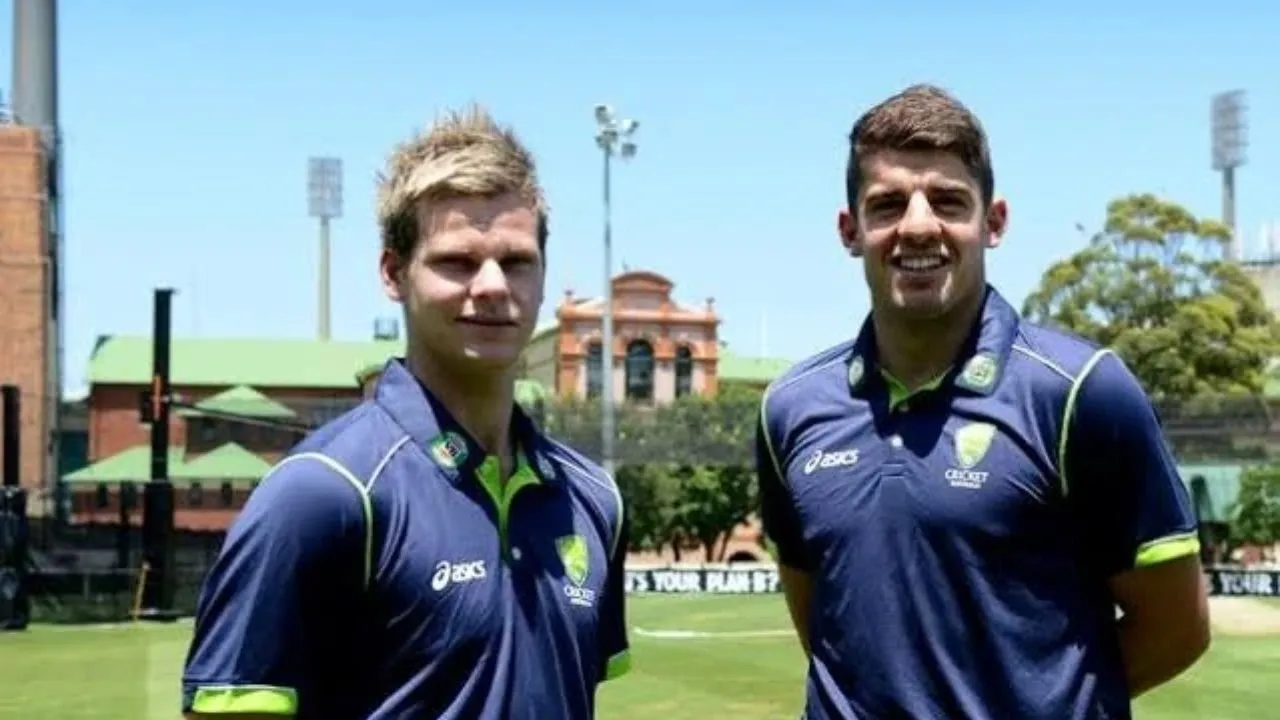
Moises Henriques Calls Steve Smith a “National Hero” as Sandpapergate Debate Returns
The Sandpapergate controversy has resurfaced in Australian cricket, prompting fresh debate about who knew what during the 2018 ball-tampering scandal—and who accepted responsibility when it became public. Former Australia all-rounder Moises Henriques has now weighed in, praising Steve Smith for taking responsibility as captain and describing him as a “national hero.”
Henriques, who currently captains Portugal, made the comments during an appearance on Fanatics TV. His remarks follow renewed claims from former Australia opener Usman Khawaja, who has said that knowledge of the ball-tampering episode extended beyond the players directly involved. The dispute has drawn former teammates and officials back into a painful chapter for Cricket Australia, with public opinion once again divided over leadership, accountability and the punishments handed down.
Why Sandpapergate Is Back in the Headlines
The 2018 scandal unfolded during Australia’s Test tour of South Africa. Cameron Bancroft was caught using sandpaper to alter the ball, while then-captain Smith and vice-captain David Warner were also found responsible for their roles in the episode. Cricket Australia imposed lengthy suspensions, including 12-month bans for Smith and Warner and a nine-month ban for Bancroft. Smith was also barred from holding a leadership position for a period.
The story has returned to the spotlight ahead of the release of Khawaja’s autobiography, Sabr. Khawaja has suggested that the incident was not known only to the three players punished by Cricket Australia, saying that players and coaching staff on the tour were aware of what had happened. Bancroft has also supported aspects of Khawaja’s account, adding to calls for a fuller public explanation.
Those claims have reopened questions that have never entirely gone away: how widely the plan was understood, whether the original investigation captured the full picture, and whether the sanctions were applied fairly. The latest comments are allegations and recollections from people connected to the team, rather than a new formal finding by Cricket Australia.
Henriques Praises Smith’s Response
Henriques focused on Smith’s conduct after the incident became public. He recalled that Smith had reportedly objected to the plan before the ball was tampered with, yet did not use that account to shift blame during the initial public fallout. At the press conference in South Africa, Smith accepted responsibility as captain and appeared alongside Bancroft to address the scandal.
“Smudge, oh mate, he’s a national hero here,” Henriques said, using Smith’s familiar nickname. He argued that Smith could have pointed to his alleged objection and named others involved, but instead chose to take responsibility in front of the public.
Henriques said Smith “owned it on behalf of his team” and did not want other players—particularly the bowlers—to face consequences. In Henriques’ view, that decision is what distinguishes Smith in the debate over the scandal. His comments present a different emphasis from the continuing questions about what happened behind the scenes: rather than concentrating on who may have known, Henriques highlighted the captain’s willingness to stand before the cameras and accept blame.
Leadership, accountability and public perception
Smith’s response has long been central to how the episode is remembered. Some supporters see his acceptance of responsibility as an act of leadership, while critics argue that the full chain of knowledge and decision-making still deserves closer examination. Both perspectives can exist at once: a captain can take public responsibility, while questions remain about whether others should also have been held accountable.
Henriques’ “national hero” description is therefore likely to attract debate. It reflects his personal assessment of Smith’s actions, not a settled verdict shared by every former player or supporter. The renewed discussion shows how strongly the scandal continues to shape opinions about Australian cricket and the standards expected of its leaders.
Former Teammates Offer Different Views
Other former and current Australian players have also entered the conversation. Warner, who received a 12-month suspension and a lengthy leadership ban, has backed calls for greater transparency and an open public inquiry. Bancroft’s recent comments have likewise intensified scrutiny of the original account of events.
Current Australia captain Pat Cummins has responded critically to Khawaja’s claims, speaking at a lengthy press conference ahead of the team’s ODI series against England. Mitchell Starc has also commented. Smith, however, has not publicly addressed the latest allegations, while Josh Hazlewood and Nathan Lyon have also remained quiet so far.
That silence does not establish what any individual knew or thought at the time. It does, however, leave room for further speculation as former teammates’ recollections are compared. Any prediction about whether Smith or other players will respond publicly remains uncertain, particularly while the claims are being discussed through interviews, articles and media appearances rather than a formal inquiry.
What the Renewed Debate Could Mean for Cricket Australia
For Cricket Australia, the return of Sandpapergate is a reputational challenge as well as a historical debate. The organisation must navigate renewed questions about its investigation while protecting the focus of the current team. With major international commitments on the horizon—including the Ashes and the next ODI World Cup cycle—attention will inevitably turn to whether the controversy affects team preparations or public confidence.
A fresh inquiry, if one were pursued, could offer a structured way to test competing accounts. It could also bring new scrutiny to decisions made in 2018 and prolong a story many in Australian cricket hoped had been put to rest. For now, there is no confirmed outcome or timetable for such a process, and calls for transparency should not be confused with proof that additional players or staff were involved.
A Scandal Still Shaping Australian Cricket
Henriques’ defence of Smith has added a new dimension to an argument that has repeatedly resurfaced over the years. Khawaja and Bancroft have renewed attention on the wider team environment; Warner has supported a public examination; and Cummins has pushed back against the latest claims. Smith’s decision not to comment has left Henriques’ praise as one of the clearest recent statements in his defence.
Ultimately, the Sandpapergate debate is about more than the act of ball tampering. It concerns leadership under pressure, the limits of team loyalty and how sporting organisations establish accountability. Whether further evidence or a formal review emerges, the competing accounts are likely to keep the issue alive—and ensure that Smith’s role in the scandal remains a subject of discussion among Australian cricket supporters.
Latest News

SA vs BAN Playing 11 Today, Live Streaming, Pitch & Weather: South Africa tour of Bangladesh 2026, 2nd Test

AUS vs ENG Playing 11 Today, Live Streaming, Pitch & Weather: England tour of Australia 2026, 2nd T20I

Blair Tickner ruled out of 2nd Test vs India, replacement named

Tim Paine and Justin Langer face fresh questions over Australia’s ball-tampering scandal

India tour of Bangladesh gets fresh hope as BCB confirms talks with BCCI

Tom Latham opens up on soft ball problem and saliva ban after draw against India

Ajinkya Rahane slams Tilak Varma for publicly criticising Shahbaz Ahmed after India A’s defeat

ICC to introduce IPL-style bat checks in international cricket

“Smiling Laughing doesn’t happen”: R Ashwin’s dig at India’s approach after draw vs New Zealand

“Not good enough for Test cricket”: Scott Styris, Sunil Gavaskar slam Wellington pitch

Dodda Ganesh declares India ‘out of WTC final race’ after Wellington Test draw

Ajinkya Rahane criticises Shubman Gill for abusing Akash Deep in 1st Test vs New Zealand

‘Why so many boundary riders?’ Dinesh Karthik questions Shubman Gill’s captaincy after Wellington Test

“I just want to enjoy my life”: Yash Dayal reflects on his return to cricket


