Stuart Broad raises questions over Mackay pitch after Australia’s win vs Bangladesh

Stuart Broad Expresses Concerns Over Great Barrier Reef Arena Pitch After Australia’s Win Over Bangladesh
Former England fast bowler Stuart Broad has sparked a debate over the pitch conditions at the Great Barrier Reef Arena following Australia’s recent victory over Bangladesh in the second Test in Mackay. Broad raised questions about the surface after the match concluded within just two days, with a total of 30 wickets falling across 125 overs in the final Test of the series.
Australia Triumphs at Great Barrier Reef Arena
Australia clinched a resounding innings-and-51-run win at the Great Barrier Reef Arena on Sunday, August 23, leveling the series 1-1 against Bangladesh. The standout performer for Australia was Mitchell Starc, who claimed a remarkable 10-wicket match haul as Bangladesh were bundled out for 64 and 95 across two innings. Australia posted a total of 210 runs in their only innings, with Cameron Green top-scoring with 67 runs.
Stuart Broad Criticizes Pitch and Australian Conditions
Speaking on the For The Love Of Cricket YouTube channel, Stuart Broad criticized Australia’s decision to prepare a pitch in Mackay that heavily favored bowlers. Broad expressed concerns that such surfaces could pose unnecessary risks for Australia when facing stronger visiting teams.
Broad stated, “While the Aussies managed to beat Bangladesh convincingly and draw the series 1-1, there are still lingering question marks. Starc was exceptional once again, utilizing swing to his advantage, while the pitch provided excessive movement. The unpredictable nature of the pitches this year means that teams may not necessarily have to rely on spinners.”
He further added, “In my opinion, if a team believes they are superior to their opposition in terms of skill, they should ideally play on a flatter pitch. If Bangladesh had won the toss and bowled first, they could have potentially dismissed Australia for a low total and put them in a challenging position. The excessive movement on the pitch posed a significant risk.”
Mackay Test Ends in Just 750 Deliveries
The Mackay Test match witnessed a swift conclusion, lasting only 750 deliveries in total. This match marked Australia’s third two-day Test in their last seven home encounters, following rapid finishes in Perth and Melbourne during the Ashes 2025-26 series.
Mitchell Starc Climbs Up All-Time Test Wicket-Takers List
Mitchell Starc showcased exceptional bowling prowess during the match, especially on Day 1, where he put immense pressure on the Bangladesh batting line-up. The left-arm pacer picked up a five-wicket haul in just 22 balls, ultimately finishing the first innings with figures of 6/12 from 10 overs as Bangladesh crumbled for 64.
Starc continued his dominance in the second innings, claiming 4/39 from 10 overs. His stellar performance earned him a 10-wicket match haul, and he finished with figures of 10/51 to secure both the Player of the Match and Player of the Series awards. Starc also moved up into the top 10 all-time Test wicket-takers list, surpassing legendary South African bowler Dale Steyn, with a total of 445 Test wickets.
Stuart Broad Highlights Marnus Labuschagne’s Struggles
Broad also raised concerns about Australian batsman Marnus Labuschagne’s recent dip in form, particularly ahead of Australia’s challenging upcoming schedule. Broad pointed out that Labuschagne’s place at No. 3 in the batting order is now under scrutiny following his inconsistent performances over the past three years.
Broad remarked, “While Starc wreaked havoc with the ball and single-handedly turned the game in Australia’s favor, Labuschagne once again failed to make an impact with the bat. His position at No. 3 is now in question, with an average of just below 25 since July 2023, spanning a considerable period.”
Labuschagne’s struggles continued in Mackay, where he managed just four runs off nine balls after scoring 1 and 31 in the previous match in Darwin. With Australia set to embark on challenging tours to South Africa, India, and England, as well as a home series against New Zealand, the pressure on Labuschagne to deliver consistent performances has intensified.
The Impact of Pitch Conditions on Test Matches
The debate surrounding pitch conditions in Test matches has been ongoing for years, with players, pundits, and fans alike discussing the balance between fair competition and home advantage. The recent match at the Great Barrier Reef Arena in Mackay has once again brought this issue to the forefront. While bowler-friendly pitches can lead to exciting matches with quick outcomes, they also raise concerns about the long-term health of Test cricket.
Stuart Broad’s comments about the pitch favoring bowlers highlight the delicate balance that cricket boards and groundsmen must maintain. While it is essential to provide pitches that offer a fair contest between bat and ball, extreme conditions can sometimes skew the game heavily in favor of one side. This can lead to matches ending prematurely, as seen in the recent Test between Australia and Bangladesh.
The Evolution of Mitchell Starc as a Leading Fast Bowler
Mitchell Starc’s exceptional performance in the Mackay Test not only secured victory for Australia but also highlighted his prowess as one of the leading fast bowlers in world cricket. Starc’s ability to swing the ball at pace and trouble batsmen with his aggressive bowling has made him a key asset for the Australian team. His climb up the all-time Test wicket-takers list is a testament to his skill and consistency over the years.
Starc’s success in the recent Test also raises questions about the role of fast bowlers in modern-day cricket. With pitches offering more assistance to seamers, bowlers like Starc can have a significant impact on the game, even in conditions traditionally favorable to batsmen. As the game continues to evolve, the value of quality fast bowling remains as crucial as ever.
The Pressure on Marnus Labuschagne and Australia’s Batting Line-Up
Stuart Broad’s observations about Marnus Labuschagne’s struggles with the bat shine a light on the challenges facing Australia’s batting line-up. With key players like Labuschagne facing scrutiny over their form, the pressure to perform consistently in all conditions has never been higher. As Australia prepares for tough tours against top-ranked teams, including South Africa, India, and England, the need for stability and reliability in the middle order becomes paramount.
Labuschagne’s dip in form also underscores the unpredictable nature of cricket and the mental resilience required to overcome rough patches. As one of Australia’s premier batsmen, his ability to bounce back from recent setbacks will be crucial in shaping the team’s fortunes in upcoming series. The management will need to support him through this challenging period and help him rediscover his best form to strengthen Australia’s batting line-up.
The Future of Test Cricket Amidst Changing Conditions
As Test cricket continues to adapt to evolving conditions and player preferences, the role of pitch preparation, player skill sets, and team strategies becomes increasingly important. While traditionalists cherish the nuances of the longest format of the game, innovations and changes are necessary to keep the sport relevant and engaging for modern audiences.
The recent debate sparked by Stuart Broad’s comments on the pitch conditions in Mackay serves as a reminder of the challenges and opportunities that Test cricket presents. Balancing the need for competitive surfaces with the desire for entertaining contests will remain a key focus for cricket administrators worldwide. As teams prepare for future series and tournaments, finding the right balance between bat and ball will be crucial in ensuring the enduring appeal of Test cricket.
Latest News

Top 10 highest run-chases in T20 cricket history, ft. West Indies’ Ranchi win vs India

Aaryavir Sehwag and Anvay Dravid set to make headlines at U19 Asia Cup 2026

Longest ducks in Test cricket history ft. Nic Maddinson, Shoaib Akhtar

ECB to offer 39 central contracts to England players after Ben Stokes, Mark Wood’s retirement

Steve Smith surpasses Steve Waugh in all-time Test run-scorers’ list

Shane Watson identifies Gautam Gambhir’s biggest problem as India struggle for consistency

Is Bhuvneshwar Kumar in India’s 2027 World Cup plans? Ajinkya Rahane makes revelation

BCCI’s big ₹127 Crore move after injury crisis raises concerns over Team India

Parthiv Patel reveals RCB ignored his Jasprit Bumrah recommendation in IPL 2014 Auction

“Never spoke ill of any faith”: Irfan Pathan hits back at fake news using his name
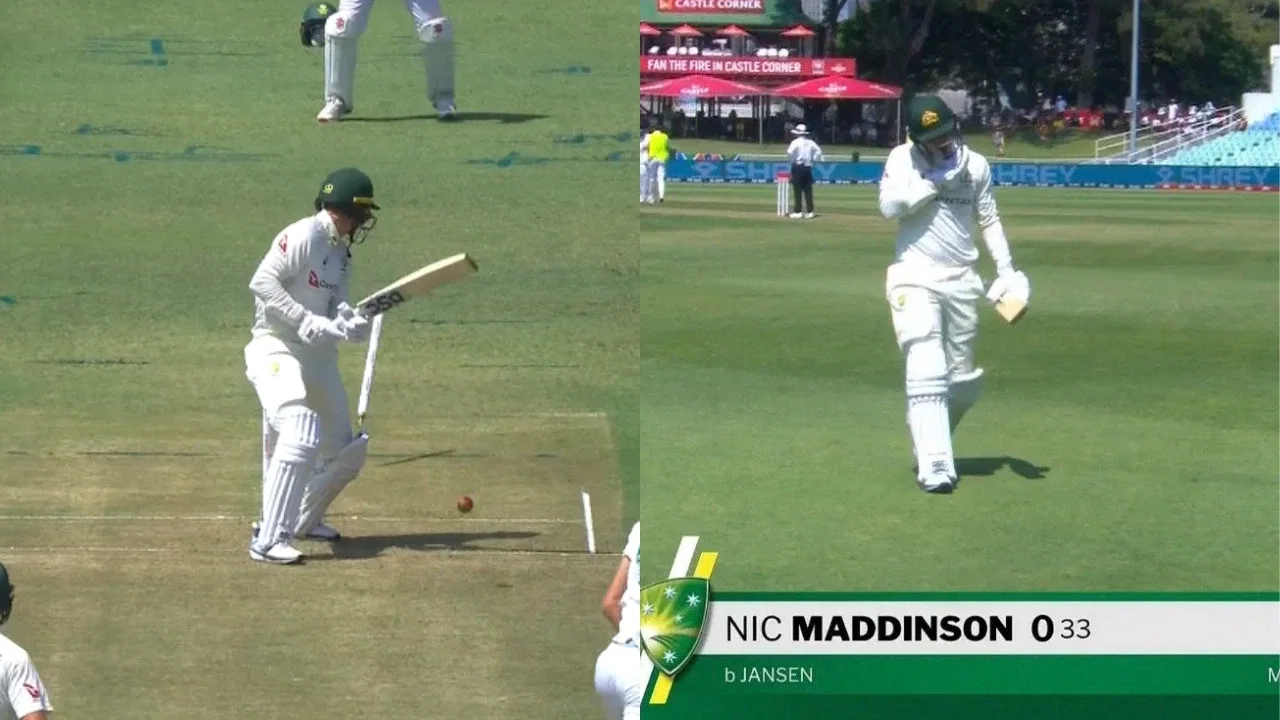
Nic Maddinson bags 33-ball duck on Test comeback, disappoints George Bailey

Imran Tahir predicts 2027 ICC ODI World Cup Semi-Finalists, snubs India for title

Australia create unwanted history with first all-30-plus Test XI
Ravindra Jadeja returns to Ranji Trophy as Saurashtra announce squad