

Sunil Gavaskar slams India’s decision to pick Washington Sundar ahead of Ravindra Jadeja in 1st Test
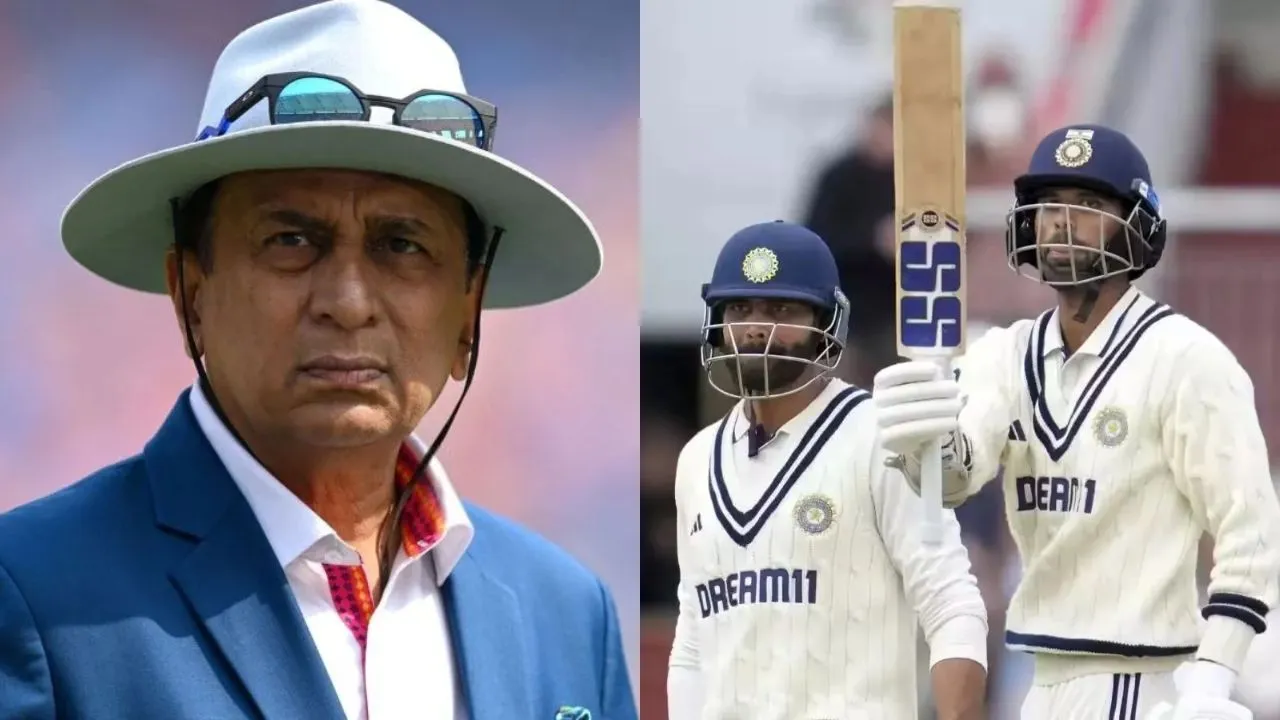
Sunil Gavaskar Questions India’s Decision to Leave Ravindra Jadeja Out Against New Zealand
Former India captain Sunil Gavaskar has questioned the decision to omit Ravindra Jadeja from the playing XI for the first Test against New Zealand at Wellington’s Basin Reserve. India selected Washington Sundar as their sole spinner, a choice Gavaskar found difficult to understand given Jadeja’s experience and recent performances in Test cricket.
India captain Shubman Gill confirmed before the series opener that his side would field four specialist fast bowlers alongside one spinner. The selection appeared to reflect New Zealand’s collection of left-handed batters, with Sundar’s off-spin offering a potential tactical advantage. But Gavaskar argued that Jadeja’s all-round ability and proven record made his exclusion a significant talking point.
Gavaskar Raises Questions Over Sundar’s Match Readiness
Speaking to Sony Sports Network after the toss, Gavaskar said he could see why India might have favoured an off-spinner against a left-heavy batting order, but he remained unconvinced that the reasoning justified leaving Jadeja out.
“Why bring him to New Zealand if you are not going to play him?” Gavaskar asked, referring to Jadeja. He pointed to the all-rounder’s experience and suggested that his bowling would have offered India a different angle in conditions where accuracy and variation could be important.
Gavaskar also expressed concern about Sundar’s lack of recent competitive cricket. The off-spinner had not featured in India’s ODI or T20I matches before the Test, and the former captain suggested that limited match practice could leave him short of rhythm. He described Sundar as potentially “rusty,” while stressing that he hoped the selection would ultimately work in India’s favour.
The debate highlights the challenge facing selectors when they must balance recent form, specialist matchups and experience. Sundar’s off-spin could be useful against left-handers such as Tom Latham, Devon Conway and Rachin Ravindra. Jadeja, however, brings a broader Test record, left-arm spin, reliable lower-order batting and exceptional fielding—qualities that can influence a match in several different ways.
Jadeja’s England Form Adds to the Selection Debate
Jadeja’s omission attracted particular attention because of his performances in India’s previous red-ball assignment in SENA conditions. During the 2025 Anderson-Tendulkar Trophy in England, he scored 516 runs across 10 innings at an average of 86.00. His tally included a century and five half-centuries, underlining his value as more than a specialist bowler.
One of his most important contributions came at Manchester, where he made an unbeaten 107 to help India save the fourth Test. The innings demonstrated his ability to absorb pressure and build a response when the team needed stability. His series total was also reported as the highest by an Indian batter at No. 6 or lower in a single Test series.
Jadeja took seven wickets during that England campaign, maintaining an economy rate of 3.56. While those figures do not guarantee selection in every match, they strengthen the case made by critics who believe his experience could have been especially valuable in a demanding overseas Test.
India’s decision also came with a trade-off elsewhere in the XI. By opting for four specialist fast bowlers and Sundar as the only spinner, the team left Mohammed Siraj out. The combination suggested that India wanted pace and seam options to lead the attack, while Sundar’s off-spin was selected to target New Zealand’s left-handers. Whether that balance would prove effective remained one of the central questions of the match.
New Zealand Recover After India’s Strong Start
The hosts gave India an early opportunity to justify their bowling-heavy approach. After Gill won the toss and chose to bowl, Jasprit Bumrah struck in the opening over, dismissing New Zealand captain Tom Latham for a duck. Anshul Kamboj then removed Conway for four, leaving the home side under immediate pressure.
Rachin Ravindra and Henry Nicholls attempted to steady the innings with a 39-run partnership for the third wicket. Akash Deep ended that stand by dismissing Ravindra for 15 from 50 balls. Bumrah soon struck again, removing Daryl Mitchell for one, with Yashasvi Jaiswal taking the catch at short leg.
New Zealand’s position deteriorated further when Tom Blundell failed to make a substantial contribution. At 70 for five, the hosts faced the prospect of a short first innings and India appeared firmly in control.
Nicholls and Phillips Turn the Momentum
Henry Nicholls and Glenn Phillips changed the complexion of the day with a confident, unbeaten sixth-wicket partnership. Phillips brought an attacking approach, putting pressure back on India’s bowlers, while Nicholls combined patience with well-timed scoring to rebuild the innings.
Nicholls reached his 12th Test century and his fifth at the Basin Reserve, reinforcing his reputation as a dependable performer at the Wellington venue. Phillips remained unbeaten on 94, closing in on a century of his own. Their unbroken stand had grown to 173 runs by stumps, lifting New Zealand from 70 for five to 243 for five.
The recovery left the opening day finely balanced. India’s fast bowlers had made the early breakthroughs, but New Zealand’s lower-middle order had prevented the visitors from capitalising fully. The stand also made the selection conversation more immediate: India’s one-spinner strategy had been chosen partly to exploit the home side’s left-handers, yet it was two right-handed batters who rebuilt the innings.
India’s Selection Prediction: What Could Matter Next?
The first Test offered no immediate verdict on whether India’s choice of Sundar over Jadeja was right. That assessment would depend on how the pitch behaved, whether spin became more influential later in the match and how effectively Sundar could contain or dismiss New Zealand’s batters. His ability to contribute with the bat could also become important if India’s top order faced a difficult innings.
For Jadeja, the omission was a reminder that even a strong record does not guarantee a place when selectors pursue a specific tactical plan. For India, the prediction going forward is that the balance between pace, spin and all-round depth will remain under scrutiny—especially if New Zealand’s batters continue to find ways to counter the bowling attack.
Gavaskar’s criticism therefore speaks to a wider question about Test selection: should a team prioritise a matchup designed for the opposition, or rely on an experienced player whose recent performances have earned trust? India’s decision at Wellington placed that debate squarely in the spotlight.
Latest News

SA vs BAN Playing 11 Today, Live Streaming, Pitch & Weather: South Africa tour of Bangladesh 2026, 2nd Test

AUS vs ENG Playing 11 Today, Live Streaming, Pitch & Weather: England tour of Australia 2026, 2nd T20I

Blair Tickner ruled out of 2nd Test vs India, replacement named

Tim Paine and Justin Langer face fresh questions over Australia’s ball-tampering scandal

India tour of Bangladesh gets fresh hope as BCB confirms talks with BCCI

Tom Latham opens up on soft ball problem and saliva ban after draw against India

Ajinkya Rahane slams Tilak Varma for publicly criticising Shahbaz Ahmed after India A’s defeat

ICC to introduce IPL-style bat checks in international cricket

“Smiling Laughing doesn’t happen”: R Ashwin’s dig at India’s approach after draw vs New Zealand

“Not good enough for Test cricket”: Scott Styris, Sunil Gavaskar slam Wellington pitch

Dodda Ganesh declares India ‘out of WTC final race’ after Wellington Test draw

Ajinkya Rahane criticises Shubman Gill for abusing Akash Deep in 1st Test vs New Zealand

‘Why so many boundary riders?’ Dinesh Karthik questions Shubman Gill’s captaincy after Wellington Test

“I just want to enjoy my life”: Yash Dayal reflects on his return to cricket


