

“The truth”: Usman Khawaja responds to Pat Cummins’ ‘complete and utter nonsense’ remarks
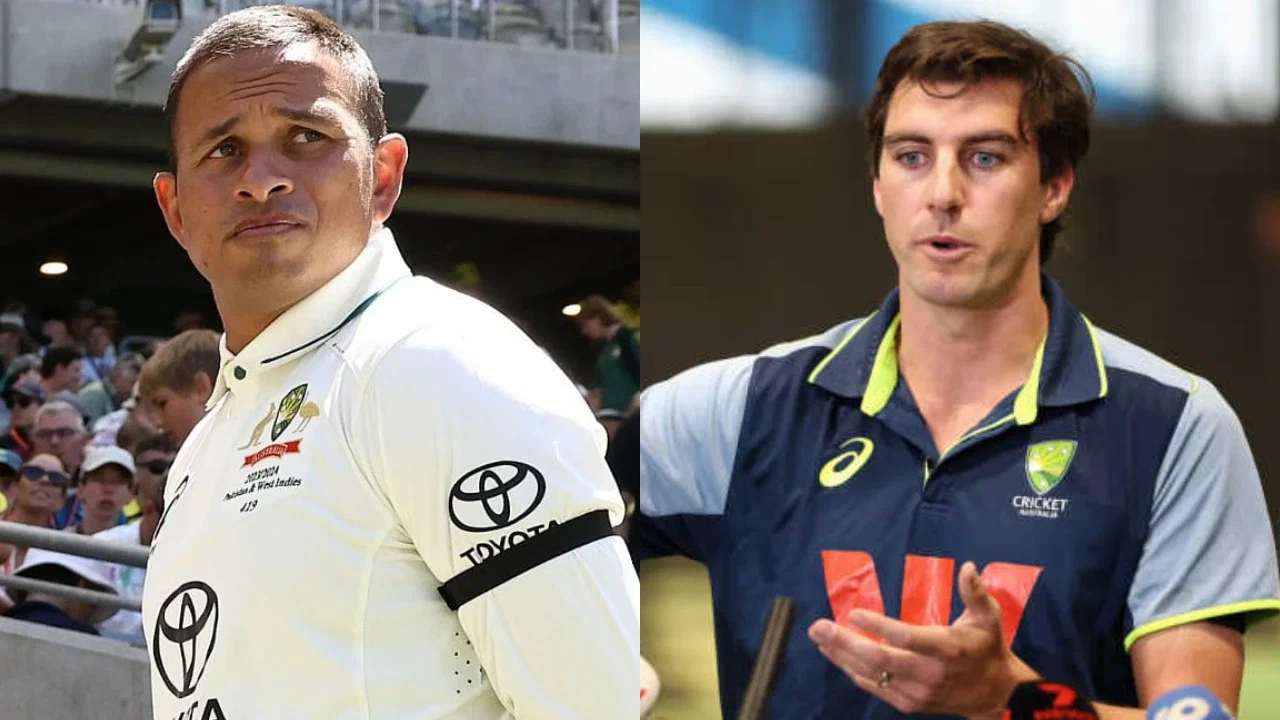
Usman Khawaja Stands by Sandpaper Scandal Claims as Pat Cummins Rejects His Account
Usman Khawaja has defended the account of Australia’s 2018 ball-tampering scandal in his autobiography, Sabr, saying the claims in the book are true after Test captain Pat Cummins publicly disputed his version of events. The exchange has renewed scrutiny of the infamous Cape Town Test and raised fresh questions about what Australia’s players knew during the match.
Speaking to reporters at Sydney Airport on Sunday, the former Australia opener declined to expand on the controversy. But he made clear that he was not backing away from what he had written. “What I wrote in my book is what I wrote in my book and it’s the truth,” Khawaja said. He then invoked Cameron Bancroft, the player caught on camera using sandpaper on the ball, before adding that he had nothing further to say.
A Book Reopens the Debate Over Cape Town
The controversy centres on the third Test between Australia and South Africa in Cape Town in March 2018. Television footage showed Bancroft attempting to alter the ball’s condition with a piece of sandpaper. The incident triggered a major crisis for Australian cricket and led to lengthy suspensions for three players.
Bancroft was banned for nine months, while then-captain Steve Smith and vice-captain David Warner each received 12-month suspensions. Smith stepped down from the captaincy, and Tim Paine subsequently took charge of the Australian side. The scandal prompted an investigation by Cricket Australia and became one of the most damaging episodes in the team’s recent history.
Khawaja’s autobiography has brought the episode back into public conversation by challenging the extent of players’ awareness and the way the investigation was handled. The book’s claims have attracted particular attention because they touch on the knowledge and roles of senior members of the team, including Cummins, who was part of the bowling attack in Cape Town alongside Mitchell Starc, Josh Hazlewood and Nathan Lyon.
Cummins Calls the Allegations “Complete and Utter Nonsense”
Cummins responded to Khawaja’s account during an hour-long press conference on Friday. He rejected the suggestion that the Australian team knew sandpaper was being taken onto the field, saying he had consistently denied having prior knowledge of the plan.
“When he says ‘we all knew’, if by that he means that we knew sandpaper was going out on the field, he is 100 per cent wrong,” Cummins said. He also strongly rejected the suggestion that he or other players helped organise a ball-tampering scheme, describing that allegation as “complete and utter nonsense.”
The captain’s response puts two former teammates’ accounts directly at odds. Khawaja has said his book reflects the truth as he understands it, while Cummins insists he did not know sandpaper was being used. The disagreement does not, on its own, establish what individual players knew at the time, but it has intensified calls for the details of the original inquiry to be examined again.
Khawaja Avoids Further Questions About Friendship and Leadership
Khawaja had cancelled scheduled media appearances after the reaction to Sabr, which was released the previous week. At the airport, he declined to answer questions about allegations of racism in the book, his claims concerning leadership decisions, or whether he believed Cummins had been aware of the plan. He also did not respond directly when asked about Cummins’ criticism.
In a separate interview with Sarah Ferguson on ABC’s 7.30, Khawaja was asked about the impact the dispute might have on his relationship with Cummins. He described the Australia captain as a good friend and said several former teammates, including Starc, Shaun Marsh and Mitchell Marsh, remained close to him.
“I’ve told my truth, and I’d give him my reasons,” Khawaja said, adding that he was not trying to start a “witch hunt.” His comments suggest he wants the claims to be taken seriously without turning the dispute into a personal campaign against current or former teammates.
Warner Questions Cricket Australia’s Investigation
Warner has also weighed in, supporting Khawaja’s account and questioning the scope of Cricket Australia’s original investigation. In a post on Instagram, the former vice-captain said that, as far as he knew, Hazlewood, Starc and Lyon were not interviewed as part of the 2018 inquiry.
That claim has added another layer to the debate. The investigation resulted in severe sanctions and public apologies, but questions about who was interviewed and how evidence was assessed may influence how the findings are viewed today. Warner’s statement is an allegation about the inquiry’s process; it does not by itself show what the three bowlers knew or whether their testimony would have changed its conclusions.
Why the Dispute Matters for Australian Cricket
The renewed disagreement is significant because the Cape Town scandal was not only about an attempt to alter the ball. It also prompted a wider review of team culture, leadership and accountability. The penalties imposed on Smith, Warner and Bancroft were highly visible, while the question of whether knowledge extended beyond those directly involved has remained a recurring point of discussion.
Khawaja’s book has reopened that discussion at a time when Australia’s current leadership is expected to protect the team’s credibility while addressing claims involving its past. Cummins’ firm denial and Khawaja’s refusal to retract his account mean the competing versions are now part of the public record, but further evidence would be needed to resolve them.
For readers following the latest cricket news, the central prediction is that the debate is unlikely to disappear quickly. The book, Cummins’ response and Warner’s criticism have created renewed pressure for clarity about the 2018 investigation. Whether that leads to additional documentation or simply another round of public statements remains uncertain. What is clear is that the Cape Town scandal continues to shape discussions about trust, leadership and transparency in Australian cricket.
Latest News

SA vs BAN Playing 11 Today, Live Streaming, Pitch & Weather: South Africa tour of Bangladesh 2026, 2nd Test

AUS vs ENG Playing 11 Today, Live Streaming, Pitch & Weather: England tour of Australia 2026, 2nd T20I

Blair Tickner ruled out of 2nd Test vs India, replacement named

Tim Paine and Justin Langer face fresh questions over Australia’s ball-tampering scandal

India tour of Bangladesh gets fresh hope as BCB confirms talks with BCCI

Tom Latham opens up on soft ball problem and saliva ban after draw against India

Ajinkya Rahane slams Tilak Varma for publicly criticising Shahbaz Ahmed after India A’s defeat

ICC to introduce IPL-style bat checks in international cricket

“Smiling Laughing doesn’t happen”: R Ashwin’s dig at India’s approach after draw vs New Zealand

“Not good enough for Test cricket”: Scott Styris, Sunil Gavaskar slam Wellington pitch

Dodda Ganesh declares India ‘out of WTC final race’ after Wellington Test draw

Ajinkya Rahane criticises Shubman Gill for abusing Akash Deep in 1st Test vs New Zealand

‘Why so many boundary riders?’ Dinesh Karthik questions Shubman Gill’s captaincy after Wellington Test

“I just want to enjoy my life”: Yash Dayal reflects on his return to cricket


