

“There are no unplayable deliveries”: Gautam Gambhir concerned after India’s 244-run defeat
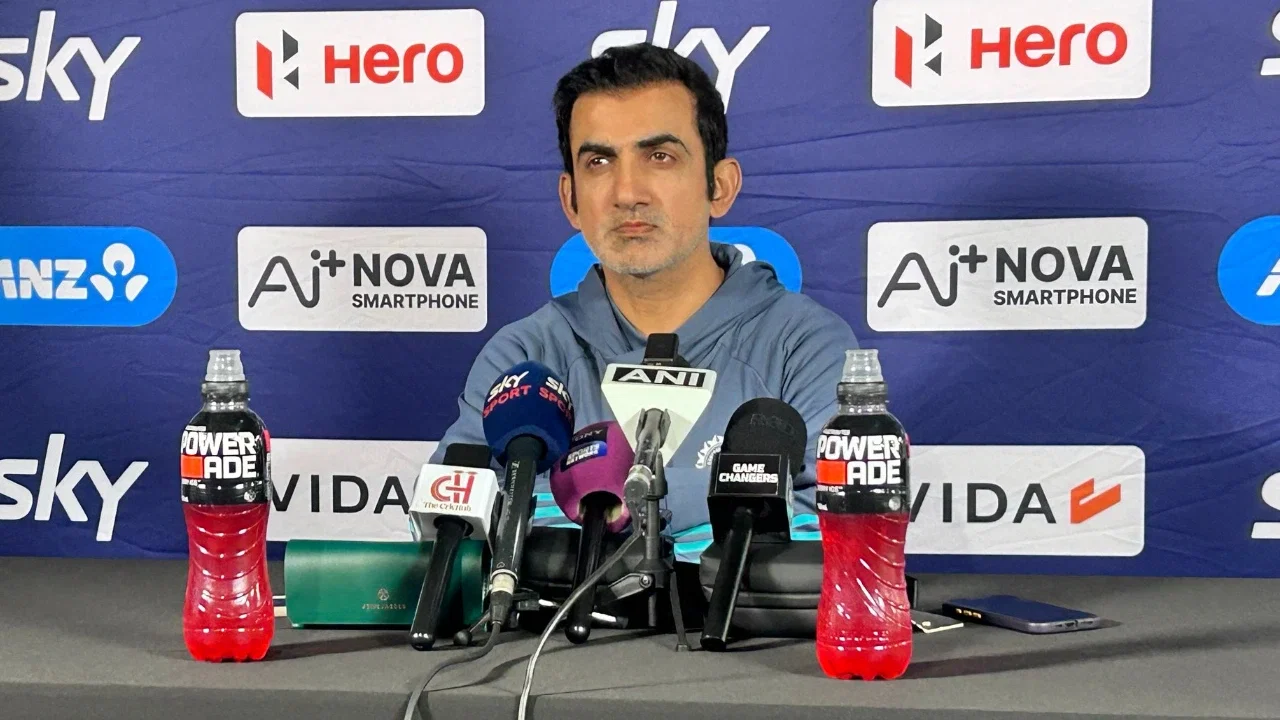
Gautam Gambhir Calls Out India’s Batting After 244-Run Defeat to New Zealand
India head coach Gautam Gambhir has described the team’s batting collapse as a serious concern after the national side suffered a 244-run defeat to New Zealand in the fourth ODI at Bay Oval, Mount Maunganui, on November 13. India were dismissed for just 89 while chasing a target of 334, making the result one of the heaviest defeats in the team’s ODI history by runs.
The scale of the loss has renewed questions about India’s ability to cope with accurate fast bowling, particularly when seam movement and disciplined lengths test the batters’ technique and decision-making. Gambhir acknowledged that New Zealand quick Matt Henry delivered an outstanding spell, but said difficult conditions could not be used to excuse the collapse. His message was direct: international batters must find a way to respond to challenging deliveries.
India’s Chase Unravels Against Matt Henry
India’s pursuit of 334 never gathered momentum. New Zealand’s bowlers struck regularly, leaving the visitors unable to build the partnerships needed to stay in the contest. Matt Henry led the attack with a remarkable six-wicket haul for 27 runs, exploiting the conditions with accuracy and control.
Gambhir said there should be no assumption that a delivery is impossible to play at international level. While he praised Henry’s performance, he stressed that India’s batters needed to find better methods to neutralise the threat.
“There are no unplayable deliveries in international cricket. Matt Henry bowled in good areas, but we should be able to negate that,” Gambhir said at the post-match press conference. He added that being bowled out for around 90 was naturally worrying, especially because the conditions offered a useful test ahead of future major tournaments.
The head coach also pointed to concerns from the previous match, when India lost seven wickets. Taken together, the results suggest that the issue may be broader than one poor innings. India’s batting group will need to examine how it handles sustained pressure, particularly when opponents maintain a consistent line and length rather than relying on dramatic movement.
Why New Zealand’s Lengths Caused Problems
Gambhir avoided offering an elaborate technical diagnosis, but identified the areas and lengths chosen by New Zealand’s seamers as central to India’s difficulties. He said there was not a great deal of deviation off the pitch; instead, the bowlers repeatedly landed the ball in positions that forced the batters to make difficult decisions.
India’s players, in his view, became too rooted to the crease. Against wobble-seam bowling, a batter may need to adjust footwork, judge the line early and make a clear decision about whether to play or leave. Remaining static can make even modest movement appear more threatening, particularly when the ball is directed towards the corridor outside off stump.
“There wasn’t a lot of deviation; it’s the job of the batter to negate movement. More than seam, areas and length created problems for us. We got stuck into the crease,” Gambhir said.
The comments underline a practical challenge for India: countering quality pace is not only about technical ability, but also about adaptability. Batters must be prepared to alter their approach to match conditions, take calculated risks and avoid allowing the opposition to dictate the rhythm of an innings.
Gambhir Backs India’s Bowlers Despite the Result
Although the batting performance dominated the post-match discussion, Gambhir defended India’s bowling unit. New Zealand were restricted to 233 runs, with Auqib Nabi, Gurnoor Brar and Axar Patel taking two wickets apiece. Arshdeep Singh and Kuldeep Yadav also claimed a wicket each.
The coach said he remained proud of every player who represents India and urged the team to value that responsibility. His support for the bowlers reflects the contrast between the two innings: India’s attack managed to take wickets and limit New Zealand’s total, but the batting side could not mount a meaningful response.
The result also highlights how quickly an ODI can swing. A target of 334 is demanding, but it can be pursued through partnerships, sensible risk management and a strong start. Once wickets fall in clusters, however, the required rate becomes less important than simply rebuilding the innings. India’s collapse left little opportunity to recover.
World Cup Preparation Adds Importance to the Defeat
Gambhir noted that the conditions were relevant to India’s preparation for the 2027 ICC Men’s Cricket World Cup in South Africa. While conditions at a future tournament will vary by venue and match day, the broader challenge is familiar: teams must be ready for pitches that reward seamers and punish hesitant batting.
For India, the defeat offers a significant learning opportunity. Coaches and players will likely review shot selection, movement at the crease, responses to the new ball and the way the middle order handles pressure. The goal will not simply be to avoid another low score, but to develop repeatable plans for facing disciplined pace attacks.
Any prediction about India’s future performance should be treated cautiously after one result. A single defeat does not define the team, but a collapse of this scale is difficult to dismiss—especially when concerns have appeared across consecutive games. The response in upcoming matches will offer a clearer indication of whether India can make the necessary adjustments.
What India Must Improve Next
The immediate priority is to turn Gambhir’s assessment into practical changes. India’s batters will need to show greater movement, make sharper decisions outside off stump and resist the urge to force scoring opportunities before settling in. Building partnerships could also help reduce pressure on individual players and prevent a difficult start from becoming a complete collapse.
New Zealand’s performance demonstrated the value of discipline: accurate lengths, patience and pressure can be just as effective as extravagant swing. India will need to meet that standard with composure and adaptability. The 244-run defeat was a painful setback, but it has also made the areas requiring attention unmistakably clear.
Latest News

SA vs BAN Playing 11 Today, Live Streaming, Pitch & Weather: South Africa tour of Bangladesh 2026, 2nd Test

AUS vs ENG Playing 11 Today, Live Streaming, Pitch & Weather: England tour of Australia 2026, 2nd T20I

Blair Tickner ruled out of 2nd Test vs India, replacement named

Tim Paine and Justin Langer face fresh questions over Australia’s ball-tampering scandal

India tour of Bangladesh gets fresh hope as BCB confirms talks with BCCI

Tom Latham opens up on soft ball problem and saliva ban after draw against India

Ajinkya Rahane slams Tilak Varma for publicly criticising Shahbaz Ahmed after India A’s defeat

ICC to introduce IPL-style bat checks in international cricket

“Smiling Laughing doesn’t happen”: R Ashwin’s dig at India’s approach after draw vs New Zealand

“Not good enough for Test cricket”: Scott Styris, Sunil Gavaskar slam Wellington pitch

Dodda Ganesh declares India ‘out of WTC final race’ after Wellington Test draw

Ajinkya Rahane criticises Shubman Gill for abusing Akash Deep in 1st Test vs New Zealand

‘Why so many boundary riders?’ Dinesh Karthik questions Shubman Gill’s captaincy after Wellington Test

“I just want to enjoy my life”: Yash Dayal reflects on his return to cricket


