

Tilak Varma breaks world record for most catches in a calendar year in T20Is
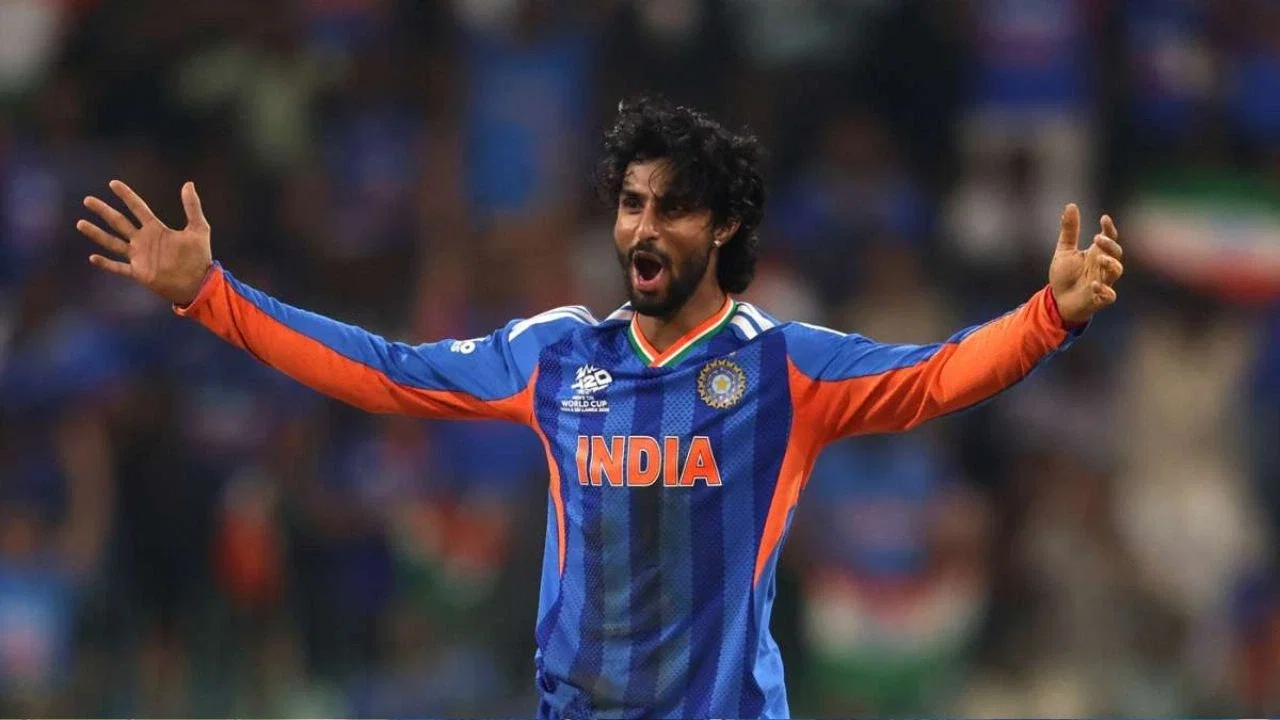
Tilak Varma Sets Men’s T20I Fielding Record in India’s Clash With New Zealand
India vice-captain Tilak Varma made history during the second T20I against New Zealand at Christchurch’s Hagley Oval, setting a new record for the most catches by an outfielder in a calendar year in men’s T20 internationals. His two early dismissals lifted his 2026 total to 26 catches in 32 matches, taking him past the previous benchmark of 25.
The milestone came as India’s bowlers made a strong start against the hosts. Varma first caught opener Tim Seifert off Arshdeep Singh, then held on to a chance to dismiss Daryl Mitchell from Bhuvneshwar Kumar’s bowling. Both catches came in the opening overs, helping India put New Zealand under immediate pressure.
A Record-Breaking Year in the Field
Before Varma’s achievement, Indonesia’s Danilson Hawoe held the calendar-year record, having taken 25 catches in 41 men’s T20Is in 2025. Varma moved ahead of that mark in fewer matches, underscoring not only his consistency but also the importance of his role in India’s fielding unit.
In T20 cricket, where batters often look to attack from the outset, a sharp catch can change the direction of an innings in seconds. Varma’s record is therefore more than a personal statistic: his work in the outfield has repeatedly helped India turn pressure into wickets. His safe hands and ability to cover ground have made him a valuable presence in a format where every missed opportunity can be costly.
Varma’s catches across the 2026 schedule
Varma missed India’s five-match home T20I series against New Zealand in January because of an injury. After returning to fitness, he contributed in the field during the T20 World Cup. He took two catches in India’s opening match against the United States at Wankhede Stadium, followed by one each against Namibia, South Africa, Zimbabwe and England.
He added two more catches in the World Cup final against New Zealand in Ahmedabad on March 8. One of those came when he dismissed Jacob Duffy, bringing the tournament’s final wicket and India’s title-winning campaign to a close.
Varma continued his run of strong fielding performances after the tournament. He claimed three catches in the second away T20I against Afghanistan in Delhi on September 15 and caught Finn Allen near the boundary in the opening match of the ongoing New Zealand series. His latest two catches in Christchurch pushed him to the top of the calendar-year list.
New Zealand Recover After Early Wickets
India captain Shreyas Iyer won the toss and chose to bowl on the same Hagley Oval pitch used for the series opener. The decision initially appeared to pay off. Arshdeep removed Seifert for seven, Bhuvneshwar sent Mitchell back for six, and Prince Yadav bowled Finn Allen for 16 in the final over of the fielding restrictions.
At 41 for three after 5.2 overs, New Zealand needed a substantial partnership to rebuild. Glenn Phillips and Bevon Jacobs supplied it, combining for a crucial 116-run stand for the fourth wicket. Their partnership steadied the innings, restored momentum and gave the home side a platform for a competitive finish.
Phillips led the recovery with an aggressive 70 from 43 balls, balancing calculated stroke play with timely boundary-hitting. Jacobs provided valuable support, scoring 50 off 40 deliveries. Together, they changed the tone of the innings after India’s quick start and ensured the hosts had enough runs to challenge the visitors.
Michael Bracewell added late boundaries as New Zealand closed on 180 for five. Arshdeep was India’s leading wicket-taker with two for 33, while Bhuvneshwar, Prince and Nitish Kumar Reddy claimed one wicket each. Although India struck early, Phillips and Jacobs’ partnership prevented the innings from slipping away.
Team Changes and Match Prediction Context
India made two changes to their lineup. Vaibhav Sooryavanshi came in for the injured Ishan Kishan and moved into the number-three position, while Prince replaced Mayank Yadav. New Zealand made one change to their bowling attack, bringing in Duffy for Adam Milne.
Those adjustments added another layer of interest to the match. India’s early breakthroughs suggested their pace attack could exploit the conditions, while New Zealand’s recovery highlighted the value of a settled partnership in a high-scoring T20 contest. With 180 on the board, the match prediction depended on how effectively India’s top order could handle the pressure of a substantial chase—and whether New Zealand’s bowlers could make early inroads of their own.
For India, Varma’s record offered a notable highlight in a match shaped by both disciplined bowling and a determined New Zealand response. His catches helped create the early collapse, but Phillips and Jacobs ensured the hosts still posted a challenging total. The contrast captured the volatility of T20 cricket: fielding brilliance can create opportunities, yet one major partnership can quickly reshape the contest.
Why the Record Matters for India
Varma’s achievement reflects the growing emphasis on all-round contribution in modern T20 cricket. Players are expected to make an impact with the bat, contribute with the ball where possible and remain alert in the field. A record 26 catches in a calendar year shows how consistently Varma has delivered in one of the game’s most demanding roles.
As India continue their series against New Zealand, his fielding will remain a key part of their plans. The record also gives fans another measure of his influence: beyond runs and match-winning performances, Varma has become one of the most reliable outfielders in men’s T20Is this year. His Christchurch milestone is a personal landmark—and a reminder that in the shortest format, a pair of well-timed catches can matter just as much as a big score.
Latest News

SA vs BAN Playing 11 Today, Live Streaming, Pitch & Weather: South Africa tour of Bangladesh 2026, 2nd Test

AUS vs ENG Playing 11 Today, Live Streaming, Pitch & Weather: England tour of Australia 2026, 2nd T20I

Blair Tickner ruled out of 2nd Test vs India, replacement named

Tim Paine and Justin Langer face fresh questions over Australia’s ball-tampering scandal

India tour of Bangladesh gets fresh hope as BCB confirms talks with BCCI

Tom Latham opens up on soft ball problem and saliva ban after draw against India

Ajinkya Rahane slams Tilak Varma for publicly criticising Shahbaz Ahmed after India A’s defeat

ICC to introduce IPL-style bat checks in international cricket

“Smiling Laughing doesn’t happen”: R Ashwin’s dig at India’s approach after draw vs New Zealand

“Not good enough for Test cricket”: Scott Styris, Sunil Gavaskar slam Wellington pitch

Dodda Ganesh declares India ‘out of WTC final race’ after Wellington Test draw

Ajinkya Rahane criticises Shubman Gill for abusing Akash Deep in 1st Test vs New Zealand

‘Why so many boundary riders?’ Dinesh Karthik questions Shubman Gill’s captaincy after Wellington Test

“I just want to enjoy my life”: Yash Dayal reflects on his return to cricket


