

Top 3 worst all-cash trades in IPL history, ft. RCB
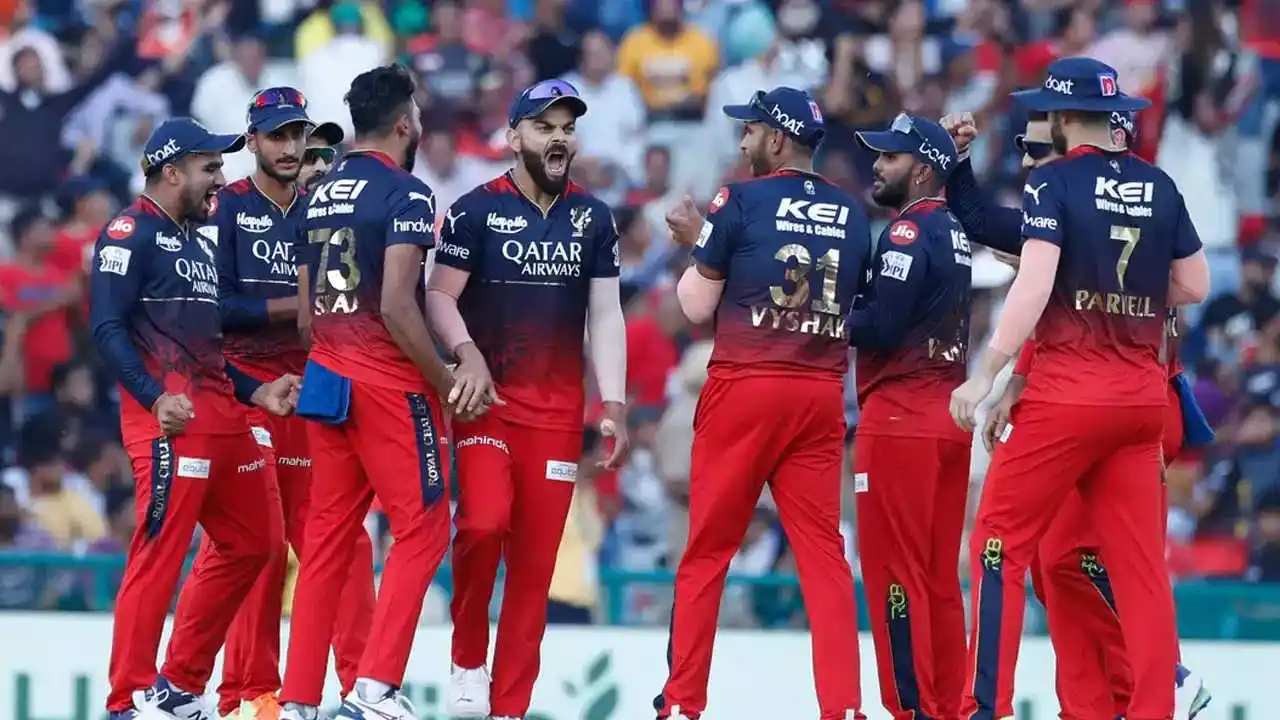
Three IPL All-Cash Trades That Backfired on the Franchises
In the Indian Premier League, an all-cash trade can be a practical way for a franchise to reshape its squad. By transferring a player for a fee rather than swapping him for another cricketer, teams can free up purse space, balance their roster and make room for new signings. But a move that looks sensible on paper can quickly become a costly mistake—especially when the player thrives at a rival club.
With franchises preparing for the November 17 retention deadline and the IPL 2027 mini-auction scheduled for December 16 in Goa, past trades offer a timely reminder that squad decisions involve more than salary calculations. Form, role, conditions and team fit all matter. Here are three all-cash deals that proved particularly painful for the teams that let the players go.
1. Quinton de Kock: Royal Challengers Bengaluru to Mumbai Indians (2019)
Royal Challengers Bengaluru’s decision to trade Quinton de Kock to Mumbai Indians ahead of the 2019 season stands out as one of the most expensive miscalculations in IPL trade history. RCB were looking to reshape their batting order and believed wicketkeeper-batter Parthiv Patel could fill the opening role. They also wanted room in their budget to bring in Marcus Stoinis and Shimron Hetmyer.
De Kock had scored 201 runs for RCB in 2018 at a strike rate of 124.07. The franchise reportedly considered his ₹2.8 crore salary difficult to justify based on that season’s return. Yet the South African soon showed why a single campaign may not tell the full story of a player’s value.
At Mumbai, de Kock became a dependable opening batter and a key part of the team’s title-winning campaigns. He made 529 runs at a strike rate of 132.91 in 2019, then followed that with 503 runs at a strike rate of 140.50 in 2020. His ability to attack in the powerplay while providing stability at the top gave Mumbai a consistent platform.
The contrast was especially striking because Hetmyer, one of the players RCB had made room for, scored only 90 runs in five matches in 2019 before being dropped. That does not mean the signing itself was without merit, but the outcome sharpened the sense of what RCB had surrendered. Mumbai gained a productive opener who contributed to consecutive IPL titles, while RCB were left searching for the same kind of reliability at the top.
Why the trade hurt RCB
De Kock’s case highlights a familiar auction and trade challenge: a player’s value depends not only on recent statistics, but also on how well his role suits the new team. Mumbai gave him a clear position and the confidence to build an innings, turning a promising batter into one of the league’s most consistent openers.
2. Harshal Patel and Daniel Sams: Delhi Capitals to Royal Challengers Bengaluru (2021)
Delhi Capitals had a deep pace-bowling group going into the 2021 season, with Kagiso Rabada, Anrich Nortje, Ishant Sharma and Avesh Khan among their options. Harshal Patel, meanwhile, had struggled to secure regular playing time. He appeared in just five matches in 2020 and took three wickets at an average of 46.33.
Delhi traded Harshal and Australian all-rounder Daniel Sams to Royal Challengers Bengaluru in an all-cash deal, freeing up space and giving both players an opportunity elsewhere. Sams did not make a major impact for RCB, but Harshal’s transformation made the deal a significant talking point.
In 2021, Harshal produced a remarkable season, taking 32 wickets in 15 matches at an average of 14.34. He finished as the tournament’s leading wicket-taker, claimed the Purple Cap and was named the tournament’s Most Valuable Player. His variations—particularly his slower deliveries—made him difficult to line up in the closing overs, when batters were trying to accelerate.
One of the season’s standout moments came against Mumbai Indians, when Harshal claimed 5/27. The performance underlined his ability to deliver in high-pressure situations and showed how a bowler who had been a fringe option at Delhi could become a central figure in another team’s attack.
A change of role, a change in results
Harshal’s success illustrates how opportunity can alter a player’s impact. Regular selection and a defined death-bowling role allowed him to use his slower balls and variations consistently. For Delhi, the trade helped manage a crowded bowling group; for RCB, it delivered a Purple Cap-winning season. In hindsight, the deal was a reminder that depth on paper does not always make a player expendable.
3. Trent Boult: Delhi Capitals to Mumbai Indians (2020)
Delhi Capitals entered the 2020 season with a formidable overseas pace attack. Kagiso Rabada led the unit, while Anrich Nortje joined the squad as a replacement. With several fast-bowling options available, Delhi traded New Zealand left-arm quick Trent Boult to Mumbai Indians in an all-cash deal.
Mumbai had a clear need: a quality left-arm fast bowler who could complement Jasprit Bumrah. Boult proved to be an ideal fit. After taking five wickets in five matches for Delhi in 2019, he enjoyed a superb campaign in the UAE, claiming 25 wickets in 15 matches at an economy rate of 7.97.
His influence was especially clear in the powerplay. Boult took 16 wickets in the first six overs—the most by any bowler in the tournament—and formed a formidable new-ball partnership with Bumrah. The pair gave Mumbai early breakthroughs while allowing the team to apply pressure before the middle overs.
Boult also made his presence felt against his former side. Mumbai beat Delhi in all four of their meetings during the season, and Boult played a decisive role in the final. He finished with 3/30, dismissing Marcus Stoinis with the first ball of the innings before removing Ajinkya Rahane. Mumbai went on to win the final and secure a fifth IPL title, while Delhi fell short of their first championship. Boult was named Player of the Match.
Why Boult was such a strong fit
The trade was not simply about adding another fast bowler. Boult brought a left-arm angle, early movement and the ability to attack from the opening over—qualities that complemented Bumrah rather than duplicating his role. Mumbai’s decision to pair the two created one of the competition’s most effective opening-bowling combinations.
What these IPL trades can teach franchises
These deals show why all-cash trades are difficult to judge in isolation. A franchise may release a player because of purse constraints, squad depth or a specific recruitment plan, but the receiving team may offer a more suitable role, better conditions or a clearer path to regular selection. The player’s performance can change dramatically as a result.
For teams approaching a retention deadline or mini-auction, the broader lesson is to assess more than recent numbers and salary value. Franchises must consider how a player’s skills fit their likely playing XI, whether he fills a scarce role and how he might perform in the conditions expected during the season. A trade can solve an immediate budget problem—but, as these examples show, it can also strengthen a rival’s title challenge.
Any prediction about future IPL trades should therefore account for both sides of the decision: what a team gains by freeing up space and what it risks losing by allowing a player to find the right environment elsewhere.
Latest News

SA vs BAN Playing 11 Today, Live Streaming, Pitch & Weather: South Africa tour of Bangladesh 2026, 2nd Test

AUS vs ENG Playing 11 Today, Live Streaming, Pitch & Weather: England tour of Australia 2026, 2nd T20I

Blair Tickner ruled out of 2nd Test vs India, replacement named

Tim Paine and Justin Langer face fresh questions over Australia’s ball-tampering scandal

India tour of Bangladesh gets fresh hope as BCB confirms talks with BCCI

Tom Latham opens up on soft ball problem and saliva ban after draw against India

Ajinkya Rahane slams Tilak Varma for publicly criticising Shahbaz Ahmed after India A’s defeat

ICC to introduce IPL-style bat checks in international cricket

“Smiling Laughing doesn’t happen”: R Ashwin’s dig at India’s approach after draw vs New Zealand

“Not good enough for Test cricket”: Scott Styris, Sunil Gavaskar slam Wellington pitch

Dodda Ganesh declares India ‘out of WTC final race’ after Wellington Test draw

Ajinkya Rahane criticises Shubman Gill for abusing Akash Deep in 1st Test vs New Zealand

‘Why so many boundary riders?’ Dinesh Karthik questions Shubman Gill’s captaincy after Wellington Test

“I just want to enjoy my life”: Yash Dayal reflects on his return to cricket


