Virat Kohli mentioned by DGMO in Indian Armed Forces’ Operation Sindoor briefing
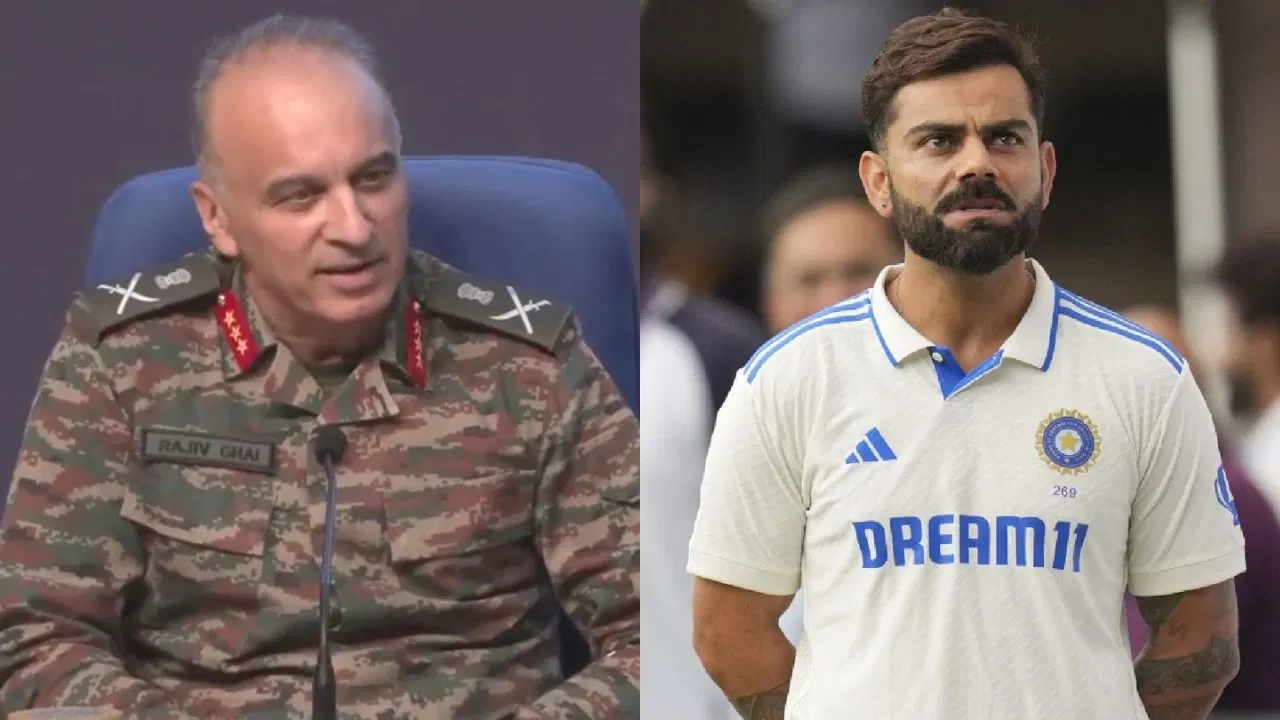
**Lieutenant General Rajiv Ghai Praises Virat Kohli’s Test Retirement**
At a recent press conference in New Delhi, Lieutenant General Rajiv Ghai, Director General of Military Operations (DGMO) of the Indian Army, commended Team India’s star batter, Virat Kohli, for his retirement from Test cricket. Drawing parallels between cricket and India’s air defense capabilities, Rajiv Ghai used Kohli’s name as a reference during the briefing on Operation Sindoor.
**A Legendary Career Comes to an End**
Virat Kohli bid farewell to Test cricket after a remarkable 14-year career in the longest format of the game. Known for his exceptional batting skills and leadership qualities, Kohli has left a lasting impact on the world of cricket. With 123 matches under his belt, Kohli scored an impressive 9,230 runs at an average of 46.85, including 30 centuries and 31 fifties. Additionally, he led India in 68 Tests, securing 40 victories with a remarkable win percentage of 58.80%.
**Rajiv Ghai’s Admiration for Kohli**
During the press conference, Rajiv Ghai expressed his admiration for Virat Kohli, stating, “Today, perhaps we should also talk about cricket, as I noticed that Virat Kohli has retired from Test cricket. Like many Indians, he is my favourite cricketer as well.” Ghai’s comments highlighted the widespread admiration for Kohli’s achievements on and off the field.
**Drawing Parallels with Cricket Greats**
Rajiv Ghai went on to draw a comparison between India’s air defense systems and the dominant pace attack of Australian cricketers Dennis Lillee and Jeff Thomson during the 1974-75 Ashes series. Reflecting on the Australians’ prowess on the cricket field, Ghai emphasized the resilience and effectiveness of India’s multi-layered defense grid.
**Lessons from the Ashes Series**
The 1974-75 Ashes series is remembered for the fearsome duo of Dennis Lillee and Jeff Thomson, whose aggressive pace bowling tactics left England’s batsmen struggling to cope. With Thomson claiming 33 wickets at an average of 17.93 and Lillee taking 25 wickets at 23.84, the Australian pair set a new standard for fast bowling in Test cricket. Their intimidating approach not only dominated the series but also revolutionized the game’s strategy.
**Operation Sindoor and India’s Defense Strategy**
In addition to discussing cricket, Rajiv Ghai led a special press briefing on India’s response to airstrikes from Pakistan, alongside Vice Admiral AN Pramod and Air Marshal AK Bharti. The outcomes of Operation Sindoor were shared, emphasizing the strength and preparedness of India’s defense forces in the face of external threats.
In conclusion, Lieutenant General Rajiv Ghai’s tribute to Virat Kohli and the insightful comparisons drawn between cricket legends and military strategies shed light on the shared values of excellence, resilience, and determination in both fields. Virat Kohli’s retirement marks the end of an era in Indian cricket, leaving a legacy that will inspire generations to come.
**The Legacy of Virat Kohli in Indian Cricket**
Virat Kohli’s retirement from Test cricket not only marks the end of an era but also highlights his significant contributions to Indian cricket. His exceptional batting prowess and aggressive leadership style have set new standards for the game. Kohli’s ability to perform under pressure and lead the team from the front have earned him a place among the cricketing greats.
Throughout his career, Kohli has faced numerous challenges and obstacles but has always emerged stronger. His relentless pursuit of excellence and unwavering determination have inspired millions of fans and aspiring cricketers around the world. Kohli’s legacy extends beyond his statistics on the field; it encompasses his passion for the game, his commitment to fitness, and his never-say-die attitude.
**The Evolution of Test Cricket**
As Test cricket bids farewell to one of its modern-day legends, it is essential to reflect on the evolution of the longest format of the game. Test cricket is often considered the ultimate test of a cricketer’s skill, temperament, and endurance. Over the years, the format has seen significant changes, including the introduction of day-night Tests, the implementation of the World Test Championship, and the rise of new cricketing powerhouses.
Despite the growing popularity of limited-overs cricket formats like T20, Test cricket remains the pinnacle of the sport. The strategic battles, the ebb and flow of the game, and the test of mental strength make Test matches a unique and captivating experience for players and fans alike. As cricket continues to evolve, the legacy of players like Virat Kohli serves as a reminder of the timeless beauty of Test cricket.
**The Intersection of Sports and Military Strategy**
Lieutenant General Rajiv Ghai’s comparison between cricket and military strategies highlights the parallels between sports and warfare. Just as cricket requires strategic planning, teamwork, and execution, military operations demand discipline, coordination, and resilience. By drawing on examples from cricket history, Ghai underscored the importance of preparation, adaptability, and unity in achieving success in any field.
The lessons learned from cricket legends like Dennis Lillee and Jeff Thomson can be applied to military tactics, emphasizing the need for innovation, aggression, and calculated risk-taking. As India faces complex security challenges, the principles of leadership, teamwork, and strategic thinking exemplified by Virat Kohli and other sports icons can inspire the country’s defense forces to rise to the occasion.
**Inspiring a New Generation**
Virat Kohli’s retirement may signal the end of an era, but it also paves the way for a new generation of cricketers to make their mark on the game. As young talents emerge to fill the void left by Kohli, they will carry forward his legacy of excellence, passion, and commitment. The lessons learned from Kohli’s career – the importance of hard work, self-belief, and sportsmanship – will continue to resonate with aspiring cricketers looking to make their mark on the international stage.
In conclusion, Lieutenant General Rajiv Ghai’s tribute to Virat Kohli and the parallels drawn between cricket and military strategy offer valuable insights into the shared values of perseverance, leadership, and teamwork. As India navigates the challenges of the modern world, the spirit of sportsmanship and the legacy of cricketing legends like Kohli will serve as guiding lights for the nation’s future endeavors. Virat Kohli’s retirement may mark the end of a chapter, but it also opens up a new narrative of hope, determination, and success for the generations to come.
Latest News

Top 10 highest run-chases in T20 cricket history, ft. West Indies’ Ranchi win vs India

Aaryavir Sehwag and Anvay Dravid set to make headlines at U19 Asia Cup 2026

Longest ducks in Test cricket history ft. Nic Maddinson, Shoaib Akhtar

ECB to offer 39 central contracts to England players after Ben Stokes, Mark Wood’s retirement

Steve Smith surpasses Steve Waugh in all-time Test run-scorers’ list

Shane Watson identifies Gautam Gambhir’s biggest problem as India struggle for consistency

Is Bhuvneshwar Kumar in India’s 2027 World Cup plans? Ajinkya Rahane makes revelation

BCCI’s big ₹127 Crore move after injury crisis raises concerns over Team India

Parthiv Patel reveals RCB ignored his Jasprit Bumrah recommendation in IPL 2014 Auction

“Never spoke ill of any faith”: Irfan Pathan hits back at fake news using his name

Nic Maddinson bags 33-ball duck on Test comeback, disappoints George Bailey

Imran Tahir predicts 2027 ICC ODI World Cup Semi-Finalists, snubs India for title

Australia create unwanted history with first all-30-plus Test XI

Ravindra Jadeja returns to Ranji Trophy as Saurashtra announce squad