

Wasim Akram reacts to Sandpapergate drama, questions Pat Cummins’ denial
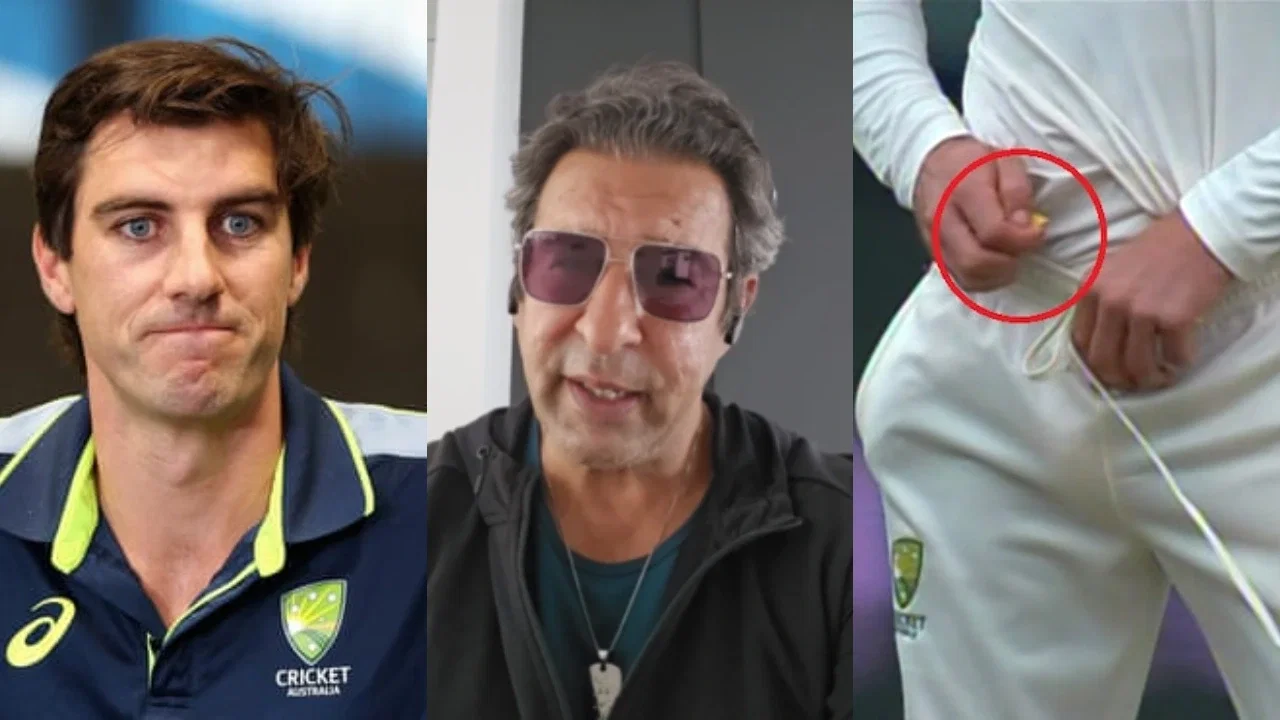
Wasim Akram Questions Pat Cummins’ Sandpapergate Claim as 2018 Controversy Returns
Former Pakistan captain Wasim Akram has cast doubt on Pat Cummins’ claim that he did not know about the sandpaper used to alter the ball during the 2018 Cape Town Test. Speaking from his experience as a fast bowler, Akram argued that the marks left by sandpaper look noticeably different from the wear a cricket ball picks up during normal play—and that an experienced bowler would be likely to recognize the difference.
Akram was careful not to accuse Cummins directly. He described the Australia captain as a close friend and praised his leadership, while stressing that his comments were a personal assessment rather than a verdict on the case. His remarks have nevertheless added fresh attention to the Sandpapergate controversy, which has resurfaced amid renewed disagreement over what members of the Australian team knew in 2018.
Why Akram Says Sandpaper Marks Stand Out
Fast bowlers handle the ball throughout an innings and closely monitor its condition. They know how it changes as it becomes older: one side may be polished to encourage swing, while the other naturally roughens after contact with the pitch and outfield. Those changes are part of the game, and bowlers often use ordinary techniques—such as a one-bounce throw—to maintain or manage the ball’s condition within the rules.
Akram’s central point is that deliberate abrasion with sandpaper produces a different kind of damage. In comments shared in a video on X, he said that the scratches caused by sandpaper are distinct from those created by routine play. In his view, a bowler who regularly studies the ball could notice that something was unusual.
“As a bowler, when the cricket ball comes in my hand, whether it’s the fifth over, the 10th over, or the 50th over, you look after the ball,” Akram said. He explained that natural roughness and sandpaper marks should not be treated as the same thing, adding that his opinion came from years of handling cricket balls at the highest level.
Akram’s Suggested Way to Compare the Marks
To illustrate his point, Akram suggested comparing a ball that has been rubbed with sandpaper against one that has developed wear through normal cricket. His broader observation is that ball condition is not merely a technical detail for specialist bowlers: it can influence swing, control and a team’s bowling plans, making changes to the surface potentially significant.
Akram also emphasized that he was not taking sides in the dispute. He spoke positively about Australian cricket’s reputation for competitiveness and honesty, but said the renewed debate has placed the team and the wider cricket community under pressure. He hopes the matter can be resolved rather than repeatedly reopening old divisions.
What Pat Cummins Has Said
Akram’s comments came a day after Cummins addressed the controversy in a lengthy press conference lasting around 68 minutes. The Australia captain rejected claims made by former teammate Usman Khawaja about the team’s knowledge of the plan to tamper with the ball during the 2018 Test in Cape Town.
Cummins and Mitchell Starc have disputed Khawaja’s account. David Warner, by contrast, has supported Khawaja’s claims, bringing new public disagreement among figures connected to the team. The competing statements have again raised questions about whether the ball-tampering incident was known only to a small group or whether more players understood what was happening.
Akram’s comments do not establish what any individual player knew at the time. Rather, they add a technical perspective to a debate that has largely focused on recollections and conflicting accounts. His assessment is based on how a seasoned fast bowler might interpret the ball’s surface—not on new evidence about the events in Cape Town.
A Brief Recap of the 2018 Sandpapergate Scandal
Sandpapergate erupted during Australia’s Test series in South Africa in 2018. David Warner, then captain Steve Smith and Cameron Bancroft were found guilty of involvement in ball tampering after television footage showed Bancroft attempting to alter the ball’s condition using sandpaper.
The incident triggered major disciplinary consequences and a prolonged debate about leadership, responsibility and the culture of the Australian team. Australia’s bowlers—including Cummins, Starc, Josh Hazlewood and Nathan Lyon—later said they had not known about the sandpaper plan and learned of the incident after seeing the television coverage.
The controversy returned to the headlines following the publication of Khawaja’s autobiography, in which he claimed the wider team knew about the plan. That account has been challenged by Cummins and Starc, while Warner has backed Khawaja’s version. The disagreement has left fans weighing different recollections from former teammates, with no single account accepted by everyone involved.
Why the Debate Matters to Cricket Fans
Ball tampering is a serious issue because the ball’s condition can affect how it behaves in the air and off the pitch. Even small changes may matter in a Test match, particularly when bowlers are trying to produce reverse swing. At the same time, a ball naturally becomes scuffed and uneven during play, which is why distinguishing legal wear from deliberate damage has long been a technical and disciplinary challenge for cricket authorities.
That distinction is at the heart of Akram’s argument. His prediction—or, more accurately, his assessment as a fast bowler—is that an experienced player would be able to spot sandpaper damage because it differs from ordinary scratches. Whether that view changes minds about Cummins’ account is another matter: recognizing a mark and knowing how it was made are not necessarily the same thing.
For now, Sandpapergate remains a dispute shaped by conflicting testimony, old footage and the memories of people involved. Akram has added a respected voice from the bowling world, but the renewed discussion has not settled the central question of who knew what in 2018. As the debate continues, cricket supporters will be watching for further responses—and for any evidence that can clarify a scandal that has followed Australian cricket for years.
Latest News

SA vs BAN Playing 11 Today, Live Streaming, Pitch & Weather: South Africa tour of Bangladesh 2026, 2nd Test

AUS vs ENG Playing 11 Today, Live Streaming, Pitch & Weather: England tour of Australia 2026, 2nd T20I

Blair Tickner ruled out of 2nd Test vs India, replacement named

Tim Paine and Justin Langer face fresh questions over Australia’s ball-tampering scandal

India tour of Bangladesh gets fresh hope as BCB confirms talks with BCCI

Tom Latham opens up on soft ball problem and saliva ban after draw against India

Ajinkya Rahane slams Tilak Varma for publicly criticising Shahbaz Ahmed after India A’s defeat

ICC to introduce IPL-style bat checks in international cricket

“Smiling Laughing doesn’t happen”: R Ashwin’s dig at India’s approach after draw vs New Zealand

“Not good enough for Test cricket”: Scott Styris, Sunil Gavaskar slam Wellington pitch

Dodda Ganesh declares India ‘out of WTC final race’ after Wellington Test draw

Ajinkya Rahane criticises Shubman Gill for abusing Akash Deep in 1st Test vs New Zealand

‘Why so many boundary riders?’ Dinesh Karthik questions Shubman Gill’s captaincy after Wellington Test

“I just want to enjoy my life”: Yash Dayal reflects on his return to cricket


