

Watch: DRS denies Hasan Mahmud a hat-trick as Joshua Bishop survives in Sylhet
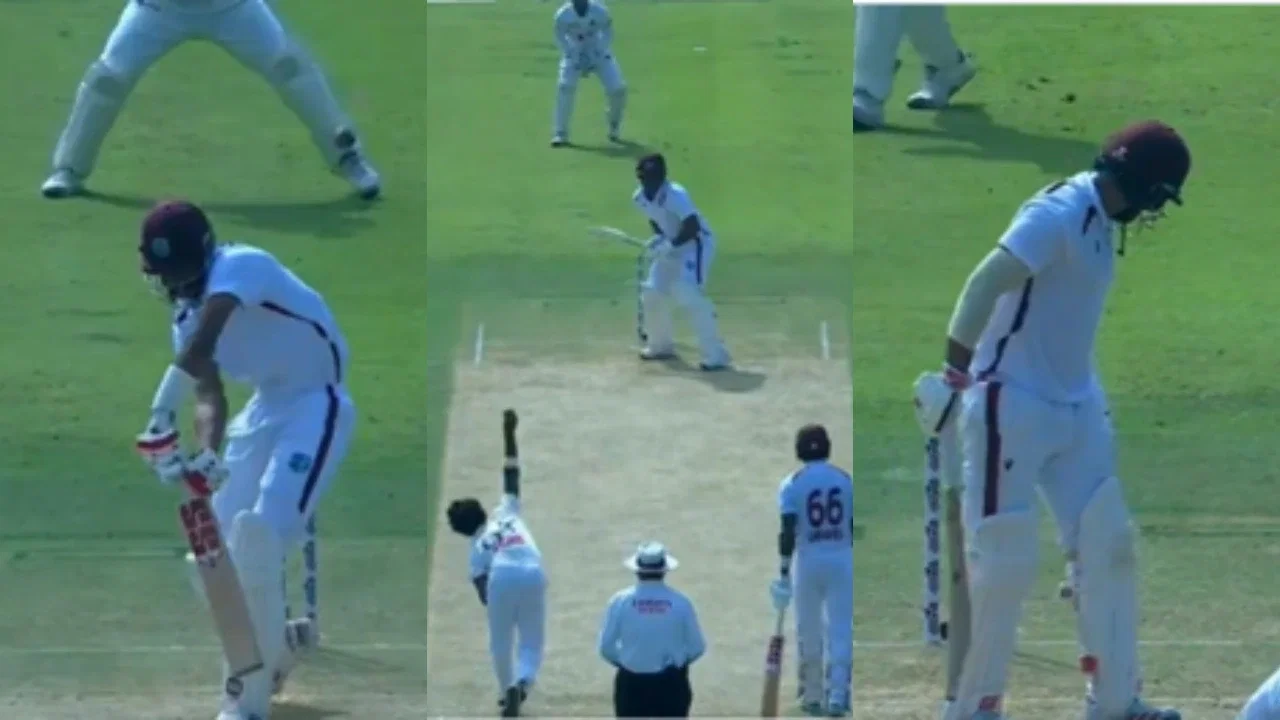
Hasan Mahmud’s Six-Wicket Spell Puts Bangladesh in Control—But DRS Denies a Hat-Trick
Bangladesh fast bowler Hasan Mahmud produced one of the defining spells of the second Test against the West Indies, claiming six wickets and coming within a successful review of a hat-trick on Day 2 at Sylhet International Cricket Stadium. His dramatic burst helped bowl the visitors out for 356, giving Bangladesh a major opportunity to build pressure in the match.
The moment arrived late in the West Indies innings, when Mahmud dismissed Amir Jangoo and captain Roston Chase with consecutive deliveries. With Joshua Bishop next at the crease, the Bangladesh seamer appeared to have completed a hat-trick after an lbw decision. But Bishop called for a DRS review, and UltraEdge revealed a faint inside edge. The on-field decision was overturned, leaving Mahmud just short of a place in the record books.
Mahmud breaks through with the new ball
Mahmud’s burst began in the 81st over, when he found a way past Jangoo after the batter had played a composed and determined innings. Bowling with the new ball, Mahmud delivered a back-of-a-length ball outside off stump. It pitched and moved sharply back into the right-hander, who was unable to adjust in time. The ball struck the top of middle and off stump, ending Jangoo’s stay at the crease.
Jangoo departed for 133 from 212 balls, having struck 13 fours and two sixes. His innings had been central to the West Indies’ recovery after an early collapse, and his dismissal was a significant breakthrough for Bangladesh. It also showcased Mahmud’s ability to make the most of movement off the pitch rather than relying solely on pace.
The next ball brought another major moment. West Indies captain Roston Chase attempted to defend a good-length delivery, but Mahmud again found sharp inward movement. The ball took the inside edge and carried through to wicketkeeper Litton Das, who completed the catch. Chase was out for a golden duck, and Mahmud suddenly had a hat-trick opportunity.
Joshua Bishop survives after a successful review
All eyes turned to Joshua Bishop as he faced the final delivery of the over. Mahmud maintained the same attacking approach, sending down a ball that moved into the batter. Bishop appeared to play down the wrong line and was struck on the pads. The umpire raised his finger, seemingly giving Mahmud a hat-trick.
Bishop, however, immediately opted for a review. The replays showed a clear spike on UltraEdge as the ball passed the bat, indicating that he had edged it before it hit his pads. The third umpire overturned the decision, and Bishop stayed at the crease.
For Mahmud, it was a near miss rather than a completed hat-trick—but the over still changed the atmosphere of the innings. Two wickets in two balls had put the West Indies under sudden pressure, while the review added a tense, technology-driven twist to the contest. In modern Test cricket, DRS can be decisive not only in determining an individual dismissal but also in shaping the momentum of a session.
West Indies bowled out for 356 after a strong recovery
The West Indies began Day 2 at 235 for four, having recovered from an early position of 27 for three. A valuable partnership between debutant Wickham and Jangoo helped steady the innings and give the visitors a platform. Jangoo’s century was the standout contribution, but the lower order also made Bangladesh work for the final wickets.
The last-wicket pair added 33 runs from 67 deliveries, delaying the end of the innings and pushing the total to 356. Mahmud’s six-wicket haul ultimately provided Bangladesh with the breakthrough they needed. Receiving the match ball as a souvenir was fitting recognition of a performance that combined control, movement and timely aggression.
While the near-hat-trick supplied the most dramatic highlight, Mahmud’s overall figures were just as important. Taking six wickets in a Test innings is a substantial achievement, particularly after the opposition had rebuilt from early setbacks. His spell gave Bangladesh a chance to turn a challenging situation into a competitive one.
Bangladesh face a demanding response
Bangladesh now have the task of responding to 356, with conditions likely to remain a factor. The fresh ball that helped Mahmud could also offer assistance to the West Indies pace attack, making the opening stages of Bangladesh’s innings especially important. A solid start from the top order would help the hosts avoid early pressure and give their middle order time to settle.
For supporters seeking a prediction on how the Test may develop, Mahmud’s spell has clearly strengthened Bangladesh’s position, but it has not removed the challenge. The West Indies have posted a substantial total and will look to use their own fast bowlers to exploit the new ball. The match could hinge on whether Bangladesh’s batters can negotiate the first spell and build partnerships of their own.
Mahmud’s almost-hat-trick will remain a memorable moment from the day, but the bigger story is the impact of his six wickets. He broke through after the West Indies had rebuilt, dismissed the set batter and captain in consecutive deliveries, and gave Bangladesh renewed energy in Sylhet. Even without the historic third wicket, it was a spell that underlined his growing importance to the national side and set up an intriguing next phase of the Test.
Latest News

SA vs BAN Playing 11 Today, Live Streaming, Pitch & Weather: South Africa tour of Bangladesh 2026, 2nd Test

AUS vs ENG Playing 11 Today, Live Streaming, Pitch & Weather: England tour of Australia 2026, 2nd T20I

Blair Tickner ruled out of 2nd Test vs India, replacement named

Tim Paine and Justin Langer face fresh questions over Australia’s ball-tampering scandal

India tour of Bangladesh gets fresh hope as BCB confirms talks with BCCI

Tom Latham opens up on soft ball problem and saliva ban after draw against India

Ajinkya Rahane slams Tilak Varma for publicly criticising Shahbaz Ahmed after India A’s defeat

ICC to introduce IPL-style bat checks in international cricket

“Smiling Laughing doesn’t happen”: R Ashwin’s dig at India’s approach after draw vs New Zealand

“Not good enough for Test cricket”: Scott Styris, Sunil Gavaskar slam Wellington pitch

Dodda Ganesh declares India ‘out of WTC final race’ after Wellington Test draw

Ajinkya Rahane criticises Shubman Gill for abusing Akash Deep in 1st Test vs New Zealand

‘Why so many boundary riders?’ Dinesh Karthik questions Shubman Gill’s captaincy after Wellington Test

“I just want to enjoy my life”: Yash Dayal reflects on his return to cricket


