

Watch: Rohit Sharma’s stunning diving catch ends Finn Allen’s knock during 4th IND vs NZ ODI
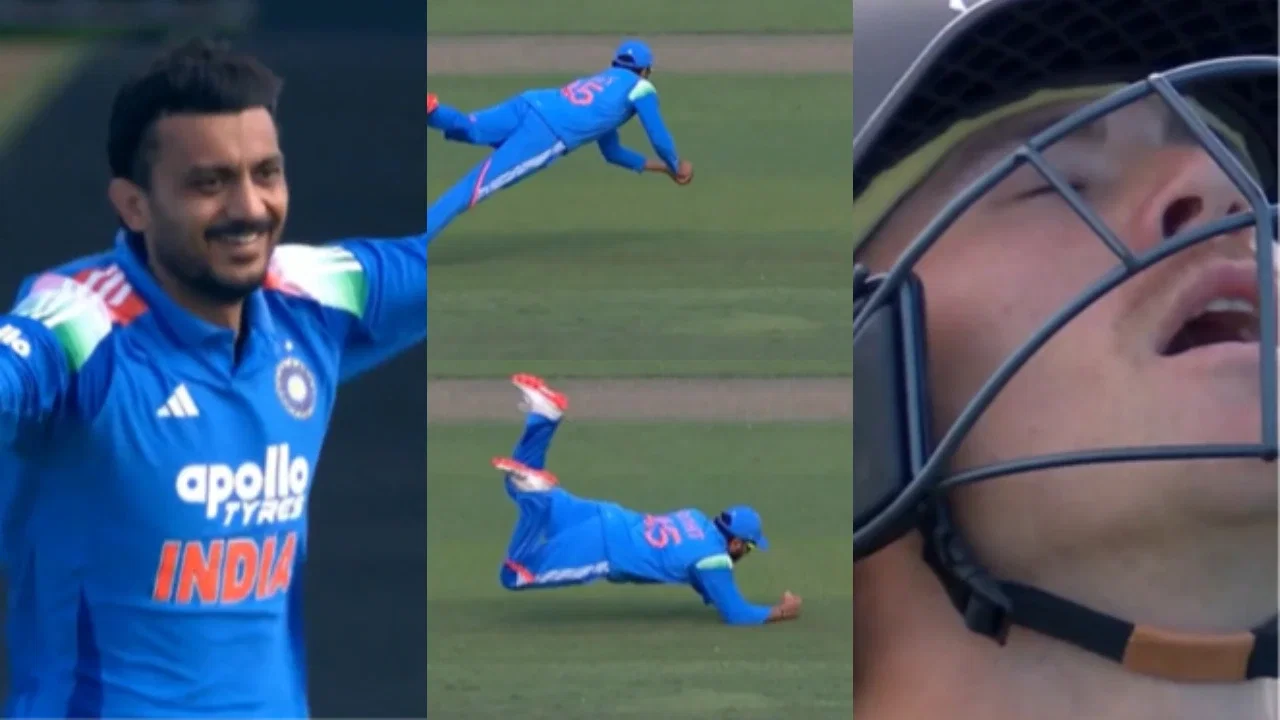
Rohit Sharma’s Diving Catch Ends Finn Allen–Will Young Stand in Fourth India–New Zealand ODI
Rohit Sharma produced a moment of brilliance in the field to help India break New Zealand’s dangerous fourth-wicket partnership in the fourth ODI at Bay Oval, Mount Maunganui, on Friday, November 13. The former India captain’s sharp reflexes and diving catch sent Finn Allen back to the pavilion just as the New Zealand batter was beginning to put the visitors under pressure.
The dismissal ended a 90-run partnership between Allen and Will Young, who went on to make 125. Axar Patel created the chance with a well-directed delivery, but it was Rohit’s athletic effort at short cover that completed the breakthrough. The catch was especially notable because Rohit had earlier put down an opportunity off Auqib Nabi’s bowling, making his response under pressure all the more impressive.
Axar Patel creates the opportunity
Allen had been playing aggressively, looking to take the attack to India’s bowlers and build on New Zealand’s position. Axar, however, kept the ball on a good length outside off stump. Allen moved onto his back foot and attempted to punch it through the off side, but he could not keep the shot along the ground.
Rohit, stationed at short cover, reacted immediately. He moved to his right, tracked the ball’s flight and dived to complete the catch. The ball appeared difficult to control as he landed, with one hand coming away from it, but Rohit held on securely. The dismissal gave India a timely lift and brought the threatening stand to an end.
Axar quickly turned to celebrate with Rohit, embracing the fielder after the wicket. The spinner’s delivery had forced the mistake, while Rohit’s positioning and commitment ensured India made the most of the chance. In a game where partnerships can quickly shift momentum, the combination of disciplined bowling and alert fielding proved valuable.
Finn Allen’s aggressive innings comes to an end
Allen scored 41 from 30 balls, striking five fours and two sixes. His positive approach had put pressure on the Indian attack and helped New Zealand keep the scoreboard moving alongside Young. Although he did not convert his start into a larger score, his innings had given the hosts momentum during an important phase of the match.
The opener was visibly frustrated after the dismissal. He struck his bat in disappointment as he walked back, aware that he had missed an opportunity to make a more substantial contribution. For India, the wicket was a significant moment: it removed an attacking batter and disrupted a partnership that had been helping New Zealand build a strong platform.
Rohit’s catch also offered a measure of redemption after his earlier dropped chance. Fielding mistakes can attract attention, particularly in a closely contested international match, but the veteran responded with a high-quality piece of work when another opportunity arrived. His effort quickly became one of the standout moments of the innings.
Rohit’s fielding provides a timely boost
Rohit’s performance underlined how important fielding can be in shaping an ODI. A sharp catch does more than add a wicket to the scorecard: it can energise the bowling side, interrupt a batter’s rhythm and increase pressure on the players still at the crease. India needed a breakthrough, and Rohit delivered one with a catch that demanded quick movement and composure.
The moment also drew praise from broadcasters and fans, with social media highlighting the former captain’s athleticism. At 39, Rohit’s ability to cover ground and complete a difficult catch was widely noted. While age often becomes a talking point around senior players, this effort showed the value of experience, anticipation and commitment in the field.
Batting form remains a key question for Rohit
Despite the fielding highlight, Rohit’s own batting form remains an important storyline in the series. He had managed only 23 runs across the first two matches, while the third ODI was abandoned without a ball being bowled. That leaves him with limited opportunities in the remaining fixtures to find rhythm and make a more substantial contribution at the top of the order.
His performances are also being viewed in the wider context of India’s plans for the ICC ODI World Cup 2026. Selection discussions naturally intensify when a senior batter is short of runs, although a small sample of innings does not tell the whole story. Rohit’s experience, leadership and record in one-day cricket remain significant considerations, but consistent contributions will help strengthen his case.
The fourth ODI therefore carries added interest for supporters watching both the match and the broader selection picture. Rohit’s catch has already demonstrated that he can influence the contest even when he is not batting. The next challenge is to translate that energy into a score when India begin their chase at Mount Maunganui.
What the breakthrough means for the match
By removing Allen, India interrupted New Zealand’s momentum and placed greater responsibility on Young and the remaining batters. The hosts still had the advantage of Young’s century, but the end of the 90-run stand gave India a chance to regain control and limit New Zealand’s progress during the closing stages.
For fans seeking a prediction on the contest, the partnership-breaking wicket could prove influential, but the outcome will depend on the total New Zealand set and how India’s top order responds. Rohit’s catch gave the visitors a lift at a crucial time; whether that moment becomes a turning point will be decided by the chase. With questions around Rohit’s form and India’s series ambitions still in focus, his next innings is likely to attract as much attention as his remarkable work in the field.
Latest News

SA vs BAN Playing 11 Today, Live Streaming, Pitch & Weather: South Africa tour of Bangladesh 2026, 2nd Test

AUS vs ENG Playing 11 Today, Live Streaming, Pitch & Weather: England tour of Australia 2026, 2nd T20I

Blair Tickner ruled out of 2nd Test vs India, replacement named

Tim Paine and Justin Langer face fresh questions over Australia’s ball-tampering scandal

India tour of Bangladesh gets fresh hope as BCB confirms talks with BCCI

Tom Latham opens up on soft ball problem and saliva ban after draw against India

Ajinkya Rahane slams Tilak Varma for publicly criticising Shahbaz Ahmed after India A’s defeat

ICC to introduce IPL-style bat checks in international cricket

“Smiling Laughing doesn’t happen”: R Ashwin’s dig at India’s approach after draw vs New Zealand

“Not good enough for Test cricket”: Scott Styris, Sunil Gavaskar slam Wellington pitch

Dodda Ganesh declares India ‘out of WTC final race’ after Wellington Test draw

Ajinkya Rahane criticises Shubman Gill for abusing Akash Deep in 1st Test vs New Zealand

‘Why so many boundary riders?’ Dinesh Karthik questions Shubman Gill’s captaincy after Wellington Test

“I just want to enjoy my life”: Yash Dayal reflects on his return to cricket


