

Watch: Virat Kohli makes rare fielding error, drops Dean Foxcroft’s catch in series-decider
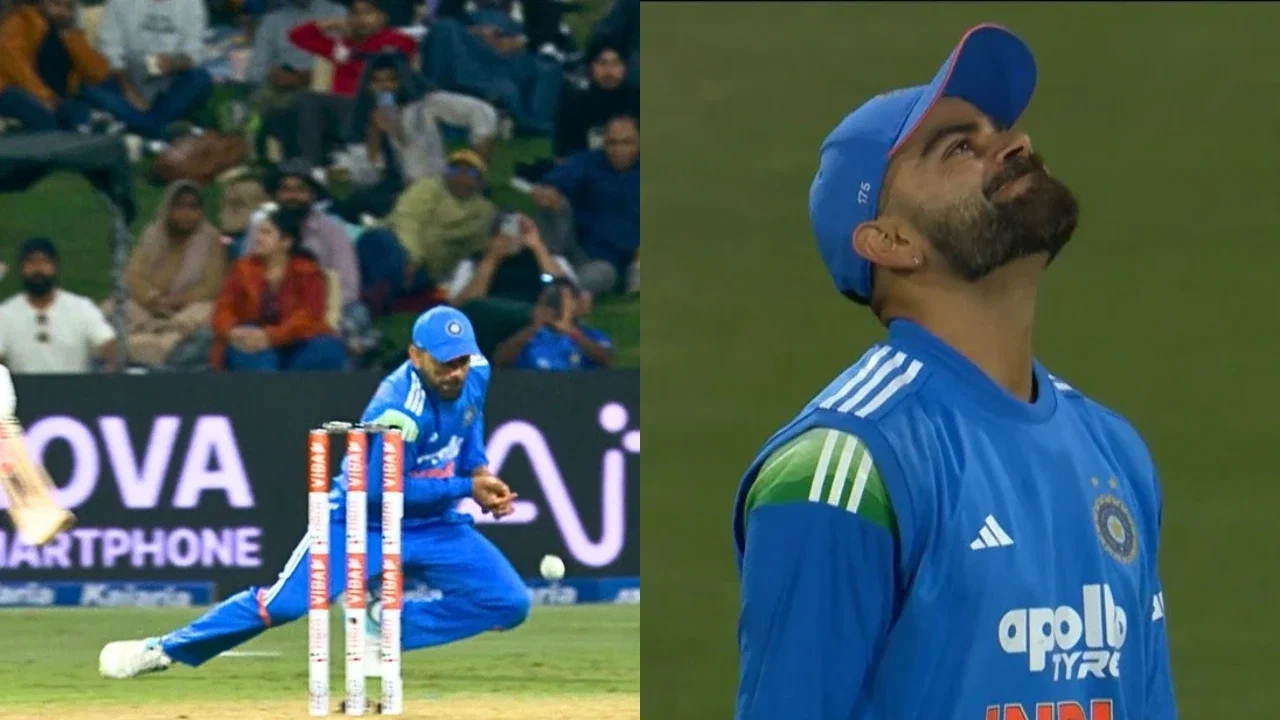
Virat Kohli Drops Costly Catch as India and New Zealand Battle in Decisive ODI
Virat Kohli is renowned for his sharp reflexes and energetic fielding, but even the most reliable players can have an off moment. During the fifth and final ODI between India and New Zealand at Bay Oval in Mount Maunganui, the former India captain dropped a straightforward slip catch that gave Dean Foxcroft a valuable reprieve in a tense, low-scoring contest.
The missed chance came at a crucial point in New Zealand’s chase. With both teams fighting for a significant result, Kohli’s reaction captured the pressure of the occasion: he looked visibly frustrated, glanced skyward in disbelief and later struck the ball into the ground. The incident quickly became one of the match’s defining talking points, even as India’s fast bowlers continued to build pressure at the other end.
Foxcroft survives after Kohli’s slip-fielding mistake
The moment arrived in the 18.1 over, when Arshdeep Singh came around the wicket to Foxcroft, who had just arrived at the crease. India had an attacking field in place, with two slips positioned to capitalise on any outside edge. Kohli was stationed at second slip.
Arshdeep’s first delivery produced the opportunity India wanted. Foxcroft edged the ball, which travelled at a comfortable height towards Kohli. The catch appeared to be a routine one, but the ball slipped through the fielder’s hands, allowing the New Zealand batter to continue his innings.
For Kohli, the error was especially surprising given his reputation as one of India’s most dependable fielders. He looked disappointed immediately after the drop, while Arshdeep and the rest of the Indian fielders had to quickly reset and focus on the next delivery. In a match where runs were at a premium, the missed chance could have an outsized impact on the final result.
Foxcroft’s reprieve also added another layer of tension to a contest already carrying major series implications. India entered the match seeking a series victory in New Zealand, while the hosts were aiming to protect an impressive run of success in bilateral series. A win for New Zealand would keep that record intact and could help them secure a drawn series, depending on the wider context of the contest.
Arshdeep Singh and Mohammed Siraj keep New Zealand under pressure
Despite the dropped catch, India’s pace attack had given the visitors plenty to celebrate. Arshdeep Singh found rhythm and movement, using disciplined lines to restrict the New Zealand batters and make scoring difficult. His spell included the dismissal of Will Young, who had made 22, after Ruturaj Gaikwad took an excellent catch in the deep at square leg.
Arshdeep then removed Nick Kelly, who had contributed 24, further disrupting New Zealand’s attempt to build a stable partnership. The left-arm quick’s ability to vary his pace and challenge both edges made him a central figure in India’s defence of a modest total. His performance showed how quickly a low-scoring chase can change when bowlers maintain pressure and fielders support them.
Mohammed Siraj also made an important impact on his return to the ODI side. He struck early to dismiss Tim Seifert and later produced a sharp delivery to remove Finn Allen. Siraj’s pace and accuracy, combined with Arshdeep’s control, gave India a strong start and prevented New Zealand from settling into a comfortable rhythm.
At the point described in the match, New Zealand were 91 for four while chasing India’s first-innings total of 209. The game remained finely balanced: another couple of wickets could put India firmly in control, while a steady partnership from the hosts could shift the pressure back onto the visitors. In a chase of this size, every over—and every fielding opportunity—could matter.
Kohli’s series form adds context to the dropped catch
The catch came during a difficult stretch for Kohli in New Zealand. Across the four matches he had played in the series before the final ODI, he had scored 86 runs, including one half-century. That return placed his average at 21.5, a notable dip for a batter who had enjoyed a productive year before the tour.
Kohli had started the series with a promising 74 in the first ODI, raising expectations of another substantial run of scores. However, he was unable to turn that opening performance into consistent contributions in the following matches. His broader record in the calendar year had been much stronger, and he had been among India’s leading run-scorers, making the New Zealand downturn stand out more clearly.
It is important, however, to separate a brief spell of poor form from a player’s overall value. Kohli’s experience, intensity and ability to influence a match remain significant assets for India. A dropped catch can happen to any fielder, and the challenge is to respond positively rather than allow one mistake to shape the rest of the performance.
What the match result could mean
India’s total of 209 left little room for error, placing added importance on early wickets and disciplined bowling. The visitors needed to defend their score through collective effort: the seamers had to keep finding movement, the fielders needed to convert chances, and the bowling unit had to avoid giving away easy boundaries.
New Zealand, meanwhile, had an opportunity to make the most of their home conditions and the lifeline Foxcroft received. If the batter could settle and form a partnership, the hosts would have a route back into the chase. But with four wickets already down, India remained well placed to apply pressure and force another breakthrough.
Any prediction about the outcome of a close ODI chase must account for how rapidly momentum can swing. India’s pace attack had created promising openings, but Kohli’s dropped catch underlined the cost of missed chances. With the match finely poised at Bay Oval, the next partnership—and the next key moment in the field—could determine not only the result, but the series narrative as well.
Latest News

SA vs BAN Playing 11 Today, Live Streaming, Pitch & Weather: South Africa tour of Bangladesh 2026, 2nd Test

AUS vs ENG Playing 11 Today, Live Streaming, Pitch & Weather: England tour of Australia 2026, 2nd T20I

Blair Tickner ruled out of 2nd Test vs India, replacement named

Tim Paine and Justin Langer face fresh questions over Australia’s ball-tampering scandal

India tour of Bangladesh gets fresh hope as BCB confirms talks with BCCI

Tom Latham opens up on soft ball problem and saliva ban after draw against India

Ajinkya Rahane slams Tilak Varma for publicly criticising Shahbaz Ahmed after India A’s defeat

ICC to introduce IPL-style bat checks in international cricket

“Smiling Laughing doesn’t happen”: R Ashwin’s dig at India’s approach after draw vs New Zealand

“Not good enough for Test cricket”: Scott Styris, Sunil Gavaskar slam Wellington pitch

Dodda Ganesh declares India ‘out of WTC final race’ after Wellington Test draw

Ajinkya Rahane criticises Shubman Gill for abusing Akash Deep in 1st Test vs New Zealand

‘Why so many boundary riders?’ Dinesh Karthik questions Shubman Gill’s captaincy after Wellington Test

“I just want to enjoy my life”: Yash Dayal reflects on his return to cricket


