

Watch: Virat Kohli tries to guide Shreyas Iyer, but India captain rejects advice
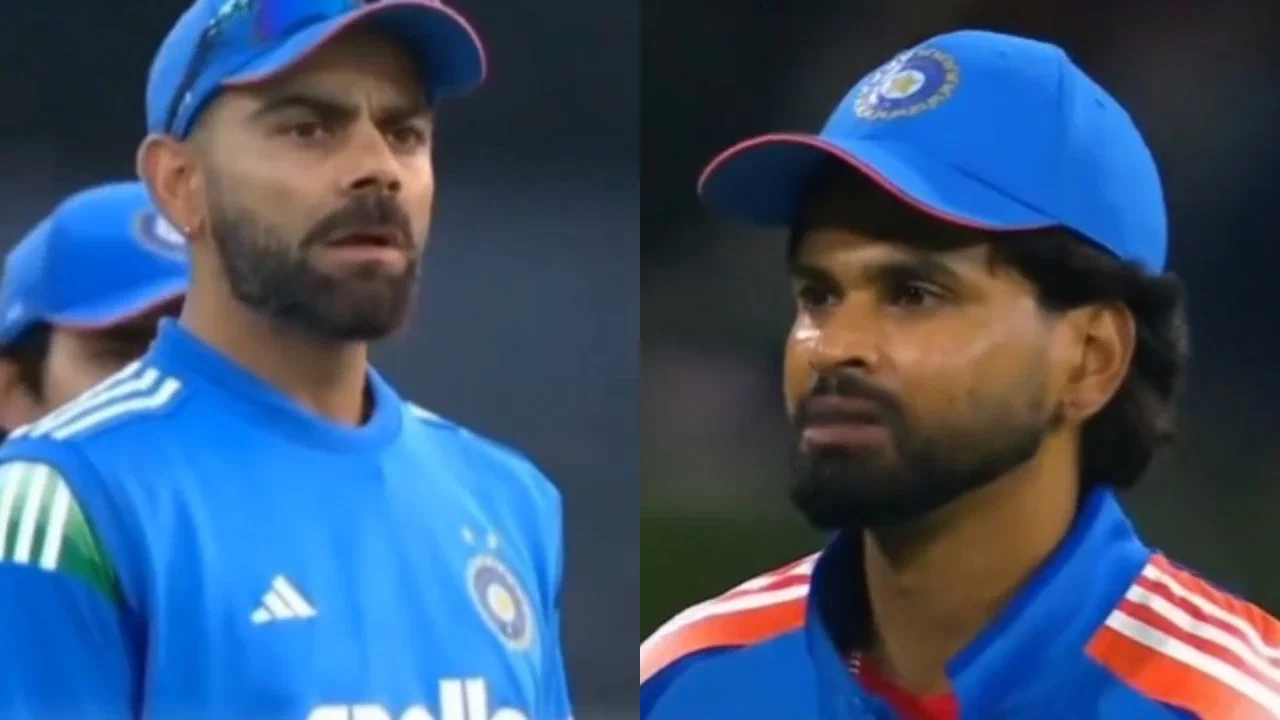
Virat Kohli and Shreyas Iyer’s On-Field Exchange Sparks Debate After India’s ODI Win
A brief conversation between Virat Kohli and Shreyas Iyer during the fifth India-New Zealand ODI has become a major talking point among cricket fans. A video of the exchange, recorded during the series decider at Bay Oval in Mount Maunganui, spread rapidly on social media, prompting speculation about what was said and whether Iyer chose to disregard advice from the former India captain.
The moment took place during India’s 22-run victory over New Zealand on Sunday, November 15. India’s win secured a 3-1 series result, but the interaction between Kohli and stand-in captain Iyer quickly drew attention beyond the match itself. Some viewers interpreted Iyer’s brief response as dismissive, while others cautioned that a short video clip cannot reveal the full context of a conversation between players.
What Happened Between Kohli and Iyer?
During a break between overs, Iyer was speaking with wicketkeeper-batter Ishan Kishan when Kohli approached. The former captain appeared to discuss a tactical matter with Iyer, who soon moved away and proceeded with his plan to bring Auqib Nabi into the attack from the other end.
The viral footage does not make clear what Kohli was suggesting or whether the conversation was directly related to the bowling change. It also offers only a brief glimpse of the exchange, leaving fans to fill in the gaps. That uncertainty has helped fuel the online debate, with some supporters arguing that Iyer should have listened more closely to Kohli’s experience and others pointing out that the captain must ultimately make decisions based on his own reading of the game.
Social media reactions ranged from criticism of Iyer’s body language to light-hearted comments about the senior players’ discussion. However, the clip alone cannot establish whether there was disagreement, tension or simply a quick exchange of views. In professional cricket, conversations between players often happen rapidly, and a captain may consider advice before choosing a different option.
Why the Moment Caught Fans’ Attention
Kohli’s reputation as an experienced international cricketer means even a short conversation involving him can attract intense scrutiny. Iyer, meanwhile, was leading the side in a high-pressure series finale. That combination made the moment especially noticeable to viewers following the match closely.
There is also a wider tactical element. Bowling changes in one-day cricket can shape the middle overs, particularly when a team is defending a total and trying to break partnerships. Fans may naturally wonder whether a senior player was recommending a particular bowler or field setting. Still, without audio or a fuller account from those involved, any claim about the substance of the discussion remains speculation—not a confirmed prediction of what either player intended.
India Take Series Positives From a Testing Tour
Despite the attention on the sideline exchange, the main outcome for India was a series victory. The team finished the five-match ODI contest with a 3-1 result after overcoming New Zealand by 22 runs in the final game. Speaking after the series, Iyer described the tour as one with several challenges and valuable lessons.
He highlighted the importance of adaptability, noting that conditions can change from one venue to another and require players to adjust their approach. Long tours can also bring mental fatigue, he said, making it important for individuals to reflect on their performances and keep learning as the schedule progresses.
The bowling effort was among India’s key positives. Iyer observed that both attacks had performed well on surfaces that generally favoured bowlers, making it difficult for batters to dominate consistently. In that setting, India’s ability to keep applying pressure and secure the series mattered more than individual statistics.
Lessons for India’s 2027 ODI World Cup Plans
The series also offered an opportunity to test players in unfamiliar conditions as India builds toward the 2027 ICC Men’s Cricket World Cup. The tournament is scheduled to be hosted in South Africa, Zimbabwe and Namibia, where conditions are expected to differ from those in New Zealand. Iyer cautioned against making a direct comparison between the environments, particularly because weather, pitches and match conditions will not be identical.
Even so, contests in New Zealand can help a team practise responding to changing circumstances. A side preparing for a major tournament needs more than a fixed game plan: it must assess pitch behaviour, manage pressure and make decisions that suit the match in front of it. These are the kinds of areas that can shape future team selection and tactical planning, although a single bilateral series is not a definitive prediction of World Cup performance.
India’s consistent bowling was especially encouraging, according to Iyer. Strong bowling across different conditions can provide a foundation for success, but the team will also want its batting unit to find reliable ways to build partnerships and handle challenging surfaces. The series therefore offered both reassurance and areas for further work ahead of the global event.
A Win, a Viral Clip and Plenty to Discuss
The Kohli-Iyer exchange has become a viral talking point, but its meaning remains uncertain. The clip shows a brief conversation followed by a bowling decision; it does not confirm that Iyer ignored advice or that the players were in disagreement. Until either player provides more detail, the most responsible interpretation is that fans witnessed a small moment in a larger tactical discussion.
For India, the broader story is a series win and the experience gained from competing in demanding conditions. Iyer’s comments suggest that the team intends to focus on learning and adaptability rather than drawing sweeping conclusions from one tour. As preparations for the 2027 ODI World Cup continue, India’s ability to combine experienced voices with clear decision-making will remain an important part of its development.
Latest News

SA vs BAN Playing 11 Today, Live Streaming, Pitch & Weather: South Africa tour of Bangladesh 2026, 2nd Test

AUS vs ENG Playing 11 Today, Live Streaming, Pitch & Weather: England tour of Australia 2026, 2nd T20I

Blair Tickner ruled out of 2nd Test vs India, replacement named

Tim Paine and Justin Langer face fresh questions over Australia’s ball-tampering scandal

India tour of Bangladesh gets fresh hope as BCB confirms talks with BCCI

Tom Latham opens up on soft ball problem and saliva ban after draw against India

Ajinkya Rahane slams Tilak Varma for publicly criticising Shahbaz Ahmed after India A’s defeat

ICC to introduce IPL-style bat checks in international cricket

“Smiling Laughing doesn’t happen”: R Ashwin’s dig at India’s approach after draw vs New Zealand

“Not good enough for Test cricket”: Scott Styris, Sunil Gavaskar slam Wellington pitch

Dodda Ganesh declares India ‘out of WTC final race’ after Wellington Test draw

Ajinkya Rahane criticises Shubman Gill for abusing Akash Deep in 1st Test vs New Zealand

‘Why so many boundary riders?’ Dinesh Karthik questions Shubman Gill’s captaincy after Wellington Test

“I just want to enjoy my life”: Yash Dayal reflects on his return to cricket


