

“We lost a baby”: David Warner slams Pat Cummins for rejecting Usman Khawaja’s Sandpapergate claims
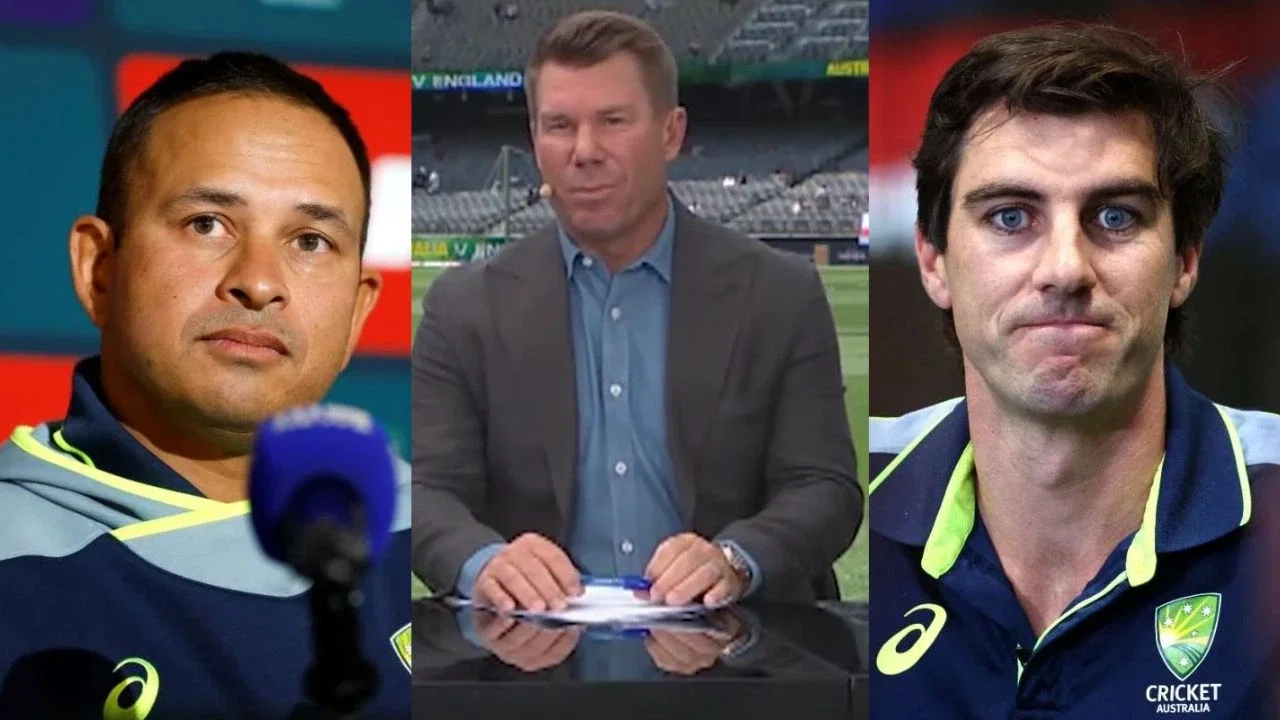
David Warner backs Usman Khawaja and criticises Pat Cummins over Sandpapergate claims
David Warner has publicly defended Usman Khawaja after Australia captain Pat Cummins rejected claims in Khawaja’s autobiography about the 2018 ball-tampering scandal. Warner said he believed his former teammate’s account and accused Cummins of unfairly directing criticism at Khawaja rather than confronting the wider questions surrounding Sandpapergate.
The dispute has reopened painful memories of the Cape Town Test and its consequences for Australian cricket. It has also brought renewed attention to the different accounts of what players knew, the culture inside the team at the time, and the long-term personal impact on those punished for the incident.
What Usman Khawaja wrote about Sandpapergate
The latest controversy began with revelations in Khawaja’s autobiography, Sabr, about the 2018 Test series in South Africa. Khawaja described becoming aware of a plan involving sandpaper and recalled warning Cameron Bancroft to be careful while using it during the Cape Town Test.
His account challenges the version of events that became widely accepted after Bancroft was caught attempting to alter the ball’s condition. Warner, then vice-captain, and Steve Smith, the captain, were also sanctioned. The three players were treated as the central figures in the scandal, while other members of the Australian team said they had not known about the plan.
Khawaja’s recollections do not, by themselves, establish who else knew about the scheme or when they learned of it. But they have renewed debate over whether the full story of the incident was ever told—and whether the responsibility was limited to the players who received formal suspensions.
Pat Cummins rejects the allegations
Cummins, who was part of Australia’s team in Cape Town, strongly disputed Khawaja’s claims. Speaking to reporters in Sydney, the captain said he had no knowledge of sandpaper being taken onto the field. He described the suggestion that he and other bowlers were involved in planning the operation as “complete and utter nonsense.”
Cummins said he was shocked by Khawaja’s account and criticised the way it portrayed former teammates, arguing that the claims could damage their reputations. At the same time, he acknowledged that Australian cricket had been affected by a win-at-all-costs mindset during that period. He maintained, however, that recognising a broader cultural problem was different from knowing about the specific ball-tampering plan.
That distinction lies at the heart of the current disagreement: Khawaja’s recollections have prompted questions about the team’s awareness, while Cummins says he was unaware of any plan to alter the ball.
Warner says Cummins threw Khawaja “under the bus”
Warner sided with Khawaja during an interview with Fox Sports on the sidelines of the first one-day international between Australia and England in Perth. The former Australia opener said he stood by his childhood friend and believed the account in Sabr was truthful.
Warner was particularly unhappy with Cummins’ response, saying the captain had targeted Khawaja rather than engaging with the broader issues raised by the book. “I actually feel that today, the captain threw Uzzy under the bus,” Warner said, adding that he was “very, very disappointed.”
Warner’s comments carry particular weight because he was one of the players at the centre of the original scandal. His intervention has turned a disagreement about a book into a public rift involving current and former Australian teammates, with the captain’s authority and the team’s handling of its past now part of the conversation.
Warner describes the lasting cost of the scandal
Warner also spoke about the lasting consequences of the suspensions imposed after the Newlands incident. He received a 12-month ban, as did Smith, while Bancroft was suspended for nine months. Warner said that, eight years later, the three players continued to face public criticism and abuse.
“All three of us have paid a big price in this thing,” Warner said. He described the consequences as a “life punishment,” saying the players had to live with the fallout long after their formal bans ended.
In a deeply personal revelation, Warner said that he and his wife, Candice, suffered a miscarriage during the period surrounding the scandal. He said the loss remained especially painful and explained that the family’s experience had shaped how he viewed discussions about the incident.
Warner’s disclosure adds a personal dimension to a story often discussed through bans, leadership decisions and cricketing reputations. It should not be taken as evidence for or against any particular account of what happened on the field; rather, it highlights the serious private pressures that can accompany intense public scrutiny.
Why the Sandpapergate debate has resurfaced
The latest exchange shows how difficult it remains for Australian cricket to settle the history of Sandpapergate. The scandal led to severe disciplinary action, reputational damage and changes in leadership. Yet the questions surrounding what teammates knew—and when—have continued to surface through interviews, memoirs and public statements.
For fans, Khawaja’s claims and Cummins’ denial offer sharply different perspectives from people connected to the same team. Warner’s support for Khawaja adds another voice, but it does not resolve the conflicting accounts. Any definitive conclusion would require evidence beyond competing recollections and public reactions.
The episode may also shape the conversation around trust within the Australian team. Cummins has acknowledged that the culture of the period needed scrutiny, while rejecting any suggestion that he knew about the specific plan. Warner, meanwhile, argues that Khawaja deserves to be heard rather than condemned for sharing his memories.
What happens next?
For now, the latest Sandpapergate dispute is a clash of accounts rather than a new formal investigation. The key issue is whether further information will emerge to clarify the events in Cape Town, or whether the debate will remain centred on what former teammates remember and believe.
Any prediction about how the disagreement will affect Australian cricket should be treated cautiously. The immediate impact is likely to be renewed public discussion of the scandal, the team culture of 2018 and the lasting consequences for those involved. Whether the latest revelations bring greater clarity—or deepen divisions—will depend on what evidence and responses follow.
Latest News

SA vs BAN Playing 11 Today, Live Streaming, Pitch & Weather: South Africa tour of Bangladesh 2026, 2nd Test

AUS vs ENG Playing 11 Today, Live Streaming, Pitch & Weather: England tour of Australia 2026, 2nd T20I

Blair Tickner ruled out of 2nd Test vs India, replacement named

Tim Paine and Justin Langer face fresh questions over Australia’s ball-tampering scandal

India tour of Bangladesh gets fresh hope as BCB confirms talks with BCCI

Tom Latham opens up on soft ball problem and saliva ban after draw against India

Ajinkya Rahane slams Tilak Varma for publicly criticising Shahbaz Ahmed after India A’s defeat

ICC to introduce IPL-style bat checks in international cricket

“Smiling Laughing doesn’t happen”: R Ashwin’s dig at India’s approach after draw vs New Zealand

“Not good enough for Test cricket”: Scott Styris, Sunil Gavaskar slam Wellington pitch

Dodda Ganesh declares India ‘out of WTC final race’ after Wellington Test draw

Ajinkya Rahane criticises Shubman Gill for abusing Akash Deep in 1st Test vs New Zealand

‘Why so many boundary riders?’ Dinesh Karthik questions Shubman Gill’s captaincy after Wellington Test

“I just want to enjoy my life”: Yash Dayal reflects on his return to cricket


