When Ajit Agarkar and BCCI clashed over Jasprit Bumrah’s captaincy
The Unfolding Saga of Ajit Agarkar’s Exit: A Closer Look at India’s Selector System and Future Predictions
The recent news surrounding Ajit Agarkar’s potential departure from his role as India’s chief selector has reignited discussions about the intricate relationship between the Board of Control for Cricket in India (BCCI) and its selection committee. This development not only raises questions about leadership dynamics within Indian cricket but also prompts a broader analysis of how predictions about future leadership and strategic decisions shape the sport’s landscape. As cricket enthusiasts and analysts speculate on the implications, it’s essential to understand the underlying issues, key conflicts, and what the future might hold for India’s selection process.
Background: How Did the Tensions Begin?
The simmering tensions between Ajit Agarkar and the BCCI did not emerge overnight. While recent headlines have focused on the Rohit Sharma controversy, the roots of the disagreement trace back to earlier in 2023, shortly after Agarkar assumed his role as chief selector. His initial decisions and approach to team selection set the stage for future conflicts, revealing differing visions for Indian cricket’s direction.
One of the earliest and most significant flashpoints occurred during the selection of the Indian squad for the two-match T20I series against Ireland in August 2023. This seemingly routine series turned into a battleground for strategic disagreements, particularly over captaincy choices. The core of the dispute revolved around who should lead India in Ireland—a decision that carried strategic implications for upcoming tournaments and player development.
The Ireland Series: Clash Over Captaincy and Leadership Strategies
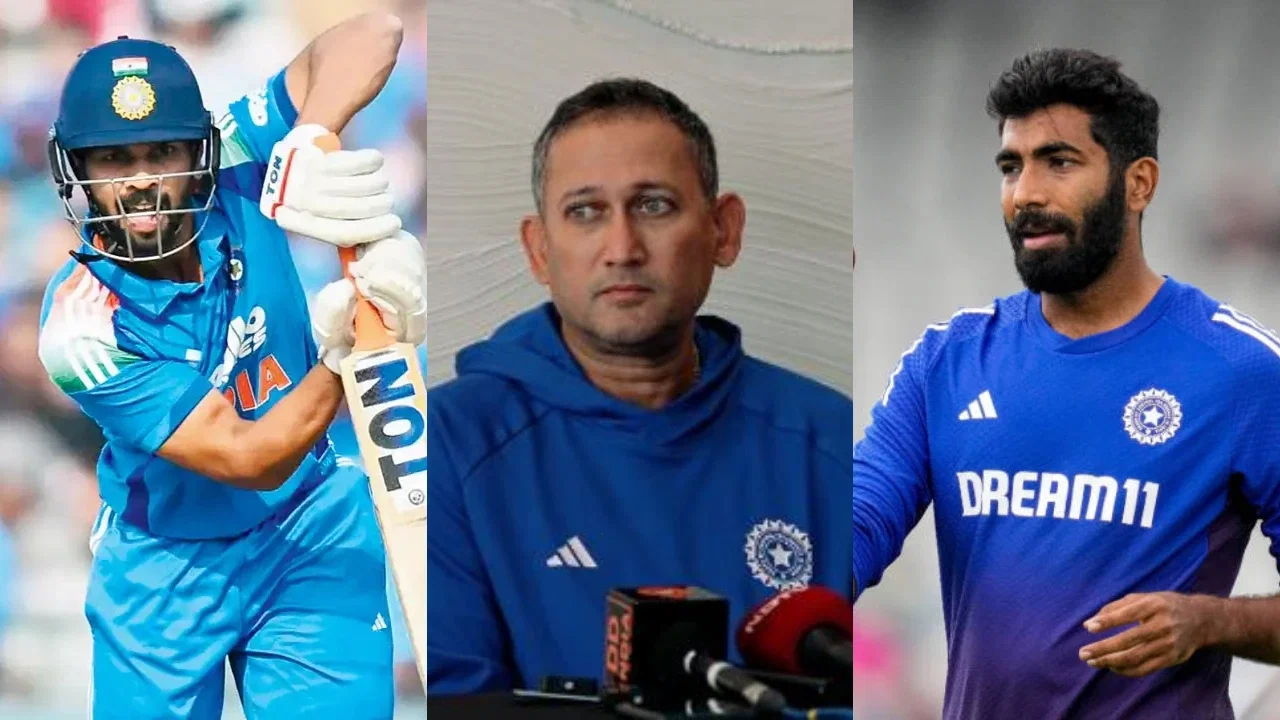
According to reports from The Telegraph, Ajit Agarkar advocated for Ruturaj Gaikwad to captain India in the Ireland T20I series. Gaikwad, a promising young player, had also been appointed captain for the 2023 Asian Games, and the Ireland series was viewed as an excellent opportunity for him to gain valuable leadership experience ahead of the continental event. Agarkar’s rationale was rooted in the belief that giving Gaikwad the captaincy would serve as a crucial developmental step, helping him prepare for larger responsibilities.
However, the BCCI had a different perspective. The board favored Jasprit Bumrah for the captaincy, primarily because Bumrah was making a notable comeback to international cricket after a lengthy injury layoff. The BCCI’s decision was driven by multiple factors, including Bumrah’s leadership qualities and the desire to support his return to peak performance. The board was also reportedly concerned about managing Bumrah’s workload, especially considering his history of injuries.
Ultimately, the BCCI’s choice prevailed, and Jasprit Bumrah led India to a 2-0 victory in the Ireland T20I series. While the decision appeared successful on the surface, it underscored deeper disagreements about strategic planning and player management—issues that would continue to influence Agarkar’s tenure as chief selector.
Assessing Ajit Agarkar’s Approach and Leadership Philosophy
Despite the conflicts, Agarkar was widely recognized for his unwavering confidence in his own judgment. Known for his strong belief in his decision-making abilities, he often sought to insulate himself from external pressures, aiming to select teams based on merit and strategic considerations rather than political or external influences.
This approach, however, sometimes clashed with the BCCI’s broader vision, especially when public backing for certain players or decisions became a point of contention. The Rohit Sharma saga further complicated matters, as Agarkar reportedly felt constrained by the BCCI’s overt support for Sharma, which made future decision-making more complex. The tension between individual judgment and organizational consensus became a defining feature of his tenure, culminating in discussions about his eventual exit.
The Rohit Sharma Controversy: A Turning Point
The Rohit Sharma issue exemplifies the broader challenges faced by the selection committee. Agarkar’s dissatisfaction with the BCCI’s public stance on Sharma’s role and future in Indian cricket highlighted the delicate balance between respecting players’ positions and maintaining organizational coherence. This conflict underscored the prediction that leadership disputes and strategic disagreements could lead to significant changes at the top of Indian cricket’s hierarchy.
Major Decisions and Autonomy: Agarkar’s Free Hand
Despite these conflicts, reports from The Telegraph suggest that Ajit Agarkar was granted considerable autonomy by the BCCI to make critical decisions during his tenure. This independence allowed him to shape Indian cricket’s future through pivotal choices, notably during a period of transition and renewal.
One of the most consequential moments came in May 2025, when two of India’s greatest cricketing icons, Rohit Sharma and Virat Kohli, announced their retirements from Test cricket. Both players had already stepped away from T20Is following India’s historic victory at the 2024 T20 World Cup but remained active in ODIs. Agarkar’s role in managing this transition was crucial, as the team looked to rebuild and identify new leaders.
Strategic Decisions and Personal Choices
Another significant decision involved dropping Suryakumar Yadav, who had been India’s T20 World Cup-winning captain, from the team’s subsequent assignments. Agarkar clarified that these decisions were personal choices made by the players themselves, not imposed by the BCCI. This highlights the delicate nature of selection decisions, where prediction about player performance and future potential plays a critical role.
The Future of Indian Cricket Leadership: Challenges and Predictions
With Agarkar’s expected exit, the future of India’s selection committee faces uncertainty. The incoming chief selector will inherit a complex landscape—one filled with high expectations, strategic challenges, and the need to balance individual talent with team dynamics. The predictions for the next leader suggest a role that requires not only deep cricketing knowledge but also diplomatic skills to manage relationships between players, coaches, and the BCCI.
Analysts predict that the next chief selector will need to embrace a more transparent and collaborative approach, fostering greater harmony within the selection process. They will also have to make tough calls about emerging talents and veteran players, all while keeping the long-term vision for Indian cricket in focus. The prediction is that leadership will be tested by these decisions, especially in an era where cricket is continually evolving with new formats, technologies, and global competition.
Additional Insights: The Role of Leadership in Shaping Future Predictions
Leadership in cricket, particularly in roles like chief selector, is increasingly about making accurate predictions—anticipating player potential, team dynamics, and strategic needs. The decisions made today influence the trajectory of Indian cricket for years to come. The prediction that a new leader will focus on developing a balanced team, integrating young talent, and managing veteran stars aligns with the broader goal of maintaining India’s dominance in world cricket.
Moreover, the upcoming changes within the selection committee are seen as an opportunity for fresh perspectives. The prediction is that the next chief selector will prioritize data-driven decisions, leverage analytics, and foster an environment of open communication. This approach aims to ensure that future predictions about team composition and player development are more accurate and aligned with the evolving landscape of international cricket.
Conclusion: A New Chapter in Indian Cricket’s Leadership Journey
The potential exit of Ajit Agarkar marks a significant turning point in Indian cricket’s administrative and strategic landscape. As predictions about leadership changes unfold, the focus remains on how the next chief selector will navigate complex relationships, make impactful decisions, and shape the future of Indian cricket. The prediction is that this new era will emphasize transparency, strategic foresight, and a balanced approach to nurturing talent.
In summary, while Agarkar’s tenure was marked by decisive actions and bold choices, the future requires a leader capable of balancing prediction with patience, managing relationships with diplomacy, and steering Indian cricket towards continued excellence on the global stage. As fans and analysts watch with anticipation, one thing remains clear: the journey of Indian cricket leadership continues to evolve, promising an exciting chapter ahead.
Latest News

Top 10 highest run-chases in T20 cricket history, ft. West Indies’ Ranchi win vs India

Aaryavir Sehwag and Anvay Dravid set to make headlines at U19 Asia Cup 2026

Longest ducks in Test cricket history ft. Nic Maddinson, Shoaib Akhtar

ECB to offer 39 central contracts to England players after Ben Stokes, Mark Wood’s retirement

Steve Smith surpasses Steve Waugh in all-time Test run-scorers’ list

Shane Watson identifies Gautam Gambhir’s biggest problem as India struggle for consistency

Is Bhuvneshwar Kumar in India’s 2027 World Cup plans? Ajinkya Rahane makes revelation

BCCI’s big ₹127 Crore move after injury crisis raises concerns over Team India

Parthiv Patel reveals RCB ignored his Jasprit Bumrah recommendation in IPL 2014 Auction

“Never spoke ill of any faith”: Irfan Pathan hits back at fake news using his name

Nic Maddinson bags 33-ball duck on Test comeback, disappoints George Bailey

Imran Tahir predicts 2027 ICC ODI World Cup Semi-Finalists, snubs India for title

Australia create unwanted history with first all-30-plus Test XI

Ravindra Jadeja returns to Ranji Trophy as Saurashtra announce squad