

Why Shadab Khan was dropped from Pakistan XI for ODI Tri-Series final vs SL?
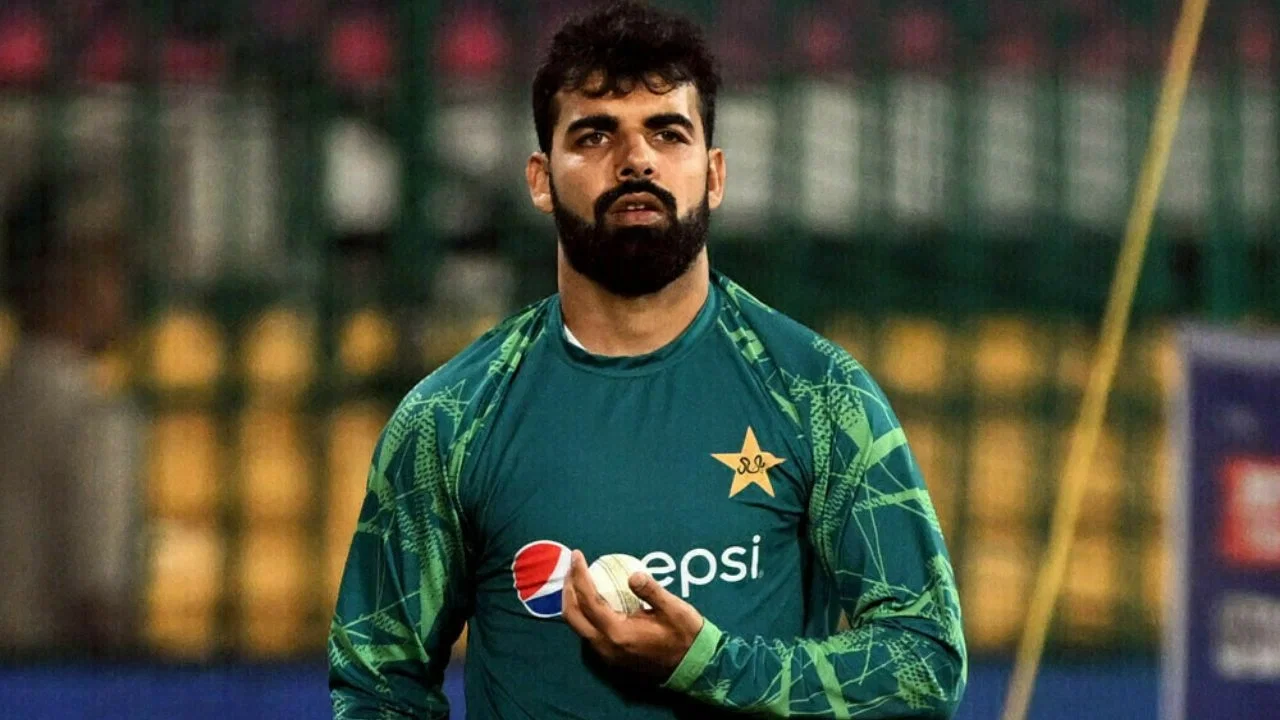
Shadab Khan Misses Pakistan’s Tri-Series Final Against Sri Lanka After Falling Ill
Pakistan will face Sri Lanka in the tri-series final at Lahore’s Gaddafi Stadium without one of their most influential players. All-rounder Shadab Khan has been left out of the playing XI after falling ill, with captain Shaheen Afridi confirming the change at the toss. Faheem Ashraf replaces him for the title decider.
The late absence is a significant setback for Pakistan. Shadab has contributed with both bat and ball during the tournament, and his recent performances have made him a key part of the team’s plans. Pakistan will nevertheless aim to carry their improved form into the final and end the competition with a trophy.
Shaheen Afridi Explains Pakistan’s Team Change
After winning the toss, Afridi chose to bowl first, citing the possibility of dew later in the evening and the chance to make early use of the new ball. He also pointed to Pakistan’s pace-heavy lineup, which includes four fast bowlers, as a factor in the decision.
Asked about the team selection, the captain confirmed that Shadab was unavailable because he was not feeling well. Faheem Ashraf was brought into the XI in his place, giving Pakistan another seam-bowling option and a player capable of contributing lower down the order.
The decision to field first also reflects the conditions Pakistan expect in Lahore. If dew makes the ball harder to grip in the second innings, chasing could become more straightforward. However, the early overs will be important: Pakistan’s bowlers will need to use the fresh surface effectively and prevent Sri Lanka from building a strong platform.
Shadab’s Record-Breaking Knock Made Him a Major Asset
Shadab’s absence is especially notable because he produced one of the tournament’s most remarkable innings against England. Pakistan were struggling at 154 for nine when the all-rounder mounted a dramatic late recovery, scoring 113 from 96 deliveries. His innings included 13 fours and five sixes, turning a difficult position into a memorable contest.
Shadab shared an unbeaten 89-run stand for the tenth wicket with Haris Rauf, contributing the bulk of the partnership’s runs. The innings was not only crucial to Pakistan’s result; it also set a new benchmark for the highest individual ODI score by a batter at No. 8 or lower. Shadab surpassed the previous record of 100 not out, jointly held by Ireland’s Simi Singh and Bangladesh’s Mehidy Hasan Miraz.
Pakistan’s stand with England was also a notable entry in the record books. The 89-run partnership was the country’s second-highest for the tenth wicket and the fourth-highest such stand overall for Pakistan. It demonstrated the value of lower-order resilience—and how quickly a match can change when a batter at the tail takes the initiative.
Pakistan Must Replace More Than Shadab’s Batting
Shadab’s contribution goes beyond his ability to score quickly. His leg-spin can help control the middle overs, break partnerships and give the captain a flexible option when the pace bowlers need a rest. Without him, Pakistan may have to adjust their bowling plans or rely more heavily on their frontline seamers to keep Sri Lanka’s scoring in check.
Faheem’s selection provides balance in a different way. He can offer pace and lower-order batting, but he does not replicate Shadab’s particular role as a spin-bowling all-rounder. Pakistan’s challenge will be to distribute those responsibilities across the XI rather than expect one replacement to cover every aspect of the missing player’s game.
Pakistan Look to Finish the Tournament Strong
Pakistan have shown encouraging form across the tri-series, losing only one of their four matches before the final. That record offers confidence after a less consistent period leading into the competition. Shaheen Afridi’s return to form has also been a positive development for the team, strengthening its pace attack at an important stage.
Still, the final presents a fresh test. Sri Lanka have had success batting second during the series, a factor Afridi acknowledged when explaining Pakistan’s approach. The hosts will need to assess how the pitch behaves in the first ten overs and adapt quickly if the surface offers less assistance than expected.
For fans following the match prediction, the toss and Shadab’s absence are important considerations, but neither guarantees the outcome. Pakistan’s four-pronged pace attack could make an impact with the new ball, while Sri Lanka will look to build a steady innings and take advantage of any conditions that favour batting later. The contest may ultimately turn on how well Pakistan manage the middle overs without Shadab and whether their lower order can provide support if the top order falters.
Pakistan will be keen to close the tri-series with a victory in front of their home crowd. Shadab’s absence removes a proven match-winner from the lineup, but the team still has the opportunity to respond with disciplined bowling, smart fielding and contributions from across the XI. The final will show whether Pakistan can turn their strong tournament run into a title despite losing one of their most in-form all-rounders.
Latest News

SA vs BAN Playing 11 Today, Live Streaming, Pitch & Weather: South Africa tour of Bangladesh 2026, 2nd Test

AUS vs ENG Playing 11 Today, Live Streaming, Pitch & Weather: England tour of Australia 2026, 2nd T20I

Blair Tickner ruled out of 2nd Test vs India, replacement named

Tim Paine and Justin Langer face fresh questions over Australia’s ball-tampering scandal

India tour of Bangladesh gets fresh hope as BCB confirms talks with BCCI

Tom Latham opens up on soft ball problem and saliva ban after draw against India

Ajinkya Rahane slams Tilak Varma for publicly criticising Shahbaz Ahmed after India A’s defeat

ICC to introduce IPL-style bat checks in international cricket

“Smiling Laughing doesn’t happen”: R Ashwin’s dig at India’s approach after draw vs New Zealand

“Not good enough for Test cricket”: Scott Styris, Sunil Gavaskar slam Wellington pitch

Dodda Ganesh declares India ‘out of WTC final race’ after Wellington Test draw

Ajinkya Rahane criticises Shubman Gill for abusing Akash Deep in 1st Test vs New Zealand

‘Why so many boundary riders?’ Dinesh Karthik questions Shubman Gill’s captaincy after Wellington Test

“I just want to enjoy my life”: Yash Dayal reflects on his return to cricket


