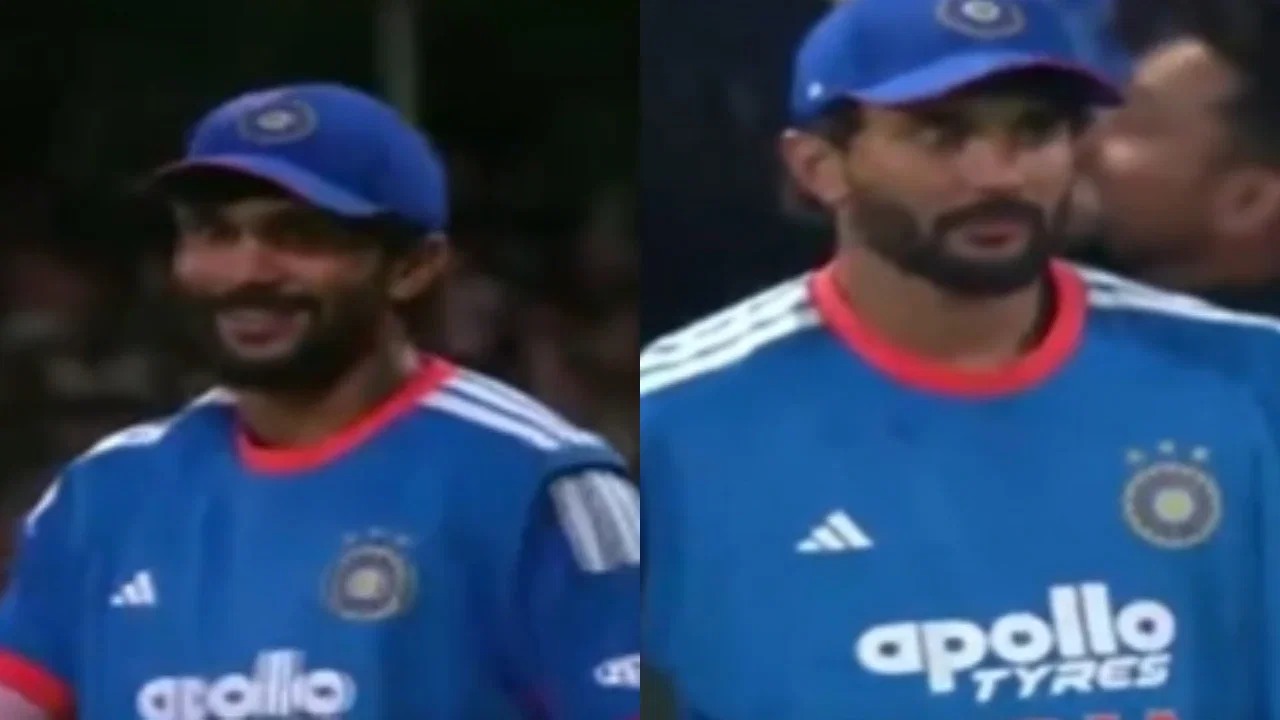
Glenn Phillips hits back at Indian reporter over New Zealand’s fielding criticism
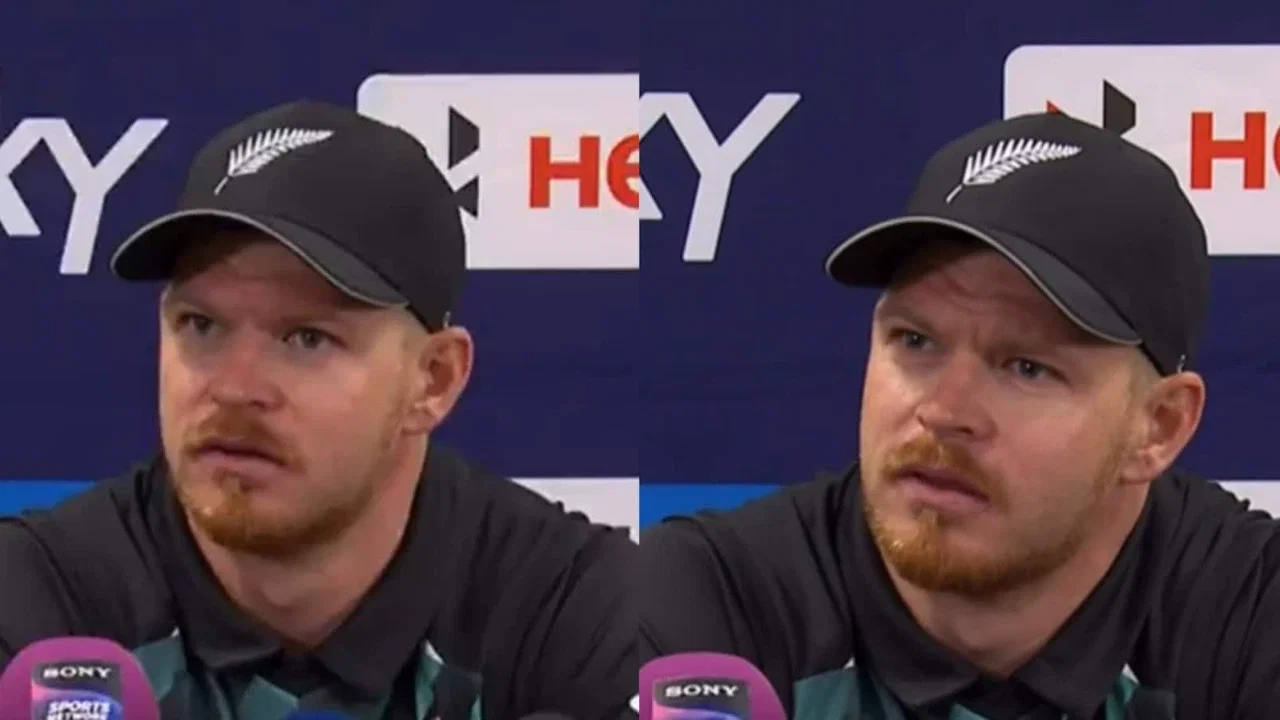
Glenn Phillips Challenges ‘Four Dropped Catches’ Claim After India’s Record T20I Chase
New Zealand all-rounder Glenn Phillips pushed back against claims that his side dropped four catches during the opening T20I against India, arguing that several of the moments in question were difficult chances rather than straightforward opportunities. His comments followed a dramatic match at Hagley Oval in Christchurch, where India chased a target of 226 with two balls remaining to take a 1–0 lead in the five-match series.
Fielding became a major talking point after New Zealand’s missed opportunities appeared to give India extra lives during the high-scoring chase. But Phillips, widely regarded as one of New Zealand’s most athletic fielders, said the number being circulated did not accurately reflect what happened on the field. He maintained that a chance should not automatically be labelled a dropped catch simply because a fielder made an attempt.
India complete a remarkable 226-run chase
India’s successful pursuit of 225 was the defining story of the series opener. Chasing a demanding total at Hagley Oval, the visitors kept the required rate within reach and found enough contributions through the middle and lower order to finish on 226 for six. The result came with two deliveries left, turning a match that had seemed firmly within New Zealand’s grasp into a memorable Indian victory.
New Zealand had set a formidable target, but India’s innings gathered momentum as the chase progressed. In a contest with little margin for error, every extra run and every missed opportunity mattered. The home side’s fielding came under scrutiny because several Indian batters survived moments that could have changed the course of the innings.
Among the incidents discussed were a difficult chance involving Axar Patel in the 13th over, when Mitchell Santner was unable to hold on, and a return-catch attempt by Matt Henry in the following over. Finn Allen also put down Shreyas Iyer, while Lockie Ferguson made contact with an outside edge from Naman Dhir that ultimately ran away for four.
Those moments were grouped together in questions put to Phillips after the match. The reported count of four dropped catches, however, did not sit well with the New Zealand all-rounder, who drew a distinction between a clear catching opportunity and a ball that a fielder could not realistically reach or control.
Phillips disputes the catch count
Phillips questioned which incidents were being included in the total and objected to counting chances where, in his view, the fielder had not properly got a hand to the ball. As quoted by News18, he challenged the premise of the question and said that only certain attempts should be considered genuine dropped catches.
“Drop catches happen. Four? Which ones? Lockie? You’re counting two that no one got their hands on?” Phillips said, before referring to the chances involving Santner and Allen. He added that fielding statistics should be based on whether a player had a realistic opportunity to complete the catch, rather than simply recording every unsuccessful attempt.
The exchange highlights a familiar debate in cricket: where does a missed chance end and an exceptional piece of fielding begin? Official scorecards can record catches and dismissals, but post-match discussions often include a wider range of moments—diving attempts, deflections, near-misses and boundary saves. Without a consistent definition, the phrase “dropped catch” can be used differently by broadcasters, journalists, players and supporters.
Phillips’s point was not that New Zealand had fielded perfectly. Rather, he argued that the count should be accurate and that difficult or unreachable chances should not be treated as routine errors. That distinction matters in a match where the pressure of defending a large total could magnify every fielding lapse.
Nathan Smith’s boundary effort adds to the debate
The conversation also turned to Nathan Smith’s attempt to dismiss Dhir near the boundary. At 16.2 overs, Smith got close to completing a spectacular catch, but his momentum carried him over the rope with the ball. Under the laws of the game, the effort resulted in six runs rather than a dismissal.
Phillips questioned why that play should be described as a dropped catch, noting that Smith had made an athletic attempt to save the ball but could not remain inside the boundary. “Nathan at the boundary line? One that went for six? Wow,” he said.
Boundary catches are among cricket’s most difficult fielding plays because a fielder must control the ball while managing speed, balance and awareness of the rope. A player who takes the ball but lands beyond the boundary has not completed a legal catch. Yet such an attempt can still be a remarkable piece of athleticism—another reason Phillips objected to placing it in the same category as a more conventional missed chance.
Phillips turns the question back on India
Phillips also challenged the reporter to consider India’s fielding before focusing solely on New Zealand’s mistakes. He argued that if the discussion was going to assess fielding performance, both teams should be judged by the same standards.
“How many catches did you guys drop?” he asked, before reiterating that chances should be counted properly. Phillips acknowledged that missed catches are part of cricket but said the label should be reserved for balls a fielder had a genuine opportunity to take.
His response was direct, but the broader issue remains relevant beyond this one match. In T20 cricket, where batters attack from the outset and scores can rise quickly, fielding pressure is intense. A single missed chance may extend an innings, change a bowler’s figures or shift the momentum of a chase. At the same time, not every dive or fingertip contact represents a catch that should reasonably have been taken.
What the result means for the series
India’s two-ball victory gives the visitors an early advantage in the five-match T20I series and provides a strong platform for the games ahead. New Zealand, meanwhile, will look to tighten its execution while defending high totals, particularly in the closing overs when small margins can decide a match.
The opening game also offers plenty for both teams to review: India will take confidence from completing a demanding chase, while New Zealand can assess how its bowling plans and fielding held up under pressure. The next match will test whether the hosts can respond and level the series—or whether India can build on its dramatic start.
For now, Phillips’s comments have added another layer to the post-match discussion. The debate is not simply about whether New Zealand missed chances, but how those chances should be classified. Any prediction for the next T20I will depend on more than fielding alone, but with the series finely poised, cleaner execution in the field could prove decisive.
Latest News
Bangladesh name 15-member squad for West Indies Tests; Taskin Ahmed returns

New Zealand name 11 international stars in 19-member squad for India A series

Ayush Mhatre set to miss rest of Mumbai’s domestic season after surgery for Grade 4 hamstring tear
Pat Cummins expects Cameron Green and Josh Inglis to be available for third South Africa Test
Daren Sammy used Hindi expletive “BC” in reaction to Sri Lanka’s historic chase vs England? Fans react
PSL Sixes: PCB mulls new six-a-side tournament to expand league’s reach
China to host PSL 2027 auction? Franchise owner wants PCB to follow IPL
Glenn Phillips hits back at Indian reporter over New Zealand’s fielding criticism
Ishan Kishan’s injury opens door for Vaibhav Sooryavanshi’s comeback to India XI vs New Zealand
Top 5 highest run-chases in ODIs, ft Sri Lanka’s win over Harry Brook’s England

Sanju Samson makes massive statement on social media noise after match-winning knock vs New Zealand
WTC Points Table after South Africa vs Australia 2nd Test, 2026
Renuka Singh Thakur ruled out of Zimbabwe ODI series, Jintimani Kalita gets call-up
Why was the toss conducted twice in Jammu & Kashmir vs Vidarbha Ranji Trophy match; reason revealed