Top 5 highest run-chases in ODIs, ft Sri Lanka’s win over Harry Brook’s England
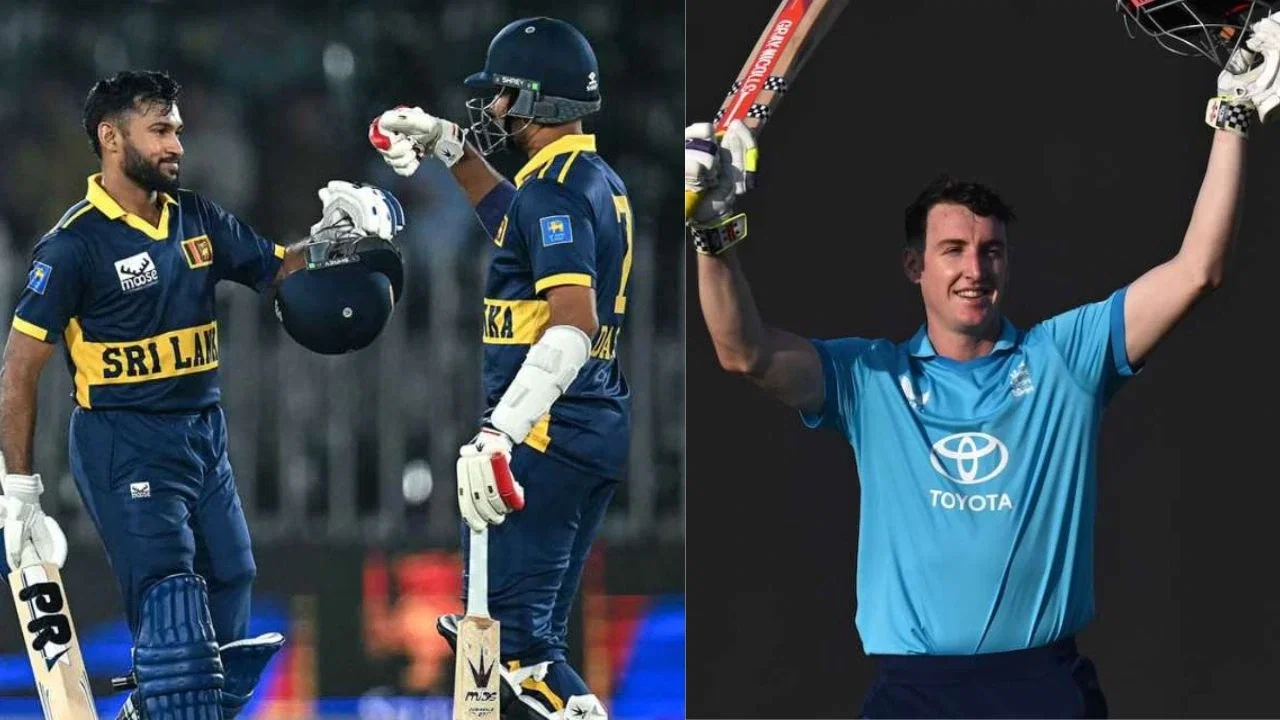
Sri Lanka Complete Historic 430-Run Chase to Defeat England in Rawalpindi ODI
Sri Lanka produced a remarkable display of batting under pressure, defeating England by two wickets after chasing a target of 430 in the third ODI at Rawalpindi on October 22. The hosts reached 430/8 with one ball remaining, completing the second-highest successful run-chase in men’s ODI history and turning Harry Brook’s extraordinary double century into a losing effort.
England had piled up 429/4 in their 50 overs, powered by Brook’s unbeaten 202 from 116 deliveries. Yet Sri Lanka answered with a composed, aggressive innings of their own, built around major contributions from Avishka Fernando, Pavan Rathnayake, captain Dasun Shanaka and the match-winning Janith Liyanage. The contest produced 859 runs, making it the second-highest aggregate in ODI cricket.
Harry Brook’s Record-Breaking Double Century
England’s innings gathered momentum after the early loss of Ben Duckett and Tom Banton, who had helped provide a brisk start with a half-century. Brook initially took time to assess the conditions before launching an assault on the Sri Lankan attack. His innings combined clean hitting with calculated risk, allowing England to accelerate sharply through the middle and final overs.
Joe Root offered valuable support, scoring 69 from 66 balls and helping Brook establish a platform for a late surge. Brook then shifted into a higher gear, reaching his double century in just 114 balls. He finished unbeaten on 202, striking 21 fours and 10 sixes. Remarkably, his second hundred came from only 39 deliveries.
Will Jacks added further urgency at the end, smashing 66 from just 30 balls. His explosive contribution helped England finish with a total that would usually be considered imposing, even on a batting-friendly surface.
Brook’s innings set several milestones. He recorded England’s highest individual score in men’s ODIs, became the country’s first batter to score a double century in the format and registered the fastest ODI double hundred on record. He also became the first English batter to make an ODI century in Rawalpindi, setting a new individual-score benchmark at the venue.
Despite those achievements, Brook’s performance could not secure victory. His double century also became the highest individual score in a losing cause in men’s ODI cricket, surpassing Charles Coventry’s unbeaten 194 for Zimbabwe against Bangladesh in 2009.
Sri Lanka’s Batters Keep the Chase on Track
Chasing 430 required Sri Lanka to balance urgency with patience. Rather than allowing the required run rate to dominate their approach, the hosts kept scoring options open and ensured that England could not settle into a sustained spell of control.
Avishka Fernando made 97, narrowly missing a century but giving Sri Lanka a strong start. Pavan Rathnayake then delivered the innings’ central contribution, scoring 130 from 106 balls. His knock combined steady accumulation with timely boundary hitting, helping the hosts remain in contention as the target climbed into the final stages.
Captain Dasun Shanaka added another major boost, striking 97 from only 50 deliveries. His attacking innings reduced the pressure on the lower order and gave Sri Lanka a realistic chance of completing a chase that had appeared daunting even after the first half of the match.
England fought back late, taking wickets and forcing Sri Lanka to negotiate a tense finish. With the result still uncertain, Janith Liyanage held his nerve. He remained unbeaten on 61 from 27 balls, providing the decisive late acceleration and guiding Sri Lanka over the line at 430/8 with one delivery to spare.
How Sri Lanka’s Chase Ranks in ODI History
Sri Lanka’s successful pursuit of 430 is now the second-highest run-chase in ODI history. Only South Africa’s famous 438/9 against Australia at Johannesburg in 2006 ranks higher. That landmark match remains a defining example of the format’s capacity for extraordinary turnarounds, and the Rawalpindi contest has added another entry to the list of classic high-scoring encounters.
Highest Successful Run-Chases in Men’s ODI Cricket
1. South Africa — 438/9 vs Australia, Johannesburg, 2006
2. Sri Lanka — 430/8 vs England, Rawalpindi, 2026
3. India — 406/2 vs West Indies, Guwahati, 2026
4. Netherlands — 374/9 vs West Indies, Harare, 2023
5. South Africa — 372/6 vs Australia, Durban, 2016
The match’s combined total of 859 runs is also the second-highest aggregate in ODI cricket. The record remains the 872 runs scored when Australia made 434 and South Africa replied with 438 in Johannesburg. Rawalpindi’s total surpassed several other celebrated high-scoring games, including India’s 414 against Sri Lanka’s 411 at Rajkot in 2009.
Highest Match Aggregates in Men’s ODI Cricket
1. 872 runs — Australia 434 vs South Africa 438, Johannesburg, 2006
2. 859 runs — England 429 vs Sri Lanka 430, Rawalpindi, 2026
3. 825 runs — India 414 vs Sri Lanka 411, Rajkot, 2009
4. 811 runs — West Indies 405 vs India 406, Guwahati, 2026
5. 807 runs — England 418 vs West Indies 389, St George’s, 2019
Match Prediction and What the Result Shows
Before Sri Lanka’s reply, England’s 429/4 would have made them strong favourites in any match prediction. Brook’s historic innings and Jacks’ late hitting had put the visitors in a powerful position. But the chase demonstrated why a large ODI total is never a guarantee of victory, especially when the pitch remains good for batting and the chasing side has several players capable of sustaining a high scoring rate.
Sri Lanka’s success came from contributions across the lineup rather than reliance on a single batter. Fernando and Rathnayake built the foundation, Shanaka changed the tempo, and Liyanage delivered when the pressure was greatest. England, meanwhile, will reflect on whether they could have taken wickets earlier or restricted the flow of boundaries during the middle overs.
For fans, the Rawalpindi ODI offered a rare combination: a record-setting individual innings and an even more astonishing team response. Brook’s 202 will remain a landmark achievement, but Sri Lanka’s two-wicket win is the result that defines the match—a historic chase completed with composure, courage and one ball to spare.
Latest News
Top 5 highest run-chases in ODIs, ft Sri Lanka’s win over Harry Brook’s England

Sanju Samson makes massive statement on social media noise after match-winning knock vs New Zealand
WTC Points Table after South Africa vs Australia 2nd Test, 2026

Renuka Singh Thakur ruled out of Zimbabwe ODI series, Jintimani Kalita gets call-up
Why was the toss conducted twice in Jammu & Kashmir vs Vidarbha Ranji Trophy match; reason revealed

Watch: Nitish Kumar Reddy suffers brain-fade, embarrasses himself with catch celebration off free-hit vs NZ

Tilak Varma labelled “fraud” as angry fans bash him for “one of the worst T20 knocks” in 1st NZ T20I
Abhishek Sharma breaks Rohit Sharma’s six-hitting record to go No. 1
Bangladesh spinner Aliss Al Islam reported for suspect bowling action after ODI debut
Joe Root scripts history with 8,000 ODI runs, joins elite international club
“Know exactly what they’re doing”: Shreyas Iyer praises India’s batters after record chase against New Zealand
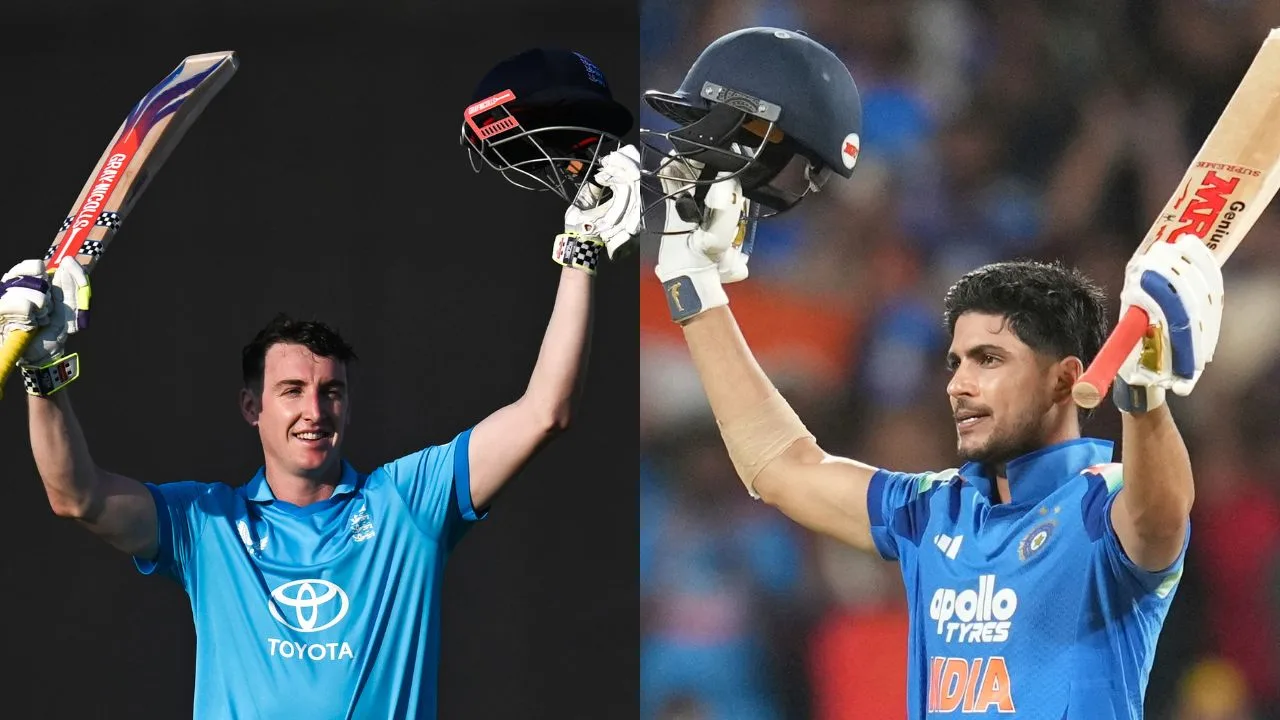
Harry Brook scripts history, surpasses Shubman Gill with record-breaking double century
India’s highest T20I run-chases: Top 5 successful pursuits
“I like batting with him”: Sanju Samson explains his understanding with Abhishek Sharma after winning POTM