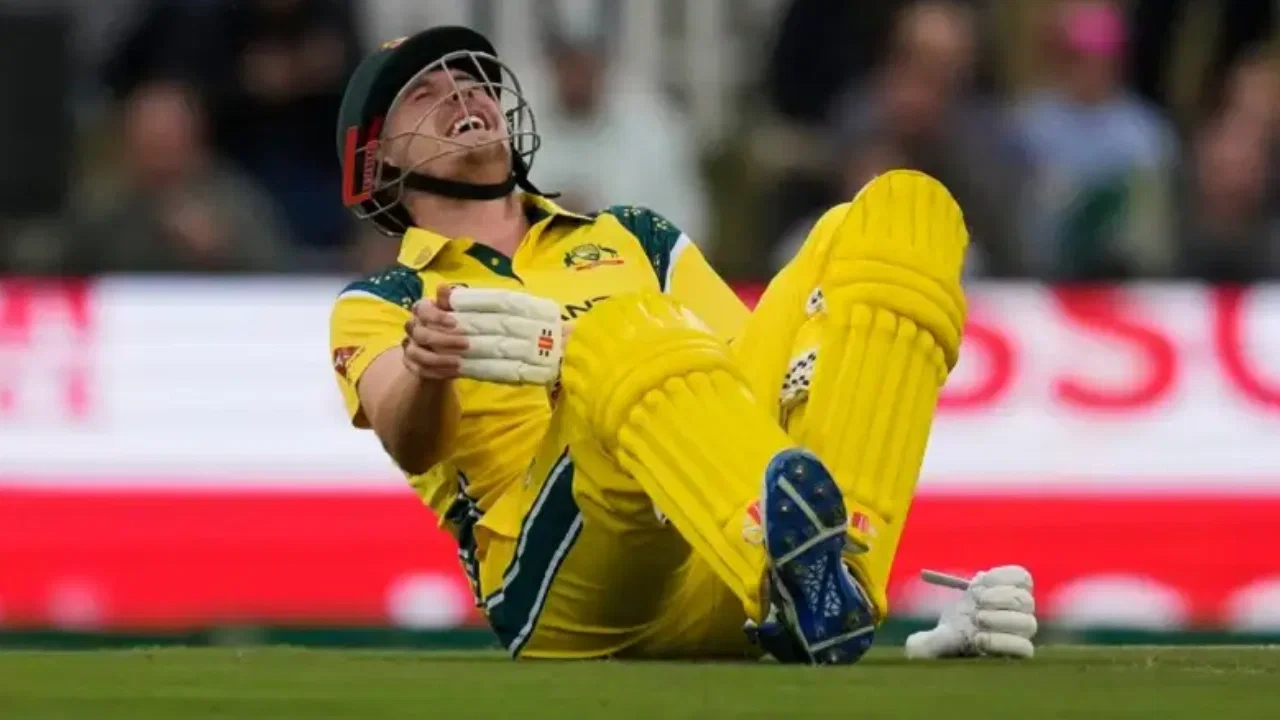
Harry Brook wins hearts with heartwarming gesture towards young Australian fan at MCG
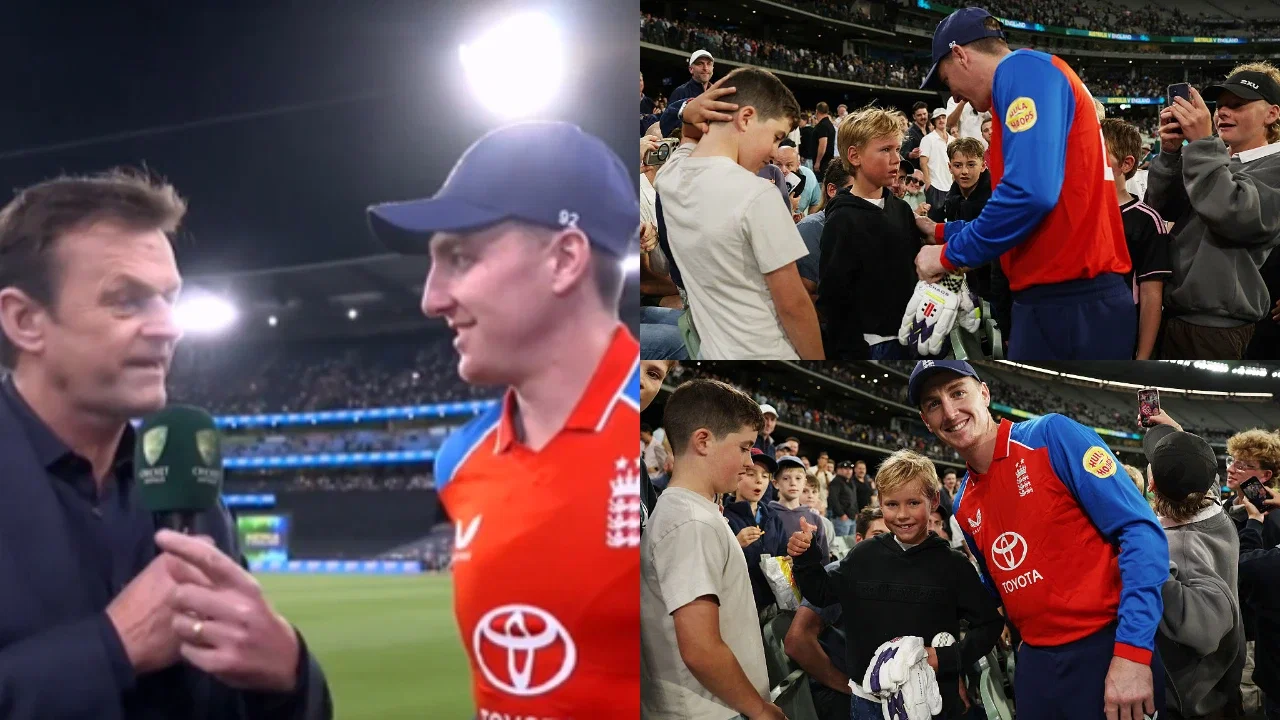
Harry Brook’s explosive 20-ball fifty and thoughtful gesture light up England’s T20I against Australia
England captain Harry Brook produced one of the standout performances of the opening T20I against Australia, combining fearless stroke play with a moment of sportsmanship that captured the spirit of the contest. At the Melbourne Cricket Ground on Saturday, November 21, 2026, Brook struck a rapid half-century to help England post 187 for nine. Afterward, attention also turned to his kind response when one of his sixes accidentally struck a young spectator.
The incident took place during England’s innings, when a powerful Brook hit sent the ball into the stands near the team dugout. The young Australian fan was struck, prompting Brook to check on him after the moment. The England batter later presented the boy with a pair of his batting gloves—a small but memorable gesture that helped turn an unfortunate accident into a special match-day experience.
Brook gives young fan a memorable MCG keepsake
Brook spoke about the exchange during the innings break in an interview with former Australian wicketkeeper Adam Gilchrist. He said the boy did not initially appear especially pleased when Brook approached, but hoped the gloves would improve his evening.
“Yeah, he got hit unfortunately with one of my sixes, but he didn’t look too happy when I went over. But hopefully that’s made his night by giving him a pair of gloves,” Brook said.
The gesture quickly became one of the most talked-about moments of the match. In a high-pressure international fixture, players are often remembered for their runs and wickets, but interactions with supporters can leave an equally lasting impression. Brook’s response showed an awareness of the young fan’s experience and added a human touch to an otherwise fiercely competitive evening.
For spectators at the MCG, where a big crowd and the fast pace of T20 cricket can make every delivery feel dramatic, the incident was a reminder of the risks that come with powerful hitting. It also highlighted why attentive crowd management and protective measures in seating areas remain important at major cricket venues.
A rapid recovery after England’s early setback
Brook’s innings was especially valuable because England’s start was far from ideal. Australia made an immediate impact when Joel Davies dismissed Phil Salt for a golden duck on the first ball of the innings. Aneurin Donald added only 10, leaving England needing a quick response to regain momentum.
Brook supplied it with remarkable speed. Rather than allowing the early wickets to slow the scoring, he attacked the Australian bowlers and put pressure back on the fielding side. One of the defining passages came against Riley Meredith, when Brook struck three consecutive sixes. The burst helped him reach his half-century in just 20 balls and pushed England to 74 runs during the powerplay.
That start gave England a platform to build a competitive total. Brook then combined with Tom Banton in a third-wicket partnership worth 97 runs, stabilising the innings while continuing to score at an aggressive rate. Their stand was crucial after the early dismissals, turning a shaky beginning into a position from which England could target a strong finish.
Brook’s innings ended when Nikhil Chaudhary dismissed him for 65. He had faced only 28 deliveries, hitting four fours and six sixes. The score reflected the captain’s ability to shift gears quickly: he attacked when opportunities appeared, but also helped anchor a substantial partnership before his departure.
How Brook approaches batting against Australia
After the innings, Brook explained that his movement at the crease is intended to unsettle bowlers and make it harder for them to settle into a consistent line and length. He said he moves both across the crease and down the pitch, but does not try to pre-plan every shot.
“I move around a lot, and that’s mainly to try and put the bowlers off,” Brook said. “But I’m still trying to play the ball on instinct. I know there’s a lot of movement, whether that’s laterally or down the pitch, but I’m literally just trying to see the ball and hit the ball.”
That approach is particularly suited to the shortest format, where bowlers often change their plans to limit boundaries and batters have only a narrow window to take control. By varying his position, Brook can disrupt a bowler’s preferred target and create different angles for scoring. His emphasis on reacting to the ball, rather than committing too early to a predetermined shot, also helps explain the improvisational quality of his innings.
What Brook’s performance could mean for the series
England’s total of 187 for nine gave the opening match a competitive edge and offered an early indication of the attacking intent Brook wants from his side. The captain’s innings was not simply a collection of boundaries: it came at a moment when England needed a response, and his partnership with Banton helped restore the innings after Salt’s first-ball dismissal.
For Australia, the match offered both a warning and useful information. Brook demonstrated how quickly he can punish missed opportunities, particularly when bowlers lose control of their lengths. Limiting his access to deliveries he can hit in his preferred areas is likely to be a key consideration as the teams continue their five-match T20I series.
Any prediction about the series remains uncertain after one game, but Brook’s form gives England a significant source of momentum. His ability to score quickly, adapt his position at the crease and build partnerships makes him a central figure in the team’s plans. Australia, meanwhile, will look to respond with disciplined bowling and sharper execution in the middle overs.
Brook’s night at the MCG ultimately carried two distinct stories: a blistering 65 that helped England recover from a poor start, and a thoughtful act that ensured a young fan was not defined by an accidental blow from the ball. Together, they made his performance memorable for more than the scorecard alone.
Latest News
Harry Brook wins hearts with heartwarming gesture towards young Australian fan at MCG
Jacob Oram questions Wellington pitch after India’s dominant batting show in 1st Test
Who is Vikalp Tiwari? Meet 17-year-old who became youngest captain to score T20 century
Darren Lehmann reflects on Australia’s dressing-room culture amid Sandpapergate row
BCCI rules out Suryakumar Yadav’s return to India’s T20I team despite amazing form
Usman Khawaja and David Warner removed from Fox Cricket commentary amid Sandpapergate claims
Matthew Hayden warns Australia and Pat Cummins of Sandpapergate fallout ahead of India Test series

IND vs PAK: Here’s why Pakistan won the Blind Asia Cup 2026 despite no final being played
Dinesh Karthik puts KL Rahul in elite Test opener conversation after 136-run knock against New Zealand

IPL 2027: Zaheer Khan addresses CSK’s trade links with Gujarat Titans
Jacob Oram refuses to judge Jacob Duffy by his expensive spell in 1st Test against India
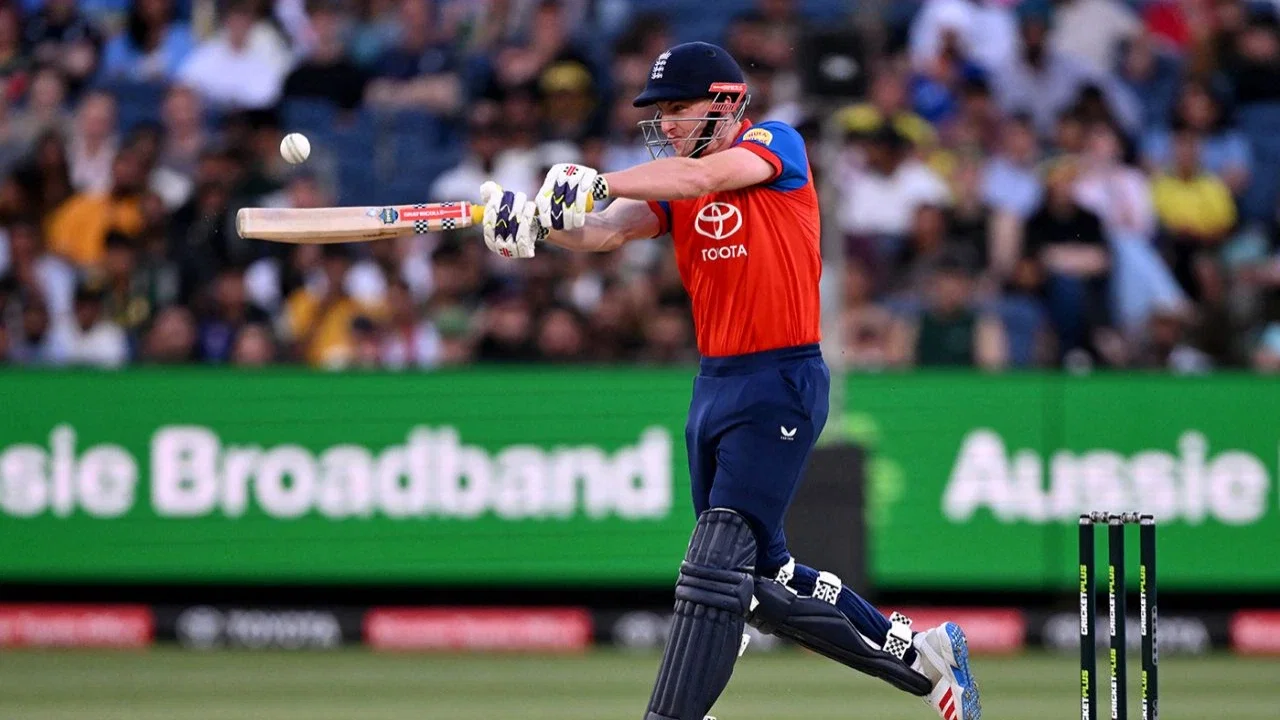
Harry Brook smashes 24 runs off Riley Meredith in 1st AUS vs ENG T20I
IND A vs PAK A Playing 11 Today, Live Streaming, Pitch & Weather: ACC Men’s Asia Cup Rising Stars 2026, Match 8
Watch: Debutant Lachlan Shaw pulls off a sensational catch in AUS vs ENG 1st T20I