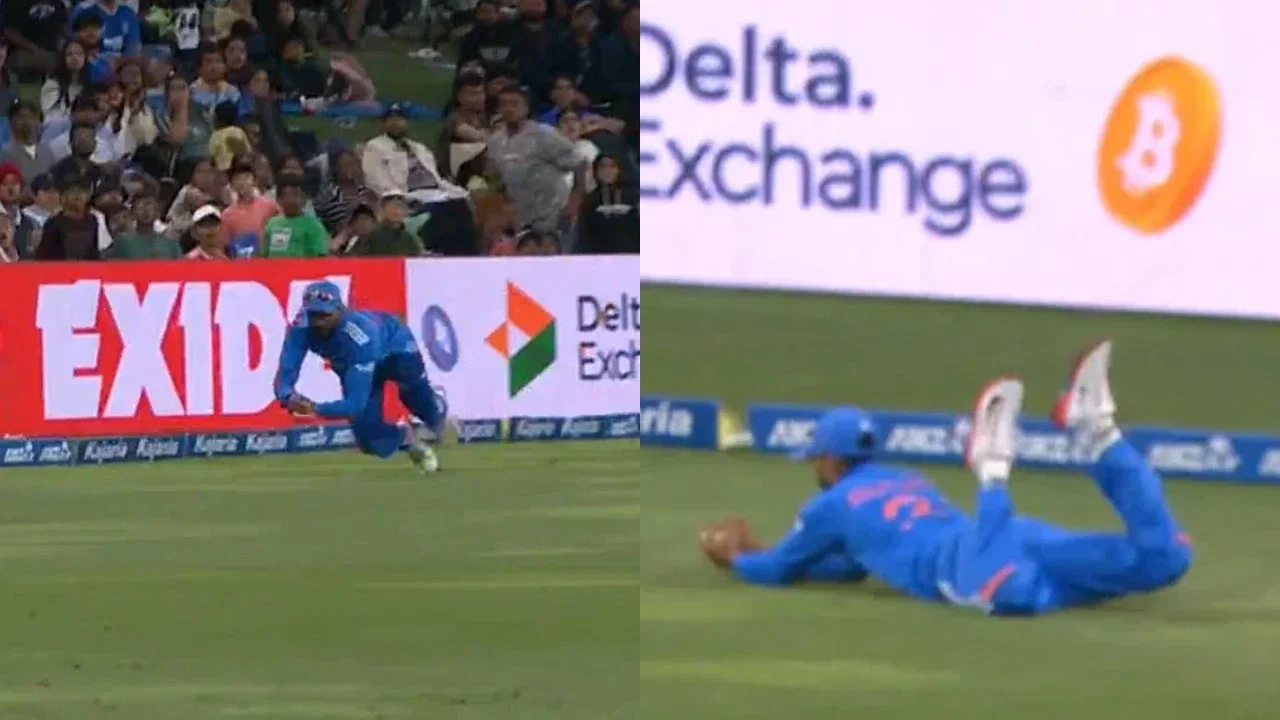
Mitchell Santner opens up on his hand injury, credits Shreyas Iyer for India’s 3-1 ODI series win
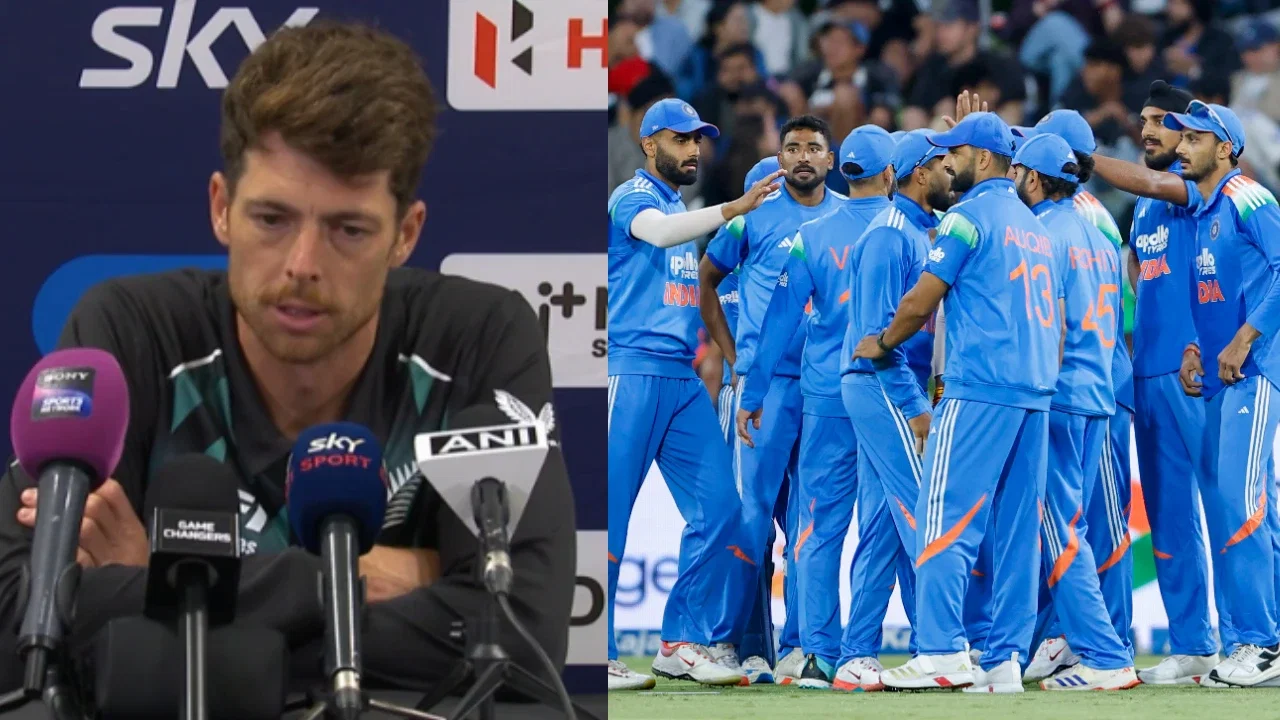
Mitchell Santner’s Hand Injury Adds Concern After India Seal ODI Series
New Zealand captain Mitchell Santner is waiting on an X-ray after suffering a painful hand injury during the fifth and final ODI against India at Bay Oval in Mount Maunganui on Sunday, November 15. The scare came during New Zealand’s unsuccessful chase, adding a worrying note to a match that ended with India winning by 22 runs and securing the series 3-1.
Santner was struck on the hand while batting and required treatment from the team physiotherapist. He returned to the crease after the injury was assessed, but later indicated that the discomfort remained significant. His condition will be clearer after further medical checks, with the X-ray expected the following morning.
Santner says his hand is “pretty sore”
Speaking at the post-match presentation, Santner offered a candid update on the injury. “Pretty sore, not a lot (smiles); it’s not great. An X-ray tomorrow morning—let’s see what it is,” he said, as quoted by Cricbuzz.
The timing is important for New Zealand, whose captain is a key all-rounder and a central figure in both the bowling attack and the middle order. An X-ray will help establish whether the injury is a bruise or something more serious. Until the results are known, any prediction about his availability for upcoming fixtures remains uncertain.
Despite the pain, Santner contributed with the ball earlier in the match, taking three wickets for 47 runs from his 10 overs. His performance helped New Zealand restrict India to 209 in 42.1 overs, a total that appeared manageable on a surface that played slower than expected.
New Zealand’s bowlers make India work for every run
New Zealand’s attack adapted effectively as the pitch offered less pace and bounce than the hosts had anticipated. Santner led the way, while Jacob Duffy also claimed three wickets, conceding 60 runs. Matthew Fisher took two wickets for 28, and Michael Bracewell and Blair Tickner picked up one apiece.
The bowlers applied pressure through the innings rather than allowing India to build a decisive partnership. Santner was particularly pleased with how his side responded to the conditions, noting that the pitch was a little slow and that the bowlers adjusted their plans accordingly.
He also singled out Bracewell’s work through the middle overs, describing his contribution as outstanding. New Zealand’s ability to take wickets at regular intervals kept India from turning a modest start into a much larger total. At the halfway point, Santner felt that 209 was a score his team could chase.
“I was very happy at the halfway stage,” he said. “It’s probably not as much in it as we thought. I thought the guys adapted well. It was obviously a little bit slow, and then the way Beast (Michael Bracewell) kind of operated through the middle was outstanding. I think we were able to chip wickets out throughout. I was pretty happy with the 200 (209).”
Middle-order collapse derails the chase
New Zealand began the pursuit with a reasonable platform and were 64 for one at one stage. But the innings lost momentum when India’s bowlers broke through repeatedly. The hosts slipped to 119 for six after losing five wickets for just 55 runs, leaving the lower order with too much to do.
Several New Zealand batters made promising starts, but none turned them into the substantial innings required in a chase of 210. Santner scored 24 from 31 deliveries before Naman Dhir dismissed him in the 41st over. New Zealand were eventually bowled out for 187 in 48.1 overs.
The result underlined a familiar lesson in ODI cricket: a target can be within reach, but the chase still depends on partnerships that absorb pressure and carry the innings through difficult periods. Santner believed New Zealand had opportunities to take the game deeper, but India kept finding breakthroughs before the hosts could settle.
Santner praises India’s bowling changes
Santner credited India’s bowlers for defending their total and praised captain Shreyas Iyer’s management of the attack. India used four seamers during the first 35 overs before turning to spin, a sequence that helped maintain pressure while the pitch offered assistance to the faster bowlers.
Arshdeep Singh was India’s leading wicket-taker, finishing with three for 30. Mohammed Siraj claimed two wickets for 50, while Axar Patel also took two as India closed out the innings. Auqib Nabi and debutant Yash Thakur were part of the pace group deployed during the early and middle stages.
“I think they bowled really well in tonight’s show. All four seamers bowled well; Shreyas did a great job rotating them around,” Santner said. He also noted that Iyer held Axar back while the seamers were operating effectively, then brought Arshdeep and Siraj back at key moments.
Those decisions helped India keep New Zealand from building the partnerships needed to shift the pressure. Rather than relying on one spell or one bowler, India shared the workload and continued to attack, particularly through the middle overs when the chase began to falter.
Was the 3-1 series scoreline a fair reflection?
Although India finished the series with a 3-1 advantage, Santner felt the margin did not fully capture how competitive the contest had been. Rain disrupted the five-match series, with two games decided using the DLS method and another abandoned. Those interruptions, along with the influence of tosses, made it harder for either side to establish a consistent rhythm.
Santner said New Zealand had played plenty of good cricket despite the conditions and believed the final match could have become more competitive if the batting side had taken the chase deeper. He also pointed to the value of giving different players opportunities, saying that several members of the squad had stepped up during the series.
For India, the final ODI was a test of composure after being bowled out for a relatively low total. Their bowlers responded with discipline, while the captain’s rotations helped keep New Zealand’s batters under pressure. For New Zealand, the defeat will prompt reflection on how to convert starts into partnerships—alongside concern over Santner’s hand.
The immediate focus now is the captain’s medical assessment. If the X-ray shows no significant damage, Santner may be able to return to action after recovery and monitoring. If it reveals a fracture or another serious issue, New Zealand could face a longer-term selection challenge. For now, the team and supporters will be waiting for the results before making any firm prediction about his next appearance.
Latest News
ICC confirms future WTC finals and World Cup windows until 2035
“I have no further comments”: Cameron Bancroft responds to Usman Khawaja’s Sandpapergate remarks
‘Wasn’t getting the grip’: Sunil Gavaskar reveals why Mohammed Siraj took time to find rhythm
“Roko for maybe the last time”: Mitchell Santner confirms Virat Kohli and Rohit Sharma’s retirement
“It’s a great achievement”: Shreyas Iyer reacts as India complete ODI and T20I series double in New Zealand
Shreyas Iyer set for Syed Mushtaq Ali Trophy return after India’s series double in New Zealand
Ben Stokes ruled out of PSL 2027 as Multan Sultans confirm England star’s unavailability
Mitchell Santner opens up on his hand injury, credits Shreyas Iyer for India’s 3-1 ODI series win
“Never know what will happen”: Shreyas Iyer highlights key lessons for India ahead of 2027 ODI World Cup
Sam Billings returns as Dubai Capitals captain for ILT20 2026, set to miss BBL matches
“Has Been really grateful”: Arshdeep Singh credits fiancee Samreen Kaur after POTM performance vs New Zealand
“Calm and composed like MS Dhoni”: Uttarakhand head coach compares Lakshya Raichandani with former captain
Gautam Gambhir takes subtle dig at Rohit Sharma and Virat Kohli, says ‘bowlers win you series’
Dinesh Karthik credits Mohammed Siraj and Arshdeep Singh for India’s win vs NZ in 5th ODI