Sunil Gavaskar hails Shubman Gill as “totally reliable” after near-century against New Zealand

Sunil Gavaskar Praises Shubman Gill After India Captain Falls Two Runs Short of Wellington Century
Shubman Gill may have missed out on a memorable Test century, but his composed innings at the Basin Reserve left a strong impression on former India captain Sunil Gavaskar. Gill was dismissed for 98 against New Zealand, just two runs shy of three figures, as India built a commanding position in the first Test in Wellington.
India declared at 720/9, setting a new record for the highest Test total at the Basin Reserve. New Zealand reached 119/2 in their second innings, still 233 runs behind, leaving India needing eight wickets on the final day to secure an away victory. With the match finely poised between a dominant Indian performance and a determined New Zealand resistance, Gill’s contribution—and Gavaskar’s assessment of it—became a major talking point.
Gavaskar: Gill Looked Settled from the First Ball
Speaking on Sony Sports Network after play, Gavaskar highlighted Gill’s assurance at the crease and his clear appetite for batting. The former opener said the Indian captain appeared comfortable from the beginning of his innings, showing no hesitation or uncertainty in the demanding conditions.
Gavaskar described Gill as “totally reliable” and said he looked confident as soon as he came in. In his view, Gill’s body language suggested that he was ready to spend time at the crease and build a substantial score. He also praised the batter’s ability to look composed under pressure, saying Gill seemed “immovable and impregnable” from the outset.
That assessment reflected more than the number of runs Gill scored. His 98 was an important part of a deep Indian batting effort, and his calm presence helped maintain the momentum as the innings progressed. Although he fell short of a century, the knock reinforced the impression that Gill is growing into a dependable presence in India’s Test middle order.
How Gill Was Dismissed on 98
Gill’s innings ended in the final over of the day when New Zealand seamer Jacob Duffy found a delivery that angled in and nipped back. The ball struck Gill on the pad and went on to hit the stumps, leaving the captain two runs short of a century that had appeared within reach.
The dismissal was a dramatic finish to Gill’s innings, but it did little to diminish its value to India. In Test cricket, a near-century can still shape a match, particularly when it comes as part of a large total that places pressure on the opposition. For Gill, the innings also offered another demonstration of how effectively he is adapting to his role as captain and to batting at No. 4.
Simon Doull Sees Gill Enjoying Captaincy and the No. 4 Role
Former New Zealand fast bowler Simon Doull also praised Gill during the post-play discussion. Doull noted that the Indian captain appeared to be enjoying both the responsibility of leading the side and his move to No. 4 in the batting order.
Doull stressed that, in a Test match, the team result matters more than an individual milestone. If India went on to win, he suggested, Gill would be unlikely to dwell on missing his hundred. The observation captured an important feature of Gill’s innings: while the personal landmark was close, his broader task was to help India build a position from which they could push for victory.
Gill’s captaincy and batting promotion have arrived at the same time, making this period a significant test of his leadership. A No. 4 batter is often expected to steady an innings after an early wicket or accelerate when the top order has laid a strong platform. Gill’s performance in Wellington suggested he is becoming increasingly comfortable with those demands.
India’s Batting Depth Produces a Record Total
India resumed the day at 486/4 and added 143 runs during the morning session. Rishabh Pant continued his attacking approach to complete his ninth Test century, while nightwatchman Anshul Kamboj contributed a useful 38. Dhruv Jurel then added 78, helping India extend the innings before the declaration at 720/9.
The scale of the total reflected contributions from across the batting order. Six Indian batters passed 50, including Yashasvi Jaiswal, who made 85, and Devdutt Padikkal, who scored 80. Gill’s 98 was another major contribution in an innings that combined patience with positive scoring. New Zealand captain Tom Latham turned to seven bowlers as his side searched for a way to break the partnerships and limit the damage.
By reaching 720/9, India set a new record for the highest Test score at the Basin Reserve. The total gave the visitors a substantial lead and left New Zealand facing a long second-innings challenge. It also created the conditions for a potential fourth-innings finish, with India needing to take wickets rather than chase a target.
New Zealand Keep the Contest Alive
New Zealand’s second innings began poorly when Jasprit Bumrah dismissed Latham for a second-ball duck. However, Devon Conway and Henry Nicholls responded with a partnership of 60, providing the hosts with a measure of stability after the early setback.
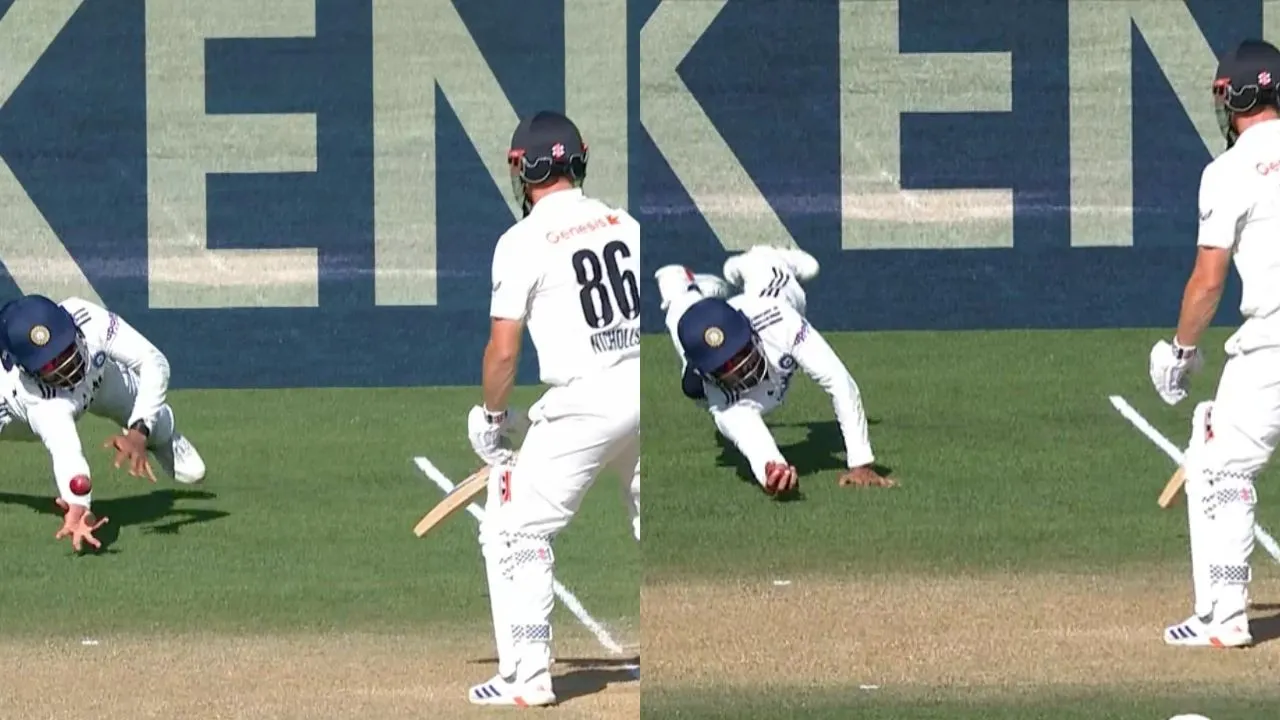
Prasidh Krishna broke through by removing Nicholls for 31. The wicket was made possible by an excellent catch from Jurel at forward short leg, giving India a timely breakthrough and shifting the pressure back onto the New Zealand batters.
Conway remained unbeaten on 59 after reaching his 14th Test half-century, while Rachin Ravindra was not out on 27. Their partnership helped New Zealand close the day at 119/2 and ensured that the match was not yet settled. The hosts still trailed by 233, but their remaining batters had an opportunity to extend the contest if they could withstand India’s attack.
Final-Day Prediction: India Hold the Advantage
India enter the final day in a commanding position, with eight wickets required to complete an away win. The large first-innings total gives the visitors room to attack, while Bumrah, Krishna and the rest of the bowling unit will look to exploit any early movement or pressure on the New Zealand lineup.
New Zealand’s hopes will depend heavily on Conway and Ravindra, who must continue their partnership and help the lower order contribute. A strong opening session could make India work hard for the remaining wickets, but the hosts still have a significant deficit to overcome.
The match’s final outcome will determine the significance of the missed century in the broader story. If India win, Gill’s 98 will be remembered as a valuable captain’s innings within a record-breaking team performance. Whatever the result, Gavaskar’s praise points to the growing confidence and reliability Gill is bringing to his role—qualities that could prove as important to India’s future Test campaigns as any individual milestone.
Latest News

Jacob Duffy becomes New Zealand’s most expensive pacer in Test history

India’s highest Test scores ever: Full list after colossal total vs New Zealand

IPL 2027: Pat Cummins confirms availability for Sunrisers Hyderabad ahead of mini auction

Mushfiqur Rahim ruled out of 2nd Test against South Africa

IPL 2027: Robin Uthappa reveals his vision as Mumbai Indians’ new batting coach
“We just don’t fet along”: Josh Hazlewood makes honest admission about Usman Khawaja
Dhruv Jurel ready to play any role for India, weighs in on Rishabh Pant’s hundred

Geoffrey Boycott launches scathing attack on Steve Smith over 2018 Sandpapergate scandal

IND vs PAK: Pakistani umpire faces match-fixing allegations after celebrating with Pakistan team
Rishabh Pant reveals secret behind his explosive batting, says he ‘play with the bowler’s mind’
Sunil Gavaskar hails Shubman Gill as “totally reliable” after near-century against New Zealand

Sanjay Manjrekar highlights Rishabh Pant’s remarkable Test record after Wellington century
Watch: Dhruv Jurel pulls off sensational catch at short leg to dismiss Henry Nicholls

Rishabh Pant smashes multiple records with century in Wellington Test