Watch: Gary Kirsten visibly furious after Dasun Shanaka’s dismissal against Pakistan, video viral
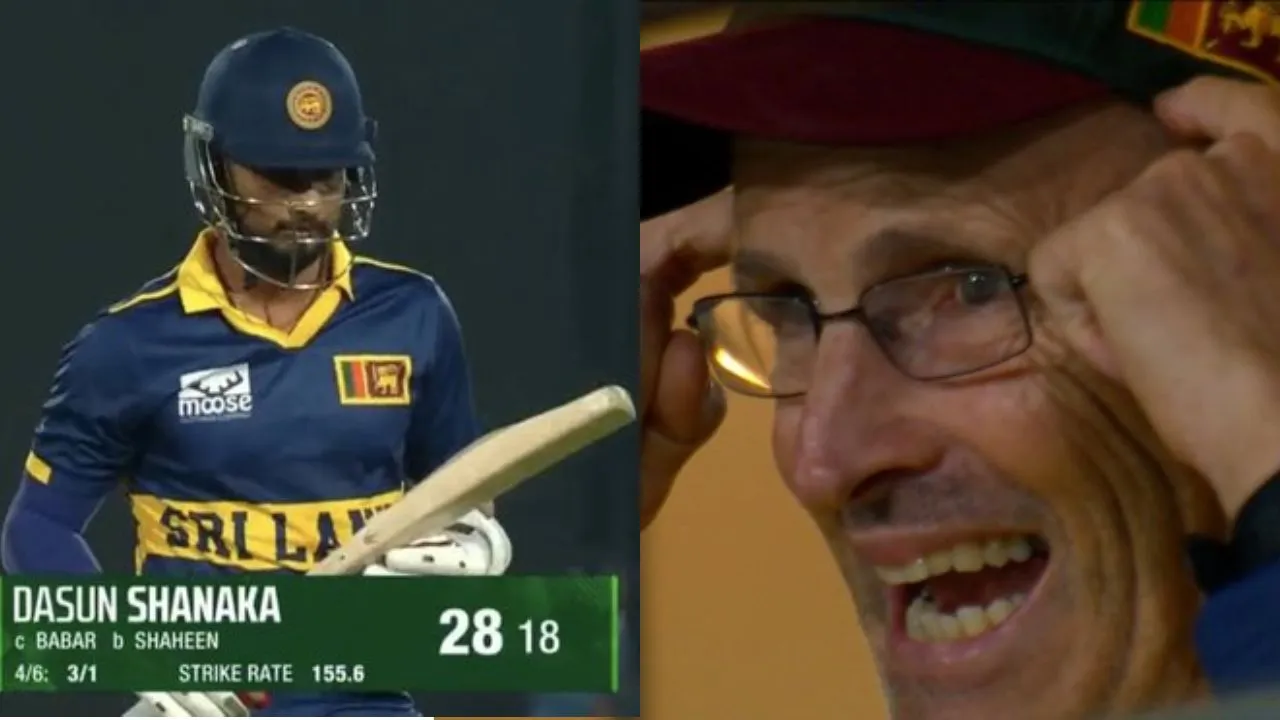
Gary Kirsten’s Frustrated Reaction After Dasun Shanaka’s Dismissal Highlights Sri Lanka’s Missed Opportunity
Sri Lanka head coach Gary Kirsten could not hide his frustration after former captain Dasun Shanaka fell during a tense chase against Pakistan in the opening ODI of the tri-series in Rawalpindi. Shanaka’s dismissal came at a pivotal moment, when Sri Lanka still had a realistic chance of reaching their target, but Pakistan regained control and went on to win by 37 runs.
The result gave Shaheen Afridi’s side an early advantage in the tournament. For Sri Lanka, the defeat was especially disappointing because a substantial partnership had brought them back into the contest. The late collapse, including the wickets of Janith Liyanage and Shanaka, turned a promising chase into a defeat.
Shanaka’s wicket changes the course of the chase
Sri Lanka needed 58 runs from 48 balls with five wickets remaining when Shanaka came to the crease. Batting on 28 from 18 deliveries, he appeared well placed to support Liyanage and keep the required rate within reach. Instead, an attempted attacking shot against Pakistan captain Shaheen proved costly.
Shaheen delivered a full ball outside off stump, angling it away from the batter. Shanaka moved back in his crease and tried to hit across the line, but did not make clean contact. Babar Azam, stationed at long-on, settled beneath the ball and completed the catch. Shanaka’s dismissal left Sri Lanka seven wickets down and placed greater pressure on the lower order.
Television cameras then showed Kirsten reacting from the dressing room. The Sri Lanka coach appeared visibly disappointed and gestured towards his head, a moment that quickly circulated on social media. While the exact meaning of the gesture is open to interpretation, it appeared to reflect frustration with the shot selection at a crucial stage of the innings.
For Sri Lanka, Shanaka’s wicket was more than the loss of a batter. It ended a potential finishing partnership and gave Pakistan a clear opening to attack the tail. The moment has also become a talking point for fans assessing the match’s decisive turning point and the prediction that Sri Lanka might still complete the chase before the late wickets fell.
Salman Ali Agha’s century powers Pakistan to 305
Pakistan’s victory was built on a resilient batting performance after Sri Lanka won the toss and chose to bowl at Rawalpindi Cricket Stadium. The hosts made an uncertain start, losing Saim Ayub for seven and Fakhar Zaman for 16 during the Powerplay to slip to 32 for two.
Babar Azam and debutant Saad Baig steadied the innings with a 74-run partnership, helping Pakistan recover from the early setbacks. Sri Lanka continued to apply pressure, however, with Eshan Malinga among the bowlers to trouble the home side and prevent the middle order from settling easily.
The innings gained momentum through a 97-run fifth-wicket stand between Salman Ali Agha and Hasan Nawaz. Agha led the recovery with an attacking 107 from 90 balls, combining patience with well-timed aggression. His century helped Pakistan rebuild after regular wickets and gave the team a total it could defend.
Pakistan were eventually bowled out for 305 in 49.5 overs. Malinga finished with four wickets for 46 runs, while Asitha Fernando claimed three. Their efforts kept Pakistan from pushing the score even higher, but Agha’s contribution proved decisive: it gave the bowlers enough runs to defend against Sri Lanka’s late charge.
Rathnayake and Liyanage bring Sri Lanka back into contention
Sri Lanka’s chase began cautiously, with the visitors reaching 42 for one after 10 overs. Kusal Mendis scored 18 before departing, and Shaheen then removed Kamindu Mendis for 44 and Sahan Arachchige, leaving Sri Lanka under pressure at 91 for four.
Pavan Rathnayake and Janith Liyanage responded with the most productive partnership of the chase. Their 119-run stand restored hope and brought the required rate within reach during the final 10 overs. Rathnayake made 79, while Liyanage contributed 60, giving Sri Lanka a genuine opportunity to challenge Pakistan’s total.
Faheem Ashraf broke the partnership by dismissing Rathnayake, and Haris Rauf soon removed Liyanage. Shanaka’s wicket followed, allowing Pakistan to tighten its grip on the match. Rauf then bowled Asitha Fernando to complete the innings, with Sri Lanka all out for 268 in 48.1 overs—37 runs short of the target.
Kusal Mendis points to Powerplay and late-innings errors
After the match, Sri Lanka captain Kusal Mendis said his side needed to show more intent in the Powerplay and avoid mistakes later in the innings. He also acknowledged that his own approach had contributed to the slow start, particularly through the number of deliveries he played without scoring.
Mendis praised Sri Lanka’s bowlers for their work in the final 10 overs, but said the team had made the chase harder by allowing too many dot balls early on. His comments underline a central lesson from the match: a competitive run chase depends not only on partnerships, but also on maintaining pressure through regular scoring and choosing the right moments to attack.
What the opening ODI means for the tri-series
Pakistan’s 37-run win gives the hosts valuable momentum in the tri-series, while Sri Lanka will be left considering how close the game came to turning in their favour. Agha’s century gave Pakistan a strong platform, but the decisive difference emerged in the closing stages of the chase, when Pakistan’s bowlers forced errors and protected their total.
For Sri Lanka, Rathnayake and Liyanage demonstrated that the target was within reach. The challenge now is to carry that middle-order resilience into future matches while improving the Powerplay scoring rate and managing pressure at the finish. Shanaka’s dismissal will remain one of the match’s defining moments—not simply because of Kirsten’s visible reaction, but because it marked the point when Sri Lanka’s comeback began to unravel.
Latest News
Lahore Qalandars owner keen to join BPL after discussions with Tamim Iqbal
Ravi Shastri wants Jasprit Bumrah to give up on one format until 2027 World Cup
Niki Prasad creates world record with two wickets in first 2 T20I balls
Watch: Gary Kirsten visibly furious after Dasun Shanaka’s dismissal against Pakistan, video viral
Darcie Brown ruled out of WBBL; Adelaide Strikers re-sign Anesu Mushangwe
Imam-ul-Haq gets PCB green signal after ban from domestic cricket
Chinmay Sutar’s triple ton headlines Ranji Trophy 2026-27 as Ayush Badoni hits double century
Akash Deep credits Gautam Gambhir for standing by him during tough times
Mohammed Shami injury update: Bengal coach issues statement on Ranji Trophy absence
Cheteshwar Pujara slams India for overlooking Manav Suthar for New Zealand Tests
Nahida Akter replaces Nigar Sultana as Bangladesh announce new T20I captain

Why Parthiv Patel pulled out of BCCI chief selector race?
Fakhar Zaman admits extreme pressure on Pakistan to end ICC trophy drought
Australia drop Nathan Lyon vs South Africa, marking third omission in 14 months