Nahida Akter replaces Nigar Sultana as Bangladesh announce new T20I captain
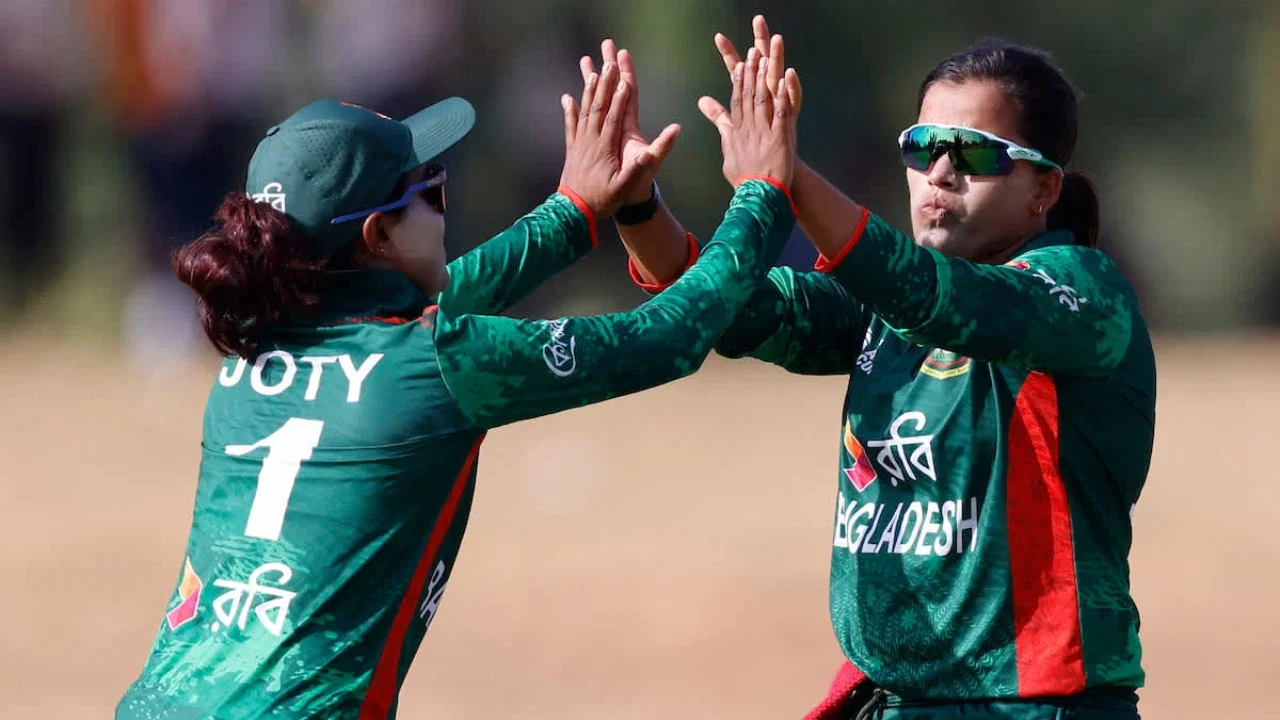
Nahida Akter Named Bangladesh Women’s T20I Captain as Sobhana Mostary Becomes Deputy
Bangladesh have appointed left-arm spinner Nahida Akter as their new women’s T20I captain, placing one of the team’s most experienced performers in charge of the shortest format. The Bangladesh Cricket Board (BCB) confirmed the leadership change on Sunday, October 18, naming batter Sobhana Mostary as vice-captain.
Nahida takes over from Nigar Sultana, who has stepped down from the T20I role but will continue to captain Bangladesh in One-Day Internationals. The change marks a new phase for the women’s team as it prepares for upcoming international assignments, beginning with the ICC Women’s Emerging Nations Trophy in Thailand.
BCB Turns to an Experienced Leader
Nahida was widely viewed as a leading candidate for the captaincy after Nigar decided to relinquish the T20I position following the Asian Games 2026. She has served as the team’s vice-captain since Nigar took charge of the T20I side in 2022, giving her several years of experience within the leadership group.
The BCB said the appointment followed discussions involving members of the selection panel and other officials. Women’s wing chairman Rafiqul Islam said the board believed the time was right to give Nahida responsibility for the T20I squad, while Mostary would support her as deputy.
That continuity could help Bangladesh manage the transition smoothly. Nahida already understands the team’s routines, players and strategic priorities, while Mostary’s appointment gives another established international batter a formal role in the leadership structure. The pair will be expected to balance individual performance with the demands of building a consistent T20 side.
Nahida Akter’s T20I Record and Leadership Credentials
Nahida’s appointment is backed by a remarkable record with the ball. She is Bangladesh’s leading wicket-taker in women’s T20Is, with 132 wickets in 113 matches at an average of 17.38. Her tally includes two four-wicket hauls and one five-wicket performance.
As a left-arm spinner, Nahida can influence matches by controlling the middle overs, limiting scoring opportunities and creating pressure that leads to wickets. Those skills are particularly valuable in T20 cricket, where captains have to make quick decisions about bowling changes, field placements and match-ups against opposition batters.
Her challenge will be to translate her experience as a senior bowler into broader leadership. Captaining a side requires more than setting fields: it involves communicating clearly, managing momentum and helping teammates respond to setbacks. Nahida’s long association with the vice-captaincy may give her a useful foundation as she takes on those responsibilities.
Sobhana Mostary Named Vice-Captain
Sobhana Mostary will serve as Nahida’s deputy in the T20I format. The batter has played 72 T20Is for Bangladesh, scoring 1,160 runs at an average of 19.33 and a strike rate of 94.92. She has recorded one half-century in the format.
Mostary’s role could be especially important in supporting Bangladesh’s batting plans. T20 teams need players who can adapt to different situations—whether rebuilding after early wickets, rotating the strike through the middle overs or accelerating at the end of an innings. As vice-captain, she may also help ensure that the team’s batting group and leadership team remain closely connected.
Her appointment offers a combination of bowling leadership from Nahida and batting experience from Mostary. The arrangement gives Bangladesh two senior players with different on-field perspectives, a potentially useful balance as the team works to improve its results in the format.
Why Nigar Sultana Stepped Down
Nigar’s decision to leave the T20I captaincy reportedly surprised the BCB. Reports have also suggested that she was unhappy with how the board had treated her in recent times, although the reasons behind the change have not been fully detailed publicly. Nigar has said she wants to focus more on her own game and will remain Bangladesh’s ODI captain.
She recently led the team during a three-match ODI series in Australia, underlining that her departure from the T20I leadership does not mark an exit from captaincy altogether. Keeping her in charge of the ODI side also gives Bangladesh a degree of stability across formats while Nahida begins her new role in T20Is.
The split in leadership means Bangladesh can tailor its approach to the different demands of each format. T20 cricket calls for rapid tactical decisions and frequent changes in momentum, while ODIs require longer-term planning across innings. Whether the arrangement delivers the intended benefits will become clearer as both teams take on their next challenges.
First Test for the New T20I Leadership
Nahida’s first major assignment as captain is expected to come at the ICC Women’s Emerging Nations Trophy in Thailand. Bangladesh are scheduled to open their campaign against Pakistan on November 12, giving the new captain an early opportunity to establish her style and assess the squad in competitive conditions.
The tournament will provide more than a chance to pursue results. It will also offer a setting for Bangladesh to test combinations, strengthen its T20 batting approach and build confidence ahead of future international commitments. For supporters seeking a prediction about the impact of the leadership change, the early signs will depend on how quickly Nahida and Mostary can turn their experience into clear roles and consistent performances.
Bangladesh’s prospects will ultimately rest on the collective contribution of the squad. Nahida’s wicket-taking ability gives her a strong platform, but the team will need dependable batting, sharp fielding and effective support from the rest of the bowling attack. A successful start could help establish belief in the new leadership; a difficult opening, meanwhile, would make communication and composure even more important.
Separate Men’s Team Update: Bangladesh Lose ODI Tri-Series Opener
In a separate development, Bangladesh’s men’s team began its ODI Tri-Series campaign in the United Arab Emirates with a heavy defeat against Zimbabwe. Chasing a target of 272 at Sheikh Zayed Stadium in Abu Dhabi, Bangladesh were dismissed for 172 and lost by 99 runs on Saturday, October 17.
The Tigers are next scheduled to face Afghanistan in Sharjah on October 21. While the men’s result is unrelated to the women’s captaincy change, it adds to a busy period for Bangladesh cricket as both national teams prepare for important fixtures.
For the women’s side, the immediate focus will be on how Nahida Akter shapes the T20I team and how effectively Sobhana Mostary supports her. The BCB has opted for a leadership transition built around experience and continuity. The upcoming tournament in Thailand will offer the first meaningful indication of whether that decision can help Bangladesh take the next step in women’s T20 cricket.
Latest News
Cheteshwar Pujara slams India for overlooking Manav Suthar for New Zealand Tests
Nahida Akter replaces Nigar Sultana as Bangladesh announce new T20I captain

Why Parthiv Patel pulled out of BCCI chief selector race?
Fakhar Zaman admits extreme pressure on Pakistan to end ICC trophy drought
Australia drop Nathan Lyon vs South Africa, marking third omission in 14 months

Tim Southee says New Zealand are not scared of Jasprit Bumrah

Ravichandran Ashwin fears the worst for Kuldeep Yadav under Gautam Gambhir

Abhishek Sharma snubbed as Abhinav Mukund names India’s top 3 all-time T20I batters

Sunil Gavaskar says Hardik Pandya is irreplaceable, urges India to build different combination
Babar Azam reaches 16,000 international runs during Pakistan vs Sri Lanka 1st ODI

South Africa vs Australia 2nd Test creates 100-year record with 19 players aged 30 or above
AFG vs ZIM Playing 11 Today, Live Streaming, Pitch & Weather: Afghanistan vs Zimbabwe 2nd ODI, Tri-Series 2026
Rinku Singh makes strong case for India comeback with back-to-back Ranji Trophy centuries
Chris Woakes reveals how Rob Key hurt him before retirement