Australia drop Nathan Lyon vs South Africa, marking third omission in 14 months

Australia Leave Nathan Lyon Out Again as Scott Boland Joins All-Seam Attack Against South Africa
Australia have made a notable selection call for their crucial World Test Championship clash with South Africa, leaving veteran off-spinner Nathan Lyon out of the playing XI and bringing fast bowler Scott Boland into the side. The change marks the third time in 14 months that Lyon has been omitted from Australia’s Test combination, adding fresh questions about his role as the team plans for the future.
Captain Pat Cummins said the decision was driven primarily by the conditions at St George’s Park in Gqeberha. With the match beginning under overcast skies, Australia opted for extra pace and seam movement rather than a specialist spinner. The selection leaves the visitors with an all-seam bowling attack, an unusual but deliberate strategy for a high-stakes Test.
Boland replaces Lyon as conditions shape Australia’s prediction
Speaking at the toss, Cummins confirmed that Australia had made one change, with Boland taking Lyon’s place. He pointed to Boland’s strong record in Test cricket and the likelihood that the surface and weather would reward fast bowling.
“Nathan Lyon comes out, and Scotty Boland comes in,” Cummins said. He added that the decision reflected both the conditions and Boland’s performances whenever he has been selected. In Australia’s prediction, a bowler capable of exploiting early movement could provide greater value than a specialist spinner at this stage of the match.
Boland is known for his accuracy, disciplined lines and ability to make the ball deviate off the seam. Those qualities can be especially useful when the pitch offers assistance, but his value is not limited to the opening overs. Cummins also highlighted Boland’s control and stamina, noting that he can maintain pressure through long spells even if the surface becomes less lively.
“When there’s anything in the wicket, he gets a lot of seam movement, is super accurate, and then even if it does flatten out, he brings that control and experience. He can bowl bulk overs,” Cummins said, describing the fast bowler as a complete option for the attack.
Australia commit to five seam-bowling options
With Boland selected, Australia’s bowling group features Cummins, Mitchell Starc, Josh Hazlewood, Boland and all-rounder Beau Webster. The lineup gives the captain a range of pace-bowling styles: Starc’s left-arm speed and swing, Hazlewood’s accuracy, Cummins’ aggression and Boland’s seam control. Webster provides another option while also adding depth to the batting order.
The absence of a frontline spinner means the seamers are likely to shoulder a heavy workload. Australia will need to rotate them carefully, particularly if the match extends into long days or the pitch loses its early movement. The strategy also places added importance on partnerships between the fast bowlers: sustained pressure and disciplined fields may be essential to prevent South Africa from settling at the crease.
An all-seam attack can be a powerful response to cloudy conditions, but it carries risks. If the pitch becomes dry and slow, or if the South African batters successfully blunt the new ball, Australia may have fewer options for controlling the middle overs. The team’s decision therefore reflects a calculated conditions-based prediction—not simply a judgment on Lyon’s recent form.
Lyon’s repeated omission raises questions about his role
Lyon has long been one of Australia’s most dependable Test players and was previously regarded as an automatic choice. His latest omission, following earlier exclusions in matches in Jamaica and Brisbane, nevertheless suggests that selection is becoming more flexible. At 38, Lyon is also approaching a stage when Australia may increasingly weigh immediate match conditions against the demands of a longer-term transition.
That does not necessarily mean the veteran has lost the selectors’ confidence. Test teams regularly adjust their combinations according to pitch, weather and opposition, and Lyon’s experience remains valuable on surfaces where spin is expected to play a significant role. The decision in Gqeberha may therefore be best understood as a tactical call, though its repetition will naturally invite discussion about how often Australia will use a specialist spinner in overseas conditions.
For Lyon, the challenge is to remain ready for the next opportunity and continue offering the qualities that have made him a central figure in Australia’s Test attack: control, persistence and the ability to build pressure over long spells. His omission also gives Australia a chance to assess how effectively its pace resources can cover the workload without a frontline spinner.
Lyon contributed in Australia’s previous win
The selection decision comes despite Lyon making a useful contribution in Australia’s previous match against South Africa. Australia secured a commanding 214-run victory in Durban, with Lyon taking two wickets in the first innings. He did not add to his tally in the second innings, but his initial breakthroughs helped Australia maintain control.
Lyon also contributed with the bat, scoring 27 from 92 deliveries as the No. 10. The innings added important runs late in Australia’s effort and demonstrated the lower-order resilience that can prove valuable in closely contested Tests. His performance in Durban makes the omission more notable, although the contrasting conditions at St George’s Park offer Australia a clear tactical explanation.
What the selection could mean for the Test
South Africa will now face a sustained pace challenge, particularly while the ball is new and the weather remains favourable to seam movement. Australia’s quicks are expected to target the outside edge, make the batters play regularly and use short spells of attacking bowling to create chances. If the conditions change, Cummins will need to adapt his fields and manage his bowlers to keep the pressure on.
The key question is whether Australia’s pace-heavy plan can deliver enough control across the full match. Boland’s inclusion strengthens the attack’s accuracy and gives Cummins another reliable option, while leaving Lyon out removes a specialist who could otherwise be influential if the pitch begins to turn. The match will offer a useful test of Australia’s selection prediction and its ability to tailor a bowling combination to conditions.
For now, Australia have backed seam movement over spin, trusting Boland’s consistency and the quality of their fast-bowling group. Lyon’s latest absence may be temporary, but it underlines how Australia’s once-settled Test XI is evolving—and how conditions, age and succession planning are increasingly shaping the team’s choices.
Latest News

Fakhar Zaman admits extreme pressure on Pakistan to end ICC trophy drought
Australia drop Nathan Lyon vs South Africa, marking third omission in 14 months

Tim Southee says New Zealand are not scared of Jasprit Bumrah

Ravichandran Ashwin fears the worst for Kuldeep Yadav under Gautam Gambhir

Abhishek Sharma snubbed as Abhinav Mukund names India’s top 3 all-time T20I batters

Sunil Gavaskar says Hardik Pandya is irreplaceable, urges India to build different combination

Babar Azam reaches 16,000 international runs during Pakistan vs Sri Lanka 1st ODI

South Africa vs Australia 2nd Test creates 100-year record with 19 players aged 30 or above

AFG vs ZIM Playing 11 Today, Live Streaming, Pitch & Weather: Afghanistan vs Zimbabwe 2nd ODI, Tri-Series 2026
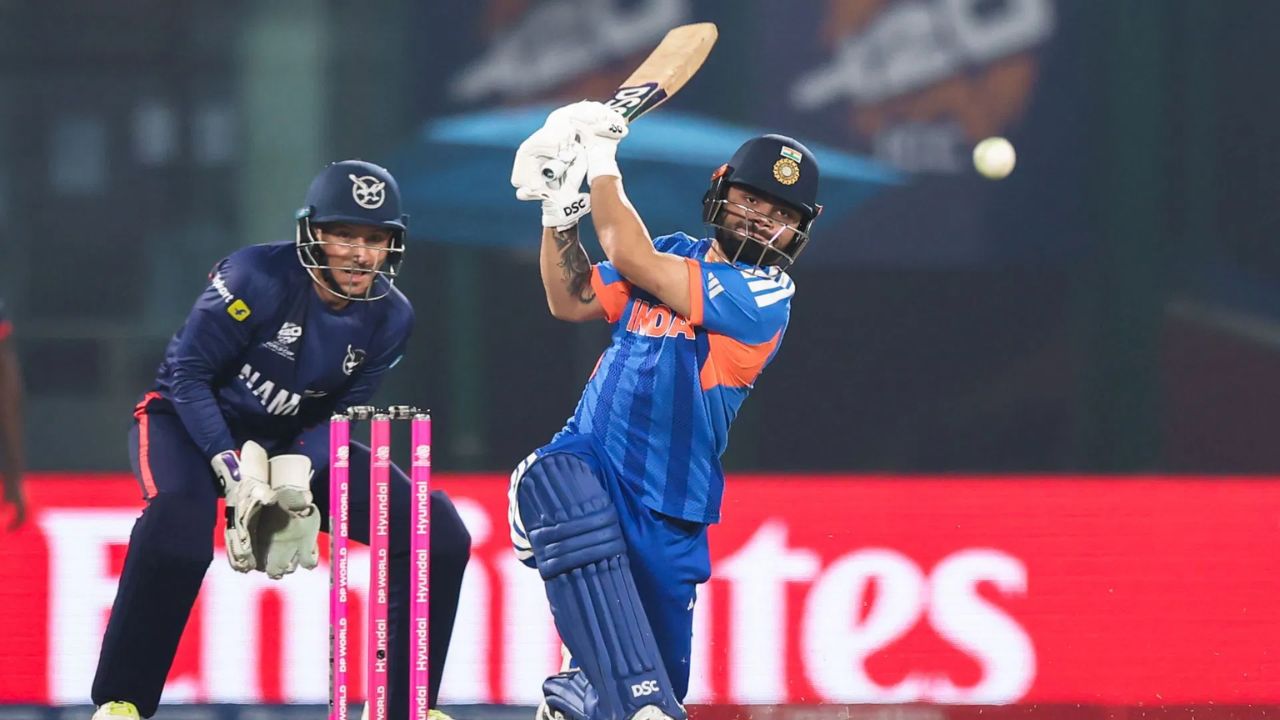
Rinku Singh makes strong case for India comeback with back-to-back Ranji Trophy centuries

Chris Woakes reveals how Rob Key hurt him before retirement

Mohammad Rizwan gets PCB clearance to return to domestic cricket amid betting probe

Mohammed Shami suffers injury amid India comeback talks, misses Ranji match

Shoaib Akhtar warns Babar Azam could be dropped from Pakistan’s ODI team