3 costly BCCI decisions that are ruining Yashasvi Jaiswal’s career
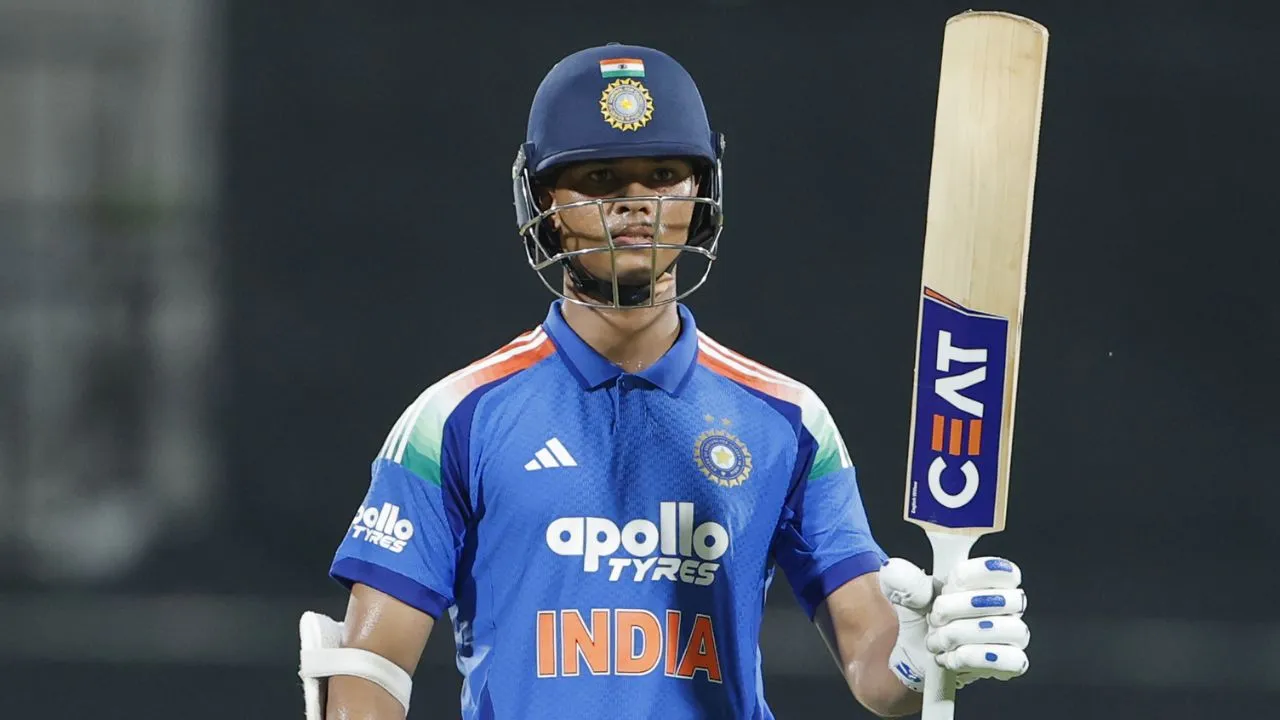
Yashasvi Jaiswal’s White-Ball Future: Three Selection Questions India Must Answer
Yashasvi Jaiswal has already shown that he belongs on the international stage. The left-handed opener combines sound technique with the ability to score quickly, qualities that have made him a major presence in India’s Test side and a promising option in limited-overs cricket. Yet his international career has followed an uneven path: while he has earned a regular place in Tests, opportunities in ODIs and T20Is have been far less consistent.
With India building towards the 2027 ODI World Cup, that uncertainty matters. Jaiswal is young enough to develop into a dependable all-format batter, but progress in white-ball cricket generally requires more than occasional appearances. It takes a defined role, regular match time and a clear understanding of what selectors expect. Three aspects of India’s approach have therefore prompted debate about whether the team is making the most of his potential.
1. Treating a potential all-format batter as a Test specialist
Jaiswal’s success in Test cricket has established his credentials, but it should not automatically limit how he is viewed in the other formats. His attacking instincts, ability to find gaps and comfort against pace could also suit ODI cricket, where openers are expected to balance a strong start with the need to bat deep. In T20Is, his capacity to put pressure on bowlers from the outset offers another possible route into the side.
The concern is not that Jaiswal must be selected in every format regardless of performance. Rather, it is that his potential should be assessed through a meaningful run of opportunities. A batter who is picked sporadically may find it difficult to adapt to changing roles, build rhythm or demonstrate how his game has developed. If the team sees him mainly as a Test opener, it risks narrowing the options available for India’s future white-ball plans.
Regular exposure would also help selectors make a fairer assessment. A few innings can be shaped by conditions, batting position or the demands of a particular match. A longer stretch gives a player the chance to respond to setbacks, adjust his approach and show whether he can contribute consistently. For Jaiswal, that distinction could be important as India evaluates its opening combinations ahead of major tournaments.
2. Expecting results without providing enough match time
One of the most difficult challenges for any young international batter is being asked to perform immediately after a long gap between appearances. Limited-overs cricket rewards confidence and clarity, but those qualities are harder to sustain when selection is unpredictable. Jaiswal may have the shots and temperament to succeed, yet he still needs regular opportunities to learn the specific demands of ODI and T20 cricket at international level.
Competition makes the situation more complicated. India have several options at the top of the order, and established players naturally occupy important positions. In T20Is, contenders such as Sanju Samson and Abhishek Sharma, along with emerging talent, add to the selection pressure. In ODIs, the presence of experienced and in-form openers can leave little room for experimentation. The challenge for the selectors is to balance current results with the long-term development of players who could be central to the next cycle.
Jaiswal’s ODI selection history, as described in the original report, illustrates the uncertainty. After an unbeaten century against Afghanistan in June 2026, he was reportedly left out of the England ODI series. He returned to the squad for the West Indies series in September, then was again omitted from the group for the New Zealand tour. Such changes can make it difficult for a player to understand whether he is being developed, considered a backup or competing for a regular place.
A century should not guarantee selection indefinitely, just as one quiet spell should not end a player’s prospects. But consistent selection criteria help make decisions easier to understand. If Jaiswal is included as an opener, giving him a sustained opportunity would allow the team to judge his performances across different opponents and conditions. If he is not in the immediate plans, clear feedback would help him focus on the areas that matter.
3. Leaving his long-term role unclear
Perhaps the biggest issue is uncertainty over how India sees Jaiswal fitting into its future. Is he viewed as a long-term opener across formats, a specialist for Test cricket, or an alternative who will be called upon when circumstances demand? Without a clear answer, it becomes difficult for the player and supporters to understand the path to regular selection.
In ODIs, established opening partnerships and competition for top-order positions complicate the picture. Shubman Gill and Rohit Sharma have been preferred in the role, while other batters are also vying for limited places. That competition is normal in a strong international team. The key is ensuring that selection decisions are accompanied by a coherent plan, particularly when the player involved is still developing.
Batting coach Sitanshu Kotak was reported to have said in September 2026 that Jaiswal remains part of India’s plans. That reassurance is significant, but squad selections carry their own message. Repeated omissions can create doubt if they are not explained alongside a clear development pathway. A conversation about batting position, preferred format and areas for improvement could give Jaiswal a more concrete target than simply waiting for another call-up.
Why the prediction around Jaiswal matters
Any prediction about Jaiswal’s future should be measured rather than absolute. He has already demonstrated the ability to perform at a high level, but success in one format does not guarantee an automatic place in another. India must weigh his strengths against team balance, form and the needs of each series. At the same time, a player cannot establish himself in white-ball cricket without opportunities to show what he can do.
For the selectors, the decision is not simply whether to pick Jaiswal or another opener. It is whether India can create a consistent process that prepares multiple players for the demands of a World Cup cycle. Giving a promising batter a defined role for a meaningful period would provide useful evidence for the team, while also helping him build confidence and experience.
A chance to turn potential into a clear role
Jaiswal’s career is not defined by selection setbacks, and there is still ample time for him to become a regular white-ball option. But the coming seasons will be important. India’s selectors and team management can help by explaining where he fits, providing opportunities when they believe he is ready, and judging him over a reasonable sample rather than isolated performances.
For Jaiswal, the task is to keep producing strong performances whenever he plays and to continue adapting his game to different formats. For India, the challenge is to ensure that talent is matched with a plan. If those two elements come together, the prediction that Jaiswal can become an all-format star will have a stronger foundation—and India may gain a valuable option as it prepares for the 2027 ODI World Cup.
Latest News
Rishabh Pant ruled out of 3rd unofficial Test against New Zealand A, doubtful for 1st Test
Mohammad Kaif slams India’s decision to drop Bhuvneshwar Kumar after 87-run defeat
Pat Cummins points to batting collapse after Australia’s series loss to South Africa
Temba Bavuma calls South Africa’s series win over Australia the best of his career
Simon Harmer opens up on his emotional journey after match-winning performance against Australia
David Warner calls Australia’s batting display ‘un-Australian’ after series loss against South Africa
Rohit Sharma set to play in Vijay Hazare Trophy for Mumbai: Report
IND vs NZ Playing 11 Today, Live Streaming, Pitch & Weather: India tour of New Zealand 2026, 5th T20I
AFG vs ZIM Playing 11 Today, Live Streaming, Pitch & Weather: Afghanistan vs Zimbabwe 2026, 3rd T20I
3 costly BCCI decisions that are ruining Yashasvi Jaiswal’s career
No room for Vaibhav Sooryavanshi? Here’s how India can solve the selection puzzle
Ravindra Jadeja’s career over? Cheteshwar Pujara spills truth about all-rounder’s ODI future
Shardul Thakur defends Shreyas Iyer amid batting criticism after India’s 4th T20I loss
3 reasons why Rohit Sharma’s return as Mumbai Indians captain would be a mistake