

Mayank Yadav makes a comeback, proves he is different from Shoaib Akhtar and Shane Bond
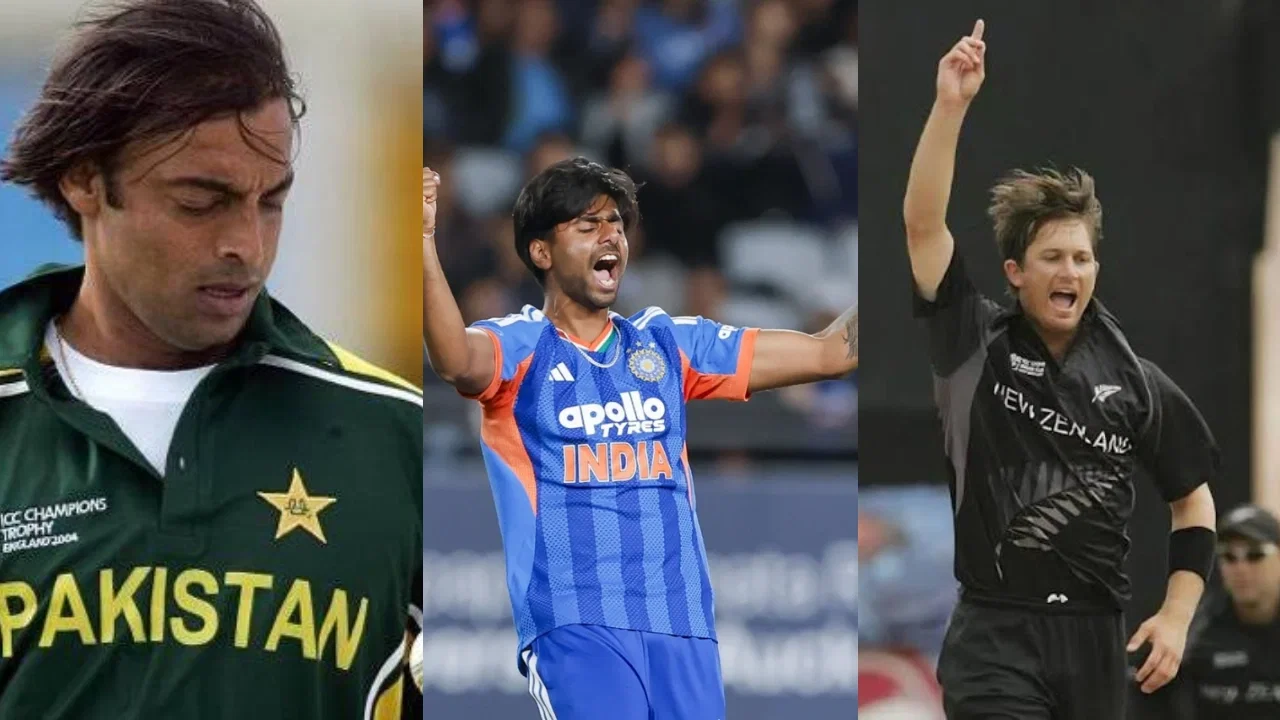
Mayank Yadav’s Pace, Persistence and Potential: Why India’s Fast-Bowling Prospect Stands Apart
Mayank Yadav has made a name for himself with a rare weapon: express pace. The young Indian fast bowler can regularly push towards 150 km/h, a speed that instantly captures attention and unsettles batters. But raw pace alone does not guarantee a long career. Fast bowling places enormous strain on the body, and cricket history is full of quick bowlers whose promising journeys were interrupted by injury.
That is why Mayank’s story is about more than speed. His repeated comebacks, his willingness to keep bowling fast, and his calm temperament have made him one of India’s most intriguing pace prospects. As he works to establish himself at the highest level, the central prediction is not simply how quick he can bowl, but whether he can combine that pace with fitness, control and consistency over time.
The High Cost of Bowling Fast
Fast bowlers are among the most physically tested athletes in cricket. Every delivery places stress on the back, hips, knees and ankles, while the repeated impact of a full run-up and landing can make recovery a constant challenge. For a young bowler who relies on speed, managing that workload is often as important as developing skill.
Former New Zealand pacer Shane Bond remains a powerful example of how injuries can limit even exceptional talent. At his best, Bond was a frighteningly quick and highly effective international bowler. Persistent physical problems, however, prevented him from enjoying the long career his ability appeared to promise.
Indian cricket has seen similar challenges across generations. Ashish Nehra and Munaf Patel both experienced injury setbacks, though they managed to make significant contributions to the national team. More recently, promising quicks such as Shivam Mavi and Kamlesh Nagarkoti have faced interruptions that made it difficult to build uninterrupted momentum. Umran Malik, another bowler celebrated for his pace, has also had to work on the control and consistency required to turn speed into sustained success.
These examples underline a difficult truth: pace can be a match-winning asset, but it can also increase the physical demands on a bowler. A successful career depends on more than hitting a speed-gun milestone. Fitness planning, workload management, recovery and the ability to execute a reliable line and length all matter.
Mayank’s Comebacks Have Added to His Appeal
Mayank’s progress has not been a straight line. Injuries have interrupted his rise, and each absence has raised questions about how quickly he might return and whether he would need to reduce his pace. Yet his comebacks have helped define his reputation. Rather than appearing to abandon his main strength, he has returned with the same willingness to bowl at high speed.
That determination is significant, but it also makes careful management essential. The goal for Mayank should not be to chase maximum pace on every ball. Instead, he will need to use speed strategically: mixing hard lengths, well-directed short deliveries and fuller balls that prevent batters from settling. A fast bowler who can vary his approach becomes harder to predict and less dependent on one method.
His recent return to the Indian setup after a lengthy gap offered a reminder of why selectors and supporters remain interested. The speed was still there, and so was the confidence to challenge batters. For a player whose development has been disrupted, simply returning to the field is not enough; he must also show that he can compete, learn and build rhythm at the international level.
Three Wickets in Auckland Showed His Competitive Edge
On October 30 in Auckland, India’s bowlers faced an aggressive challenge from Glenn Phillips and Michael Bracewell. The pair attacked with intent, putting pressure on the bowling unit and making it difficult to control the scoring rate. Mayank was not immune to the conditions, and his economy rate reflected the demanding nature of the contest. Still, he made an important impact by taking three wickets.
His response to the batters was revealing. When Phillips, Bracewell or Finn Allen looked to take him on, Mayank did not retreat from his strengths. He answered with pace and short-pitched deliveries, forcing the batters to make decisions under pressure. That approach helped him claim valuable breakthroughs even as the opposition continued to score freely.
For a young fast bowler, such moments can be instructive. International cricket rarely provides perfect conditions, and a wicket-taking spell may matter more than a tidy economy rate when batters are in full attack mode. The next step for Mayank will be learning how to pair that attacking instinct with greater control, especially when the opposition targets him from the start.
How Mayank Yadav Differs from Shoaib Akhtar
Comparisons with Shoaib Akhtar are inevitable whenever a bowler produces extreme pace. The former Pakistan star combined speed with an imposing presence and a famously aggressive approach. His short-pitched deliveries could intimidate batters, while his body language added to the sense of confrontation.
Mayank, however, does not appear to rely on that kind of outward aggression. His temperament is noticeably calmer, and he has spoken openly about recognising that difference. Former Lucknow Super Giants coach Justin Langer once told him that Akhtar’s aggressive personality was part of what made the Pakistani legend such a formidable fast bowler. Mayank’s response has not been to imitate him, but to understand his own strengths.
“I am not aggressive. My nature is to be calm. I work around it on other things,” he said in comments to Star Sports. That attitude offers a useful insight into his approach. A fast bowler does not need to copy a famous predecessor to be effective. Mayank can build his identity through pace, discipline, tactical awareness and a composed presence at the crease.
What the Future May Hold
The prediction for Mayank’s career depends on how well he balances ambition with patience. His speed gives him a rare point of difference, and his comeback performances suggest that he has the confidence to use it. But long-term success will depend on staying available, improving his accuracy and developing enough variation to keep international batters guessing.
That means working on more than the fastest delivery. A dependable stock ball, effective slower options, smart use of the bouncer and sound plans for different formats could help him become a more complete bowler. Just as importantly, a carefully managed workload may allow him to preserve his pace without repeatedly putting his body under unnecessary strain.
Mayank Yadav is not simply the next Shoaib Akhtar, nor is his path guaranteed to mirror Shane Bond’s. He is a distinct talent with his own temperament and challenges. If he can turn his speed into a sustainable, well-rounded skill set, he could become a valuable part of India’s fast-bowling future. For now, every comeback adds another chapter to a career built on pace, resilience and the determination to keep testing himself at the highest level.
Latest News
Rishabh Pant ruled out of 3rd unofficial Test against New Zealand A, doubtful for 1st Test
Mohammad Kaif slams India’s decision to drop Bhuvneshwar Kumar after 87-run defeat
Pat Cummins points to batting collapse after Australia’s series loss to South Africa

Temba Bavuma calls South Africa’s series win over Australia the best of his career

Simon Harmer opens up on his emotional journey after match-winning performance against Australia

David Warner calls Australia’s batting display ‘un-Australian’ after series loss against South Africa
Rohit Sharma set to play in Vijay Hazare Trophy for Mumbai: Report

IND vs NZ Playing 11 Today, Live Streaming, Pitch & Weather: India tour of New Zealand 2026, 5th T20I
AFG vs ZIM Playing 11 Today, Live Streaming, Pitch & Weather: Afghanistan vs Zimbabwe 2026, 3rd T20I
3 costly BCCI decisions that are ruining Yashasvi Jaiswal’s career
No room for Vaibhav Sooryavanshi? Here’s how India can solve the selection puzzle
Ravindra Jadeja’s career over? Cheteshwar Pujara spills truth about all-rounder’s ODI future
Shardul Thakur defends Shreyas Iyer amid batting criticism after India’s 4th T20I loss
3 reasons why Rohit Sharma’s return as Mumbai Indians captain would be a mistake

