Mohammad Kaif slams India’s decision to drop Bhuvneshwar Kumar after 87-run defeat
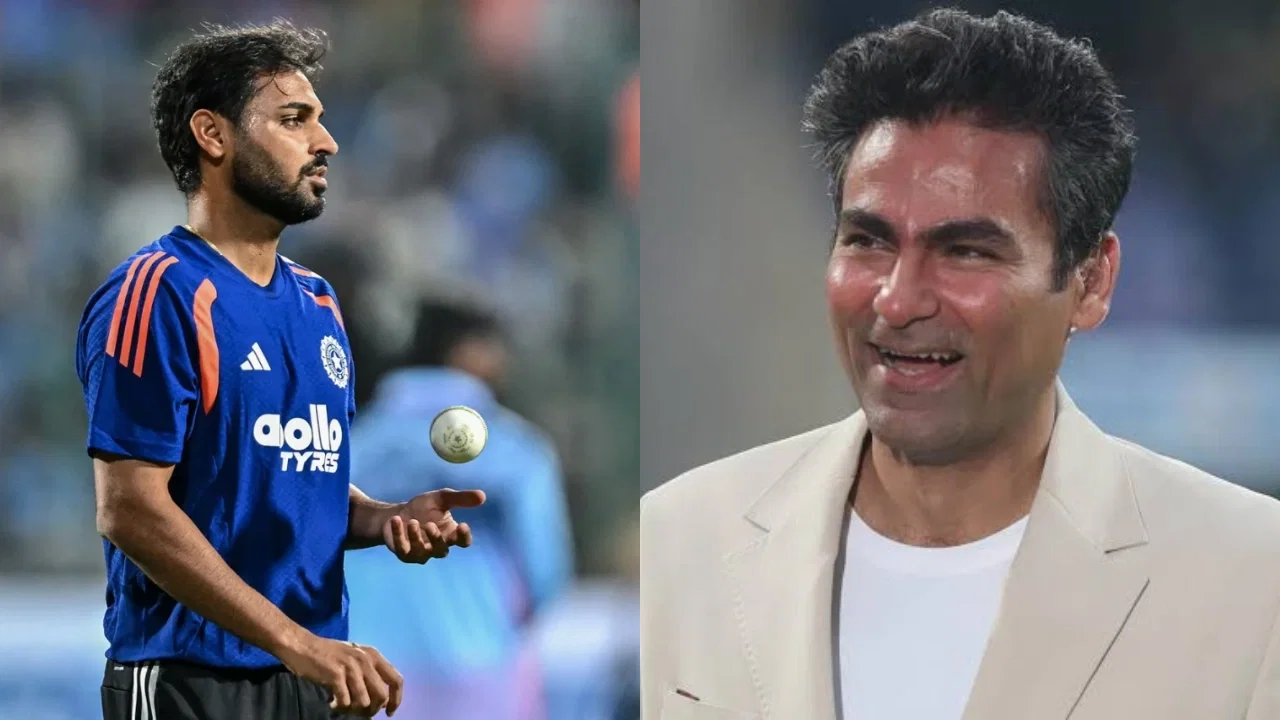
Mohammad Kaif Questions India’s Decision to Drop Bhuvneshwar Kumar After Three T20Is
Former India batter Mohammad Kaif has criticised the team management’s decision to leave Bhuvneshwar Kumar out of the fourth T20I against New Zealand, arguing that the experienced fast bowler deserved a longer opportunity after returning to international cricket. Kaif said India should have backed Kumar across the series before judging his form, particularly because bowlers from both sides were conceding runs.
Kumar was omitted from India’s playing XI for the Auckland match, which the visitors lost by 87 runs—one of their heaviest defeats by a margin of runs in T20 internationals. The result came after India had already won the five-match series by taking the first three games, making the fourth match a chance to assess players rather than a contest that could decide the series.
Kaif Says Kumar Was Not the Only Bowler Struggling
Speaking on his YouTube channel, Kaif said he was surprised by the selection call. In his view, the wider bowling performances during the series did not justify singling out Kumar, who had played only three matches following a lengthy absence from the international side.
“I was surprised that Bhuvneshwar was dropped,” Kaif said, noting that several bowlers from both teams had been expensive. He argued that when the overall bowling conditions and performances are difficult, one player should not automatically carry the blame for a high economy rate.
Kumar’s figures in the first three matches were challenging: he conceded 139 runs in 12 overs, at an economy rate of 11.58, and took one wicket. Those numbers made the case for a change understandable from a performance perspective. However, Kaif believes they should also be considered alongside the context of Kumar’s return, the conditions, and the form of the other bowlers in the series.
A Return That Needed Time
Kumar had returned to India’s T20 setup after an absence of around four years. For a bowler rebuilding rhythm at the highest level, Kaif suggested that three appearances were not enough to reach a firm conclusion—especially when the team had already secured the series.
“He is coming back after four years. You have also won the series,” Kaif said. He added that the fourth T20I was not a do-or-die game for India, so the management could have used the opportunity to give Kumar another outing and gather more information about his form.
That argument reflects a broader challenge in international selection: teams must balance immediate results with longer-term assessment. A difficult spell can reveal weaknesses, but it can also be part of a player’s adjustment after a long break. Giving a returning bowler a consistent run may help coaches distinguish between a temporary loss of rhythm and a more sustained decline in performance.
Why the Fourth T20I Presented a Selection Opportunity
By the time the teams reached Auckland, India had won the first three matches and clinched the series. The final two games therefore carried less pressure for the visitors, while New Zealand were playing to restore pride after losing the contest. In such circumstances, India could have considered using the remaining matches to test combinations and give players additional opportunities.
Instead, Kumar’s omission meant that India had to assess its bowling resources without him in the fourth game. The team went on to suffer a heavy defeat, although one result does not establish that the selection decision caused the loss. T20 cricket can turn sharply because of batting momentum, fielding errors, match-ups and conditions, as well as the performance of individual bowlers.
Still, Kaif’s criticism centres less on the defeat itself than on the timing of the change. His point is that a series already won offered a relatively low-risk setting to continue evaluating a senior player. A further appearance could have helped the coaching staff make a more informed prediction about Kumar’s readiness for future international assignments.
Kaif Calls for Patience and Clearer Evaluation
Kaif acknowledged that Kumar had not looked in the flow expected of him and said the bowler would likely be aware of that himself. But he maintained that the same scrutiny should apply across the attack rather than focusing on one player. India were also working with a group that included several newer bowlers, while leading fast bowler Jasprit Bumrah was unavailable for the series.
“When you are aware of his capabilities, you should have stood by him even if two or three games were bad,” Kaif said. He argued that playing Kumar in all five matches would have offered a clearer picture of his current level than making a decision after three outings.
That does not mean experience should guarantee selection indefinitely. Modern T20 teams have to respond quickly to match-ups and performance data, and an economy rate above 11 is a significant concern in a format where every over can shape the result. But Kaif’s comments underline the importance of explaining selection decisions and applying consistent standards to the entire bowling group.
What the Debate Means for India’s T20 Plans
The discussion around Kumar’s place is part of a wider question facing India: how should the team manage proven players returning from long breaks while also building depth for the future? Established bowlers bring tactical knowledge and control, while newer options can offer pace, variation and fresh energy. Finding the right balance requires more than judging a player on a small sample of matches.
For Kumar, the series offered a difficult comeback, and his early figures gave selectors legitimate reasons to reassess. For Kaif, however, the management moved too quickly. His prediction is that a full five-match opportunity would have provided a fairer assessment of the bowler’s capabilities and whether he could still contribute consistently at international level.
India’s heavy loss in Auckland intensified the debate, but the central issue remains selection policy rather than a single scoreline. Kaif believes the team should have shown greater patience with Kumar, particularly after sealing the series. Whether the management’s decision proves right will depend on how India’s bowling options perform in upcoming matches—and whether the team can turn a difficult series into a clearer plan for its T20 attack.
Latest News
Rishabh Pant ruled out of 3rd unofficial Test against New Zealand A, doubtful for 1st Test
Mohammad Kaif slams India’s decision to drop Bhuvneshwar Kumar after 87-run defeat
Pat Cummins points to batting collapse after Australia’s series loss to South Africa

Temba Bavuma calls South Africa’s series win over Australia the best of his career

Simon Harmer opens up on his emotional journey after match-winning performance against Australia

David Warner calls Australia’s batting display ‘un-Australian’ after series loss against South Africa
Rohit Sharma set to play in Vijay Hazare Trophy for Mumbai: Report

IND vs NZ Playing 11 Today, Live Streaming, Pitch & Weather: India tour of New Zealand 2026, 5th T20I
AFG vs ZIM Playing 11 Today, Live Streaming, Pitch & Weather: Afghanistan vs Zimbabwe 2026, 3rd T20I
3 costly BCCI decisions that are ruining Yashasvi Jaiswal’s career
No room for Vaibhav Sooryavanshi? Here’s how India can solve the selection puzzle
Ravindra Jadeja’s career over? Cheteshwar Pujara spills truth about all-rounder’s ODI future

Shardul Thakur defends Shreyas Iyer amid batting criticism after India’s 4th T20I loss
3 reasons why Rohit Sharma’s return as Mumbai Indians captain would be a mistake