India bowl Nepal out for 26 as Prince Yadav, Harshit Rana run riot
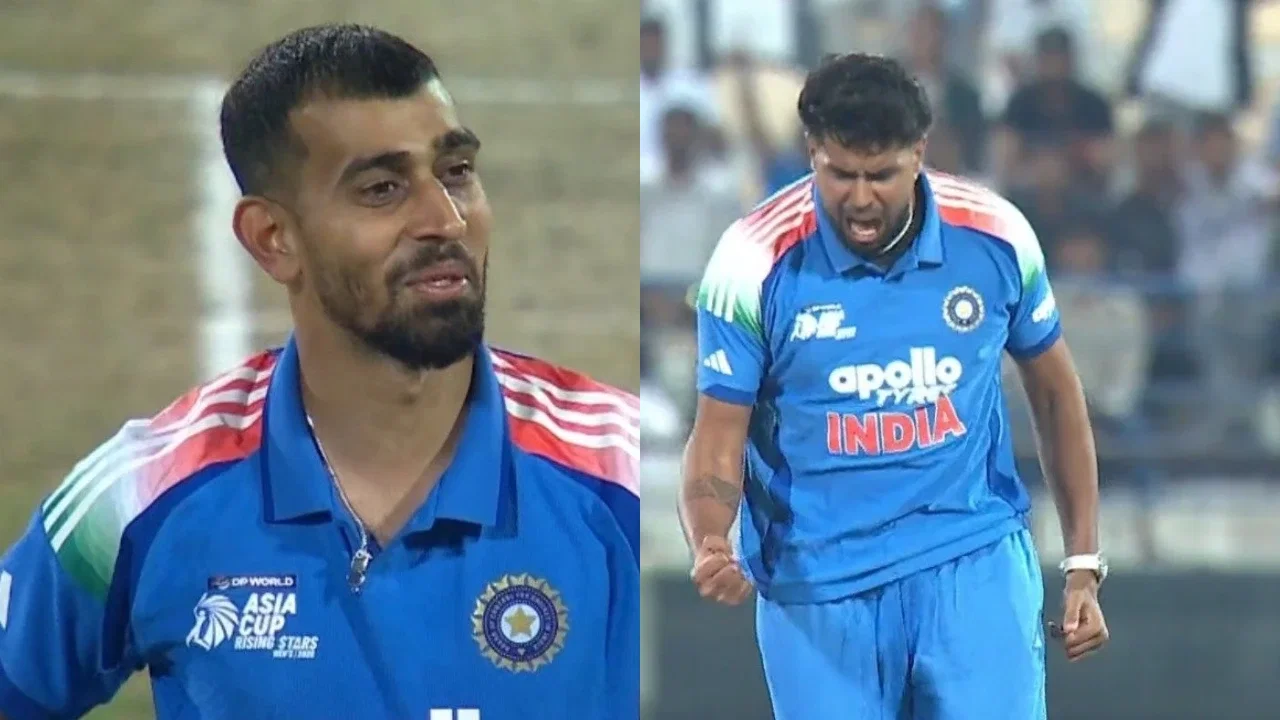
India A Crush Nepal by 306 Runs in Rising Stars Asia Cup 2026
India A delivered a commanding performance at the Rising Stars Asia Cup 2026, defeating Nepal by a staggering 306 runs in Doha. After piling up 332 for nine from their 50 overs, India’s bowlers dismissed Nepal for just 26 in 11.3 overs—their innings never gaining momentum as wickets fell at regular intervals.
Centuries from Tilak Varma and Kumar Kushagra laid the foundation for India’s imposing total, while Prince Yadav and Harshit Rana led a ruthless bowling display. The result was one of the tournament’s most emphatic victories so far and a statement of India A’s batting depth and bowling strength. It also gives the team valuable confidence as it prepares for two important Group B fixtures.
Tilak Varma and Kumar Kushagra Build India A’s Big Total
India A were asked to bat first and had a few early setbacks. Vaibhav Sooryavanshi made 26, but Abhishek Sharma and Ayush Badoni were unable to turn their starts into substantial scores. Nepal had an opportunity to put pressure on the innings, but Kushagra and Tilak responded with a composed partnership that shifted control firmly towards India.
Kushagra’s composed century steadies the innings
Wicketkeeper-batter Kumar Kushagra scored 117 from 102 deliveries, striking 10 fours and five sixes. His innings combined patience with timely aggression: he helped India recover from the early losses, then accelerated as the partnership developed. By occupying the crease and keeping the scoreboard moving, Kushagra gave the middle order a platform to build on.
Tilak Varma adds another hundred
Tilak Varma produced a similarly influential innings, making 107 from 113 balls. His score included six fours and four sixes. The left-hander’s measured approach complemented Kushagra’s batting, and together the pair turned a potentially unsettled start into a commanding position. Their centuries were central to India A reaching a total that placed Nepal under significant pressure before the chase even began.
India also finished strongly. Suryansh Shedge struck an unbeaten 36 from just 14 deliveries, including four sixes, to provide a late burst of scoring. His quick contribution helped India move beyond the 330-run mark and finish at 332 for nine. The total gave the bowlers a substantial cushion and left Nepal needing a highly disciplined chase against a varied attack.
Prince Yadav and Harshit Rana Dismantle Nepal’s Chase
Nepal’s reply began badly and quickly became a collapse. Harshit Rana made the first breakthrough by dismissing Arjun Kumal, then continued to trouble the batting order by removing Kushal Bhurtel and Deepak Dumre. His pace and accuracy prevented Nepal from settling into the chase, and he finished with four wickets for 16 runs from six overs.
Prince Yadav was even more economical. He claimed five wickets for just six runs in five overs, including two maidens, tearing through Nepal’s middle and lower order. With runs difficult to find and wickets falling at the other end, Nepal had no realistic opportunity to build the partnerships needed to approach India’s target.
The innings ended at 26 after only 11.3 overs. Pawan Sarraf top-scored with six, while several Nepal batters failed to score. The lack of partnerships was decisive: once early wickets fell, the team could not halt India’s momentum or establish a platform for recovery. India A’s bowlers maintained pressure throughout, turning a challenging chase into a one-sided finish.
What the Result Means for India A
The scale of the victory highlights how effectively India A combined its strengths. The batting unit recovered from early losses through two long, productive innings, then gained extra momentum at the end. The bowlers followed by attacking from the outset and keeping Nepal from building even a modest stand.
For India, the performance also offered useful evidence of squad depth. Tilak and Kushagra showed they could anchor a long innings, while Shedge demonstrated how a late contribution can lift a total in the final overs. With the ball, Rana provided early breakthroughs and Prince delivered a highly economical spell through the middle and later stages. That balance will be important as the competition becomes more demanding.
At the same time, the result should be viewed in context. A 306-run win is a major boost, but India A’s upcoming matches against stronger opposition will offer a more searching test of its batting plans, bowling combinations and ability to respond under pressure. The team will be looking to carry its confidence forward without assuming that future contests will follow the same pattern.
India A’s Upcoming Matches: Pakistan A and UAE
India A will next face Pakistan A on November 22 in Doha. The match is scheduled to begin at 3:30 PM IST and is expected to be a key fixture in the Group B campaign. The sides will meet in a contest likely to demand greater composure and discipline than India’s match against Nepal.
India’s following group-stage fixture is against the UAE on November 24, also at 3:30 PM IST. Both games will matter as India A looks to build on its opening statement and strengthen its position in the competition. The team’s recent performance provides an encouraging starting point, but consistency across the remaining fixtures will be essential.
For fans following the Rising Stars Asia Cup 2026, India A’s next matches will offer a clearer prediction of how far this group can progress. The combination of centuries from Tilak Varma and Kumar Kushagra, Shedge’s late hitting, and match-winning spells from Prince Yadav and Harshit Rana gives India plenty to build on. The challenge now is to reproduce that control against tougher opposition.
Latest News
Aakash Chopra explains why Yashasvi Jaiswal and KL Rahul’s partnership is crucial for India
Danish Kaneria raises age fraud concerns over Pakistan U-19 players after Asia Cup final

IPL 2027: Ricky Ponting backs Hardik Pandya, explains his role at Punjab Kings
Ajinkya Rahane backs Shubman Gill to continue his fine form against New Zealand
‘Give Vaibhav Sooryavanshi 20 innings’: Krishnamachari Srikkanth urges India to back 15-year-old wonder boy
India bowl Nepal out for 26 as Prince Yadav, Harshit Rana run riot
Abhishek Sharma FAILS! SRH opener out cheaply in opening game of ACC Men’s Asia Cup Rising Stars 2026

‘I want to win the IPL’: Suryakumar Yadav reveals his biggest target for 2027

Kuldeep Yadav to play against Jharkhand as Uttar Pradesh eye SMAT knockout spot
Kieron Pollard appointed MI Emirates captain ahead of ILT20 2026 season
IPL 2027: Kumar Sangakkara opens up on Rajasthan Royals’ decision to release Shimron Hetmyer
“Ask the selectors”: Kapil Dev weighs in on Mohammed Siraj’s omission against New Zealand
India boycott trophy ceremony after Pakistan declared winners of Blind Cricket Asia Cup 2026
“Biggest traitor”: De Villiers tears into Usman Khawaja over Sandpapergate revelations