Ravi Shastri unhappy with Ajit Agarkar, Gautam Gambhir after Mohammed Shami’s Test retirement
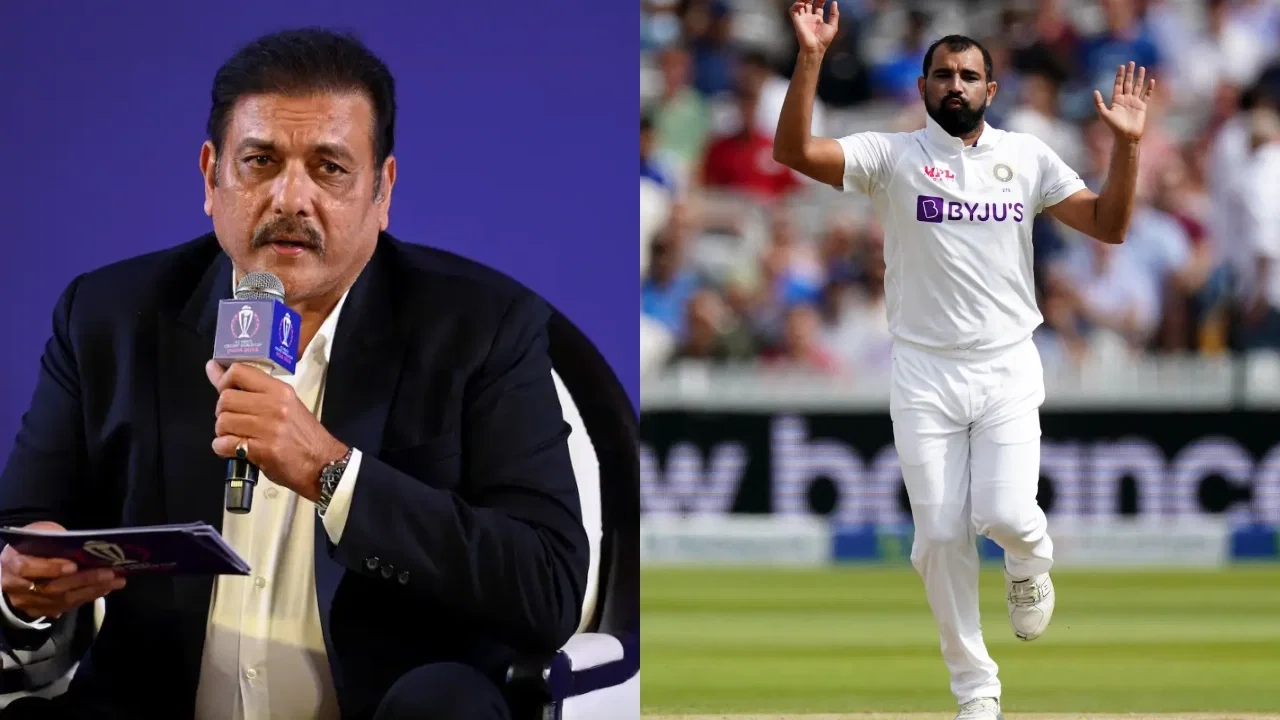
Ravi Shastri Questions India’s Handling of Mohammed Shami After Test Retirement
Former India head coach Ravi Shastri has expressed disappointment over Mohammed Shami’s decision to retire from Test cricket, arguing that the experienced fast bowler still had more to offer at the international level. Shastri’s prediction is that Shami could have taken another 30 to 40 Test wickets if he had been given a further opportunity to represent India.
Shami brought his Test career to a close 13 years after making his debut for India. He finished with 229 wickets in 64 matches, establishing himself as one of the country’s most effective seamers across different conditions. His final Test appearance came in the 2023 World Test Championship final against Australia, after which he did not feature again in the format.
A Test career that ended without a return
The announcement has renewed debate about how India managed Shami’s workload, injuries and place in the Test side. The 36-year-old remained active in domestic cricket, turning out for Bengal in competitions including the Ranji Trophy. His continued involvement in the longer format—and his ability to take wickets while maintaining control—has prompted questions about whether he might have been considered for another international run.
Shami’s career was shaped by both remarkable consistency and repeated physical setbacks. After the 2023 ODI World Cup, he underwent ankle surgery in February 2024. He later dealt with knee problems, with injury concerns limiting his availability for several important bilateral and multi-format series. His most recent appearance for India came in the final of the 2025 ICC Champions Trophy against New Zealand.
Although his international future had been uncertain for some time, Shami’s retirement from Tests makes that chapter definitive. For supporters, the timing is especially striking because he continued to play domestic cricket and demonstrate his value as a bowler in the longer format.
Shastri believes Shami deserved one more chance
Speaking on the cricket programme Extra Innings ahead of India’s second ODI against New Zealand, Shastri said he felt Shami’s contribution to Indian cricket warranted a more dignified end to his Test career. He suggested the pacer should have been part of the national setup during the previous year, provided his fitness allowed him to meet the demands of Test cricket.
“It’s sad when someone who’s played so well for the country has to go. I definitely thought he had another 30 or 40 wickets in him,” Shastri said. “He should have played in the last 12 months and perhaps should have been in the side as a Test-match bowler.”
Shastri’s comments do not guarantee that Shami would have been selected or that he would have remained injury-free. Instead, they reflect the view that his experience and proven ability merited a fresh assessment. A fast bowler with Shami’s record can offer more than wicket-taking: he brings knowledge of how to build pressure, manage spells and adapt his lengths to changing pitches.
Fitness beyond the gym
Shastri also questioned whether modern discussions about player fitness place too much emphasis on gym work, rather than the specific physical demands of cricket. In his view, a bowler’s readiness should ultimately be judged by whether he can perform the work required during a match—particularly in a format where long spells and repeated efforts are central to the role.
“What’s the point of being fit in the gym if you can’t bowl 10 or 12 overs in a match?” Shastri said, describing Shami as a “workhorse” who could have been used more effectively. He added that he was disappointed the seamer did not get another opportunity in Test cricket.
The distinction matters because fast-bowling fitness is not simply a measure of strength or conditioning. Test cricket demands the ability to recover between spells, maintain pace and accuracy over extended periods, and cope with the cumulative strain of a match. Shami’s supporters may argue that his domestic appearances offered useful evidence of his readiness. At the same time, selectors must weigh that evidence against medical assessments, workload management and the risk of another injury.
Selectors cited fitness and match preparation
During Ajit Agarkar’s time as chair of the selection committee, he was asked why Shami had not been considered for India’s Test series against the West Indies in the latter part of 2025. Agarkar said he did not have sufficient updates on the bowler’s fitness and noted that Shami had not played enough competitive cricket to make a strong case for selection.
That explanation highlights the challenge facing selectors when a senior player is returning from injury. A strong record and reputation can carry significant weight, but Test selection also depends on current match fitness and confidence that a player can withstand the demands of a series. The gap between Shami’s last Test and his domestic appearances therefore became a central part of the discussion over whether a comeback was realistic.
Shastri’s criticism, meanwhile, has put the spotlight on the difference between being unavailable and being overlooked. Without a clear, sustained run of competitive cricket, selectors may have had limited grounds to judge Shami’s readiness. Yet his domestic performances have kept the debate alive, particularly among fans who believe an experienced bowler could still have strengthened India’s attack.
What Shami leaves behind
Shami’s 229 Test wickets place him among India’s most accomplished fast bowlers. His ability to generate movement, strike with the new ball and remain dangerous as a match progressed made him a key part of India’s pace attack for more than a decade. His record also reflects the wider evolution of Indian cricket, as the team increasingly relied on fast bowlers capable of competing at home and overseas.
Whether Shami could have added the extra wickets Shastri predicted will remain a matter of speculation. The prediction captures the sense that his Test career may have ended before his ability to contribute had been fully exhausted. His retirement also raises broader questions about how teams balance injury risk, domestic form and the value of experience when planning for the future.
For now, Shami’s Test legacy is defined by his 64 appearances, 229 wickets and years of service to India. Shastri’s remarks ensure that the discussion will not focus only on the numbers, but also on whether the veteran seamer received a final opportunity to prove himself in the format he helped shape.
Latest News
Watch: Gurnoor Brar and Daryl Mitchell involved in heated exchange during 2nd ODI
Mohsin Khan to leave LSG? Two IPL franchises show interest
Not India! Harshit Rana to make comeback for this team, date revealed
Virat Kohli breaks Ricky Ponting’s all-time ODI record against New Zealand
Arshdeep Singh to Gurnoor Brar: Can India’s four pacers dominate in South Africa in 2027 CWC?
Ravi Shastri unhappy with Ajit Agarkar, Gautam Gambhir after Mohammed Shami’s Test retirement
Hardik Pandya ruled out of Syed Mushtaq Ali Trophy 2026; Krunal Pandya to captain Baroda
Cheteshwar Pujara predicts major shake-up at KKR, MI changes and easy ride for RCB ahead of IPL 2027 auction
“A sad day to see him go”: Morne Morkel reacts to Mohammed Shami’s Test retirement
Towhid Hridoy breaks Bangladesh’s all-time individual Test scoring record
Rohit Sharma creates history with record-breaking sixes against New Zealand in 2nd ODI
Evil motive behind Usman Khawaja’s Sandpapergate revelations?
Usman Khawaja accuses South Africa of being experts at ball-tampering
Rishabh Pant expected to be fit for India vs New Zealand 1st Test in Wellington