KL Rahul wins hearts with special gift for female stadium staff member after India’s win vs NZ
KL Rahul’s Heartwarming Gesture Steals the Show After India’s Rain-Affected ODI Win
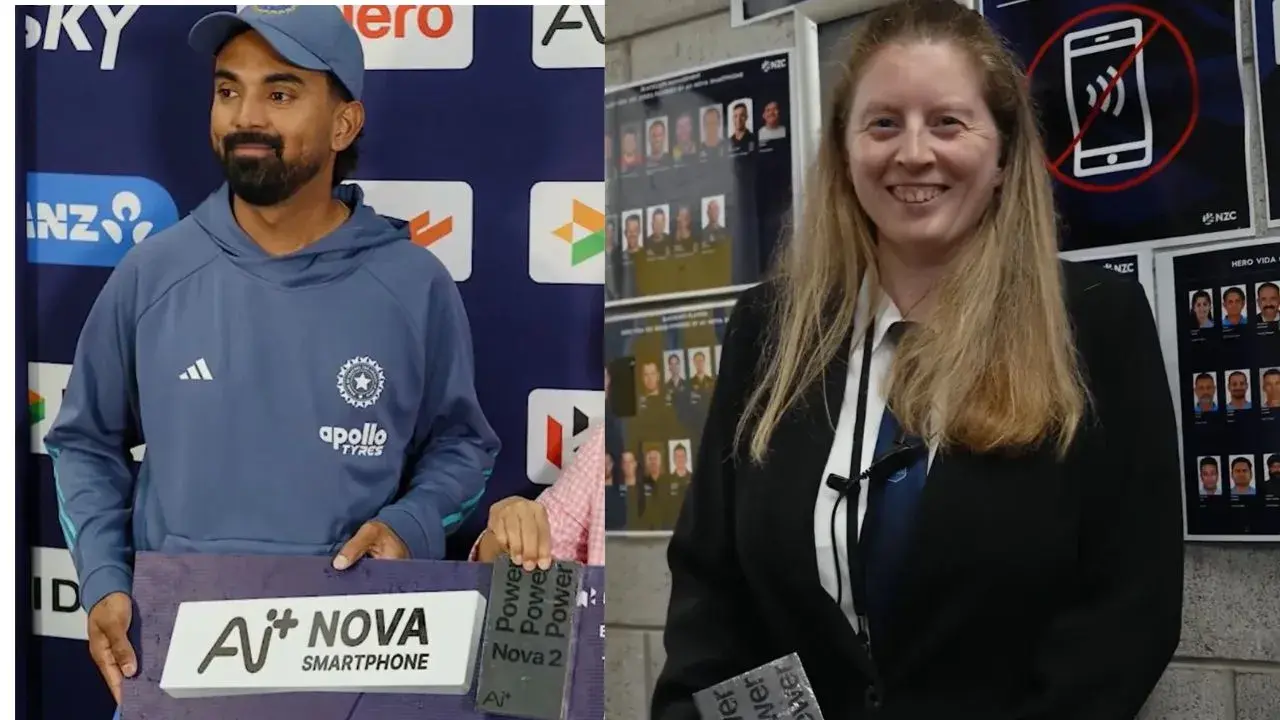
India wicketkeeper-batter KL Rahul delivered a memorable moment away from the scoreboard after the Men in Blue edged New Zealand by four runs under the DLS method in the second ODI at Wellington’s Hnry Stadium. After being named the match’s “Gamechanger,” Rahul gave the phone he received as part of his award to a female stadium staff member—an unexpected gesture that quickly won admiration from fans.
The rain-shortened result gave India a 2-0 lead in the five-match ODI series and put Shubman Gill’s side within one victory of securing the contest. Yet alongside the result and India’s impressive bowling performance, Rahul’s act of generosity became one of the game’s most talked-about moments.
Rahul shares his award with a stadium staff member
Rahul earned the Gamechanger recognition for an unbeaten innings of 26 from 38 deliveries. With wickets falling around him during India’s chase, he stayed composed and helped keep the required target within reach. His contribution was modest in terms of runs, but valuable in a tense match shaped by early dismissals and worsening weather.
After the presentation, Rahul handed the mobile phone he had won to a female member of the stadium staff. The Board of Control for Cricket in India (BCCI) shared footage of the exchange on social media, describing the batter as a “big player” with an even bigger heart.
The staff member said she was surprised by the gift and had not expected Rahul to give it to her. Her reaction captured the spontaneous nature of the moment: a player choosing to share an award with someone working behind the scenes at the venue.
Such gestures offer a reminder that major sporting events depend on more than the athletes in the spotlight. Stadium staff help prepare facilities, support match operations and keep events running smoothly, often without receiving the attention given to players. Rahul’s decision brought one of those workers into the post-match spotlight and added a human touch to a rain-disrupted contest.
India’s fast bowlers put New Zealand under pressure
The match itself was dominated by India’s bowlers. After winning the toss, India chose to field, and the pace attack made an immediate impact by removing New Zealand openers Tim Seifert and Henry Nicholls early. The hosts struggled to build partnerships and were reduced to 55 for five, leaving them in serious trouble.
Daryl Mitchell and captain Mitchell Santner attempted to steady the innings. Mitchell made 55, while Santner contributed 31, helping New Zealand move past the 100-run mark. However, India continued to take wickets and eventually dismissed the hosts for 134.
Gurnoor Brar led the attack with four wickets. Anshul Kamboj, Auqib Nabi and Axar Patel claimed two apiece, giving India a balanced performance across the bowling unit. The team’s ability to strike early and maintain pressure was a major factor in limiting New Zealand to a low total for the second match in a row.
India’s bowling display also strengthened the broader series narrative. In the opening two ODIs, the visitors have repeatedly disrupted New Zealand’s batting plans, using early breakthroughs to prevent the hosts from building a substantial platform. If India can maintain that discipline, the pressure will be on New Zealand’s batters to find a way to counter the attack in the next match.
India’s chase turns into a test of composure
Despite the manageable target, India’s pursuit was far from straightforward. Shubman Gill was dismissed for a golden duck, and Virat Kohli departed after scoring seven. The early losses gave New Zealand an opening and left India needing a stabilising partnership.
Rohit Sharma and Shreyas Iyer helped slow the slide. Rohit scored 23 before being dismissed, while Iyer made 30 after spending time at the crease. His wicket, however, added to the pressure on India as the chase continued to lose momentum.
Rahul then took responsibility in the middle order. Rather than forcing the pace, he focused on staying at the crease and managing the chase as wickets fell at the other end. When India reached 113 for seven, they still needed 22 runs, and the match remained finely balanced.
Heavy rain eventually stopped play. Under the DLS calculation, India were four runs ahead of the required score at that point, giving them the victory. The result was narrow, but it reflected Rahul’s importance: his presence helped India remain close enough to the target for the weather-affected calculation to work in their favour.
What the result means for the series
The win gives India a 2-0 advantage in the five-match ODI series. A victory in the next game would secure the series, while New Zealand will need to respond quickly to keep the contest alive. The hosts have shown glimpses of resistance, particularly through Mitchell and Santner, but their top order will need to withstand India’s new-ball attack more effectively.
For India, the key question is whether the batting can provide greater support to the bowlers. The team has defended its position in a rain-affected finish, but the early dismissals during the chase exposed the risk of relying on a lower-order recovery. A stronger start from the top order would reduce the pressure on Rahul and the middle order in the matches ahead.
Any prediction for the next ODI will depend on conditions, team selection and New Zealand’s response to India’s pace bowling. India will enter with confidence after taking a commanding series lead, while the home side must find a way to turn promising individual contributions into a more complete batting performance.
For now, the second ODI will be remembered for two contrasting reasons: India’s disciplined bowling and a tense, weather-shortened chase—and KL Rahul’s thoughtful decision to share his prize with a stadium worker. The result moved India closer to series victory, but the gesture gave the match a lasting story beyond the cricket itself.
Latest News
Usman Khawaja alleges Pakistani descent cost him Australia captaincy after Sandpapergate
Marketing strategy? Usman Khawaja explains why he took 8 years to address Sandpapergate
Rohit Sharma, Riyan Parag to captain MI, RR as Hardik Pandya-Arshdeep Singh switch teams
KL Rahul wins hearts with special gift for female stadium staff member after India’s win vs NZ
Watch: India-Pakistan no-handshake row continues as Lakshya Raichandani snubs Farhan Yousaf
Cameron Bancroft refuses to look back as Usman Khawaja reignites Sandpapergate

Shadman Islam ruled out of South Africa tour in major blow for Bangladesh
Rajat Patidar tells BCCI to remove him from Asia Cup squad, Ayush Badoni comes in
PAK vs SL Playing 11 Today, Live Streaming, Pitch & Weather: Sri Lanka tour of Pakistan 2026, 1st Test
Geoffrey Boycott hits back at Usman Khawaja over Sandpapergate claims
Aaryavir Sehwag, Anvay Dravid flop hard in India vs Pakistan U19 Asia Cup clash
Babar Azam breaks silence on Mohammad Yousuf offering help on social media
Usman Khawaja’s Sandpapergate claims backed by Australia pacer part of tour
Ambati Rayudu takes a dig at New Zealand over bowling-friendly pitches after India’s 2nd ODI win