Sanjay Bangar accuses Tilak Varma’s slow batting after 48-run defeat against Pakistan

Tilak Varma’s Century Comes Under Scrutiny After India A Lose to Pakistan Shaheens
Tilak Varma produced a century for India A in their Men’s Asia Cup Rising Stars clash with Pakistan Shaheens, but his innings could not prevent a 48-run defeat. The captain’s measured approach during the chase has since drawn criticism, with former India batting coach Sanjay Bangar questioning whether the team’s strategy gave Pakistan too much control.
India A were pursuing a target of 314 on Sunday, November 22, but finished well short despite Varma reaching three figures. His 100 came from 149 deliveries, including seven fours and one six. While the milestone showed patience and resilience, the slow scoring rate left India A with an increasingly difficult equation as the innings progressed.
A century that did not change the course of the chase
Varma is widely regarded as an attacking batter, yet he began cautiously on a pitch that offered assistance to the bowlers. He took 26 balls to score his first three runs and had made only eight after facing 36 deliveries. At one stage, he had scored 22 from 52 balls, a pace that placed considerable pressure on the rest of the batting order.
His innings eventually ended when Ahmed Daniyal dismissed him. By then, the required rate had climbed, leaving the incoming batters with little room to settle. Varma’s century was a significant personal achievement, but in a steep chase, the value of a hundred also depends on how quickly it is scored and whether it keeps the team within reach of the target.
The match offered a familiar lesson in limited-overs cricket: a long innings can anchor a chase, but an anchor must still move with the demands of the scoreboard. When the target is above 300, teams generally need regular boundaries, quick running between the wickets and a clear plan for accelerating before the final overs.
Sanjay Bangar questions the impact on the batting partner
Bangar’s main concern was not limited to Varma’s individual strike rate. He argued that a captain’s tempo can influence the batter at the other end, shaping whether that player feels free to attack or is drawn into a similarly cautious approach.
Bangar pointed to Varma’s slow start as a potential source of pressure. In his assessment, when a batter spends a large portion of an innings scoring at a modest rate, the partner must decide whether to preserve their wicket or take greater risks to keep the chase moving. Either choice can create problems: restraint allows the required rate to rise, while an attempt to force the pace can expose the batter to a dismissal.
That tension is especially important in a run chase, where partnerships are built not only on communication but also on shared intent. If one batter is focused on batting deep and making up the rate later, the other may have to take on a more aggressive role. Without a clearly defined division of responsibilities, the pair can lose momentum and give the bowling side opportunities to dictate the terms.
Hasan Nawaz’s full quota proved valuable for Pakistan
Bangar also highlighted Pakistan’s use of Hasan Nawaz, who completed all 10 overs and claimed three wickets at an economy rate of 4.50. The surface was turning, making spin a useful option, but India A’s approach allowed Nawaz to remain in the attack for his full allocation.
On a pitch offering turn, rotating the strike can be as important as hitting boundaries. A right-hand and left-hand batting combination can sometimes disrupt a spinner’s preferred line and length, while frequent singles prevent the bowler from building pressure against one batter. Bangar suggested that India A could have looked more deliberately for such a matchup to make Nawaz’s task harder.
That does not guarantee a different result. Pakistan’s bowlers still had to execute their plans, and the conditions clearly suited spin. But forcing a captain to change a bowler’s angle, field or rhythm can create small openings in a chase. India A’s failure to do so consistently meant Nawaz could settle into his spell and contribute significantly to the defence of the target.
What the defeat means for India A’s approach
The loss provides India A with a useful point of review ahead of future fixtures. Varma’s innings demonstrated the ability to stay at the crease under pressure, but the team will need to assess when patience becomes too costly. A captain chasing a large total must balance personal survival with the need to keep the scoreboard moving.
One possible adjustment is to set clearer phases for the chase. Batters can aim to preserve wickets early while still maintaining a minimum scoring rate, then identify specific overs or bowlers to target. Another is to ensure that the non-striker remains active through quick singles, which can reduce the sense that the entire burden of acceleration rests on one player.
India A may also consider how to respond when the pitch favours spin. Changing the batting combination, using sweeps or other controlled scoring options, and taking calculated risks against particular deliveries can help prevent a spinner from bowling comfortably through a full spell. These tactics require judgement, especially when wickets are valuable, but a static approach can allow the opposition to control the middle overs.
Prediction: India A’s next challenge is finding the right tempo
The result should not overshadow Varma’s achievement, but it does underline the difference between a personal milestone and a match-winning innings. His century showed composure; the broader question is whether India A can pair that composure with a more proactive scoring plan in their next outing.
Bangar’s criticism centres on tempo, partnerships and the tactical use of the opposition’s bowling resources. Those are areas India A can address through better communication and more flexible decision-making. If the team can keep the required rate under control, rotate strike against spin and avoid leaving acceleration until too late, its chances of converting strong individual performances into victories should improve.
For Pakistan Shaheens, the 48-run win was built on a demanding total and disciplined bowling. For India A, the defeat is a reminder that a century can keep a chase alive without necessarily putting it in a winning position. The next test will be whether the side can turn that lesson into a sharper, more balanced approach.
Latest News

“We picked on current form”: Shubman Gill justifies Mohammed Siraj’s exclusion after Wellington draw

“A pleasing result”: Henry Nicholls reflects on New Zealand’s fightback after 70/5 in 1st Test vs India

“Hopefully there’s a bit more help”: Shubman Gill wants better bowling conditions in 2nd Test at Christchurch
Sanjay Bangar accuses Tilak Varma’s slow batting after 48-run defeat against Pakistan
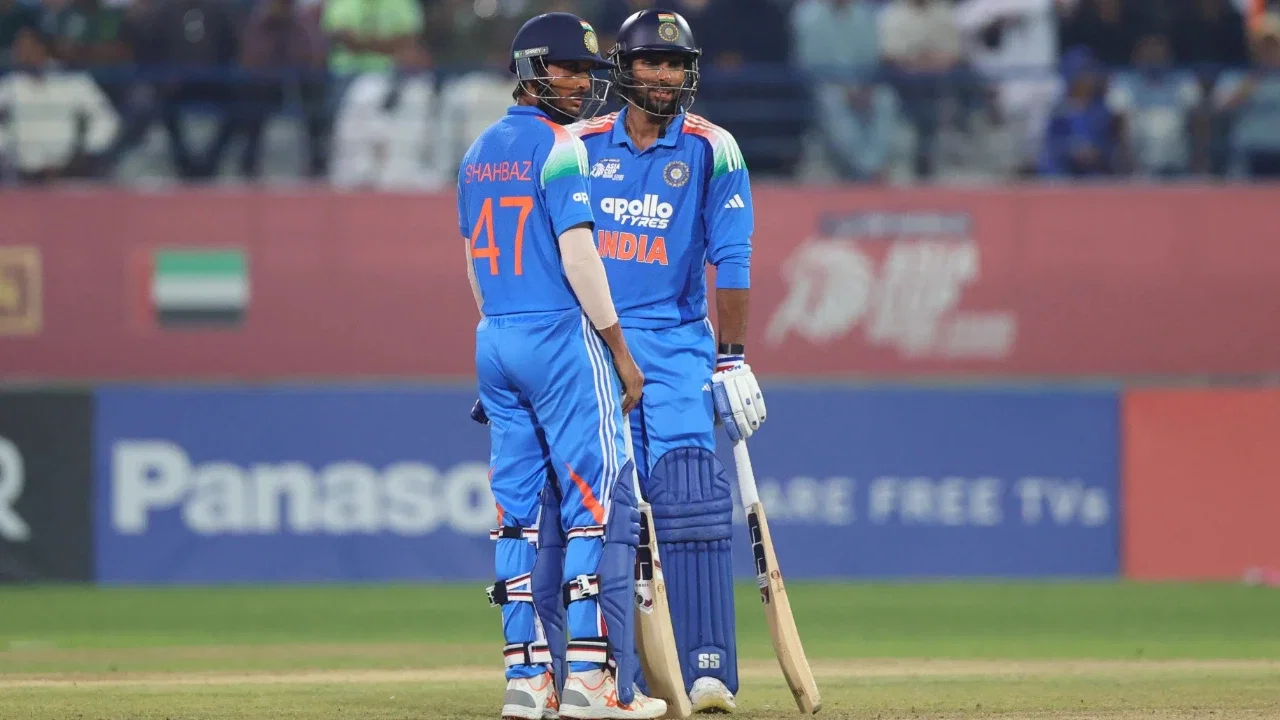
“If he could have stayed…”: Tilak Varma blames Shahbaz Ahmed after India’s 48-run loss to Pakistan

Steve Smith fails on comeback, gets out for just 12 runs

“Where is Kuldeep or Manav Suthar?”: Sourav Ganguly questions Gautam Gambhir over India’s spin options

Usman Khawaja booed by fans on cricket return amid Sandpapergate controversy

Kyle Mills calls KKR’s decision to release Shubman Gill “a shame”

“Bigger issues at play”: MCC reacts to ongoing India-Pakistan handshake controversy

Will Jacks ruled out of Australia vs England T20I series with broken hand

Harshit Rana involved in heated on-field exchanges with Pakistan batters in Doha

Vaibhav Sooryavanshi leaves field after collision with Vipraj Nigam in IND vs PAK game

Jasprit Bumrah scripts special Test record after dismissing Tom Latham in 1st Test vs New Zealand