Watch: Glenn Phillips’ ‘most atrocious shot ever’ off Bhuvneshwar Kumar amazes Irfan Pathan

Glenn Phillips’ Audacious Switch-Hit Steals the Show as New Zealand Reach 225 Against India
Glenn Phillips delivered one of the most eye-catching moments of New Zealand’s innings against India, turning the final ball of the 20th over into a boundary with an audacious switch-hit. The powerful stroke off Bhuvneshwar Kumar drew an astonished reaction from former India all-rounder Irfan Pathan and capped a blistering performance from Phillips, who finished unbeaten on 82 from just 40 deliveries.
New Zealand posted 225 for four at Hagley Oval in Christchurch on Thursday, October 22, after India chose to bowl first. Led by Phillips’ aggressive innings and valuable contributions from the middle order, the hosts recorded their highest T20I total against India. The score also placed the match firmly in the spotlight ahead of the chase, with India facing a demanding target on a ground known for offering early assistance to bowlers.
Phillips’ Switch-Hit Leaves Pathan Stunned
The defining shot arrived on the last delivery of New Zealand’s innings. Facing a full ball from fast bowler Bhuvneshwar, Phillips changed his stance, dropped onto one knee and swung the ball over the cover boundary for four. The unusual angle and timing made the stroke especially striking: it was not simply a last-ball flourish, but a high-risk shot executed against a pace bowler under pressure.
Pathan reacted on social media, describing the effort as the “most atrocious shot” he had seen against a fast bowler, before adding that Phillips was “extraordinary.” In context, the comment was an expression of disbelief at the audacity and execution of the stroke. Fans online echoed the former cricketer’s surprise, sharing the clip and praising Phillips for attempting such an unconventional shot at the end of a high-scoring innings.
Phillips’ ability to access different areas of the field is a major part of his value in T20 cricket. Switch-hitting can unsettle a bowler’s length and force changes to the field, but it carries obvious risks, particularly when the delivery is full and the batter has little room for error. Phillips made the movement look controlled, turning the final ball into a boundary and leaving New Zealand with a strong finish.
New Zealand Build Momentum from the Powerplay
New Zealand began aggressively, reaching 65 for one by the end of the powerplay. Tim Seifert scored 24 before Mayank Yadav claimed India’s first wicket, but the early breakthrough did little to slow the home side’s scoring. Finn Allen added 45, keeping the pressure on India’s bowlers before Axar Patel dismissed him.
Phillips then joined Daryl Mitchell, and the pair added 42 runs for the third wicket. Mitchell contributed 28, helping maintain the momentum as New Zealand continued to attack rather than settle into a cautious rebuilding phase. That approach gave Phillips the platform to take greater control of the innings as the later overs approached.
Bevon Jacobs provided another burst of acceleration. He and Phillips put together a 73-run partnership for the fourth wicket, with Jacobs making 31 from 16 balls. His innings ended in a run-out, but the partnership had already strengthened New Zealand’s position and helped turn a promising start into a formidable total. Phillips remained at the crease through to the end, striking eight fours and three sixes in his unbeaten 82.
India’s Bowlers Struggle to Contain the Scoring
India’s attack found it difficult to keep New Zealand’s batters quiet. Bhuvneshwar, returning to international cricket, finished without a wicket and conceded 49 runs. His final over included the memorable boundary from Phillips, but the pressure had built across the innings as New Zealand repeatedly found ways to score.
Mayank and Axar did provide breakthroughs, yet the hosts’ partnerships prevented India from taking control for long. New Zealand’s total reflected both their ability to capitalise on scoring opportunities and the challenge India faced in controlling the run rate. With every Indian bowler conceding more than 10 runs per over, the innings became a test of how the visitors would respond to a target of 226.
A Significant Total at Hagley Oval
New Zealand’s 225 for four equalled their highest T20I total against India. It was also the second-highest T20I score recorded at Hagley Oval, behind England’s 236 for four against New Zealand in 2025. The venue’s reputation for offering something to bowlers early in an innings makes such a score particularly notable, though the surface appeared to become more favourable for batting as the ball grew older.
The match also added to a broader trend of increasingly high totals in men’s T20 internationals. New Zealand, England and the West Indies have each recorded 29 scores of 200 or more, while India lead the list with 57 and South Africa sit next with 31. Those figures underline how modern T20 teams are increasingly willing to attack throughout an innings rather than saving their biggest risks for the final overs.
Jacobs Credits Phillips’ Experience
Jacobs made an immediate impression by launching his first delivery for a six that travelled 96 metres. Speaking during the innings break, he said he was pleased to continue the work of the batters who had started the innings and credited Phillips with helping him remain composed while still playing aggressively.
Jacobs also noted that the new ball offered some movement, with swing and assistance from the surface early on. As it became older, he felt the pitch played more truly, allowing New Zealand’s batters to make the most of their opportunities. That assessment helps explain the innings’ progression: the visitors made an early breakthrough, but New Zealand adapted and accelerated as conditions became more predictable.
Prediction: India Face a Tough Chase
With 226 required, India’s chances depended on making a strong start without losing too many wickets. The target demanded a high scoring rate, but New Zealand’s total meant the visitors could not afford a prolonged period of cautious batting. Early boundaries would be important, while partnerships would need to carry the chase deep into the innings.
New Zealand, meanwhile, had the advantage of defending a substantial score at home. Their bowlers could apply pressure by using the conditions early and making India’s top order work for runs. The match prediction therefore hinged on the first phase of the chase: if India negotiated the new ball and kept wickets in hand, the contest could remain open; if New Zealand struck early, the scale of the target would quickly become more daunting.
Regardless of the result, Phillips’ unbeaten knock and his extraordinary final-ball switch-hit had already given the innings its signature moment. His 82 helped New Zealand reach a record-equalling T20I total against India, while the shot that stunned Pathan offered a vivid reminder of the invention and confidence that make modern T20 cricket so compelling.
Latest News

Bhuvneshwar Kumar breaks 89-match streak with first T20I no-ball against New Zealand
Bhuvneshwar Kumar sets world record on India comeback, surpasses Tim Southee

Watch: Abhishek Sharma turns Babar Azam, drops a dolly in 1st T20I vs New Zealand

Full list of Indian cricketers with 100 T20I matches, ft Arshdeep Singh, Virat Kohli
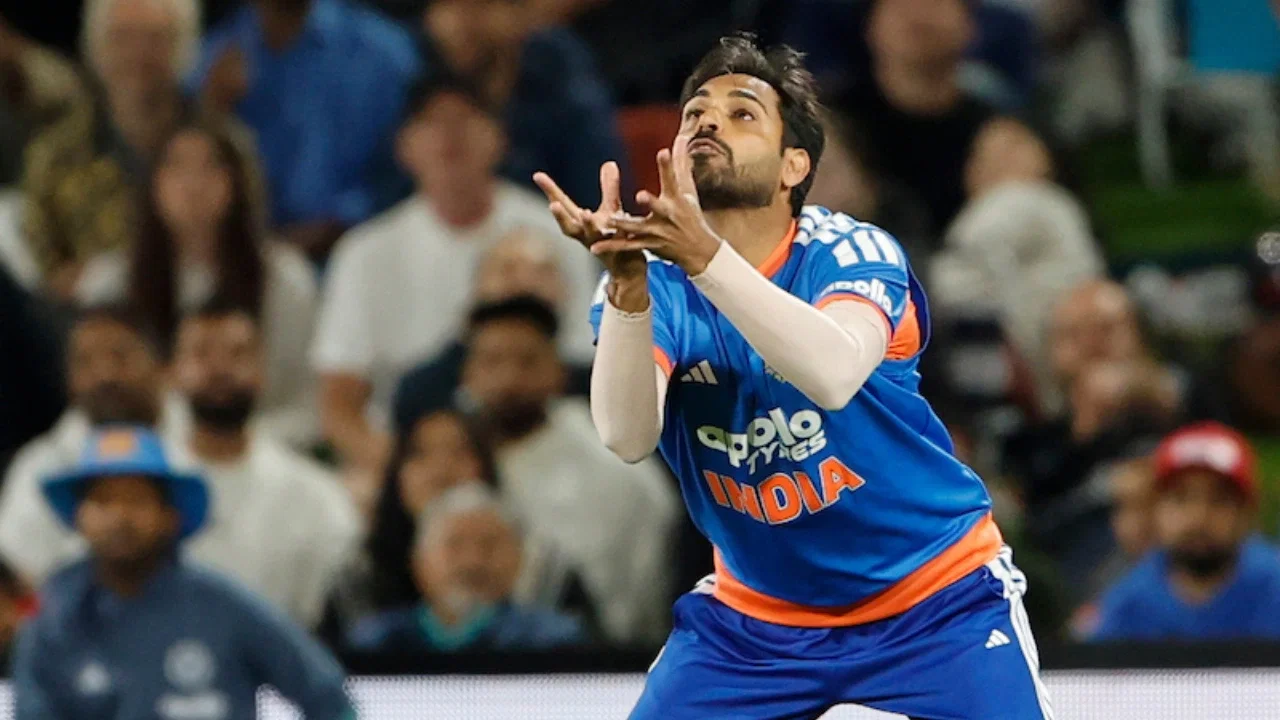
Bhuvneshwar Kumar fares worse on comeback than in last T20I 4 years ago
Watch: Glenn Phillips’ ‘most atrocious shot ever’ off Bhuvneshwar Kumar amazes Irfan Pathan
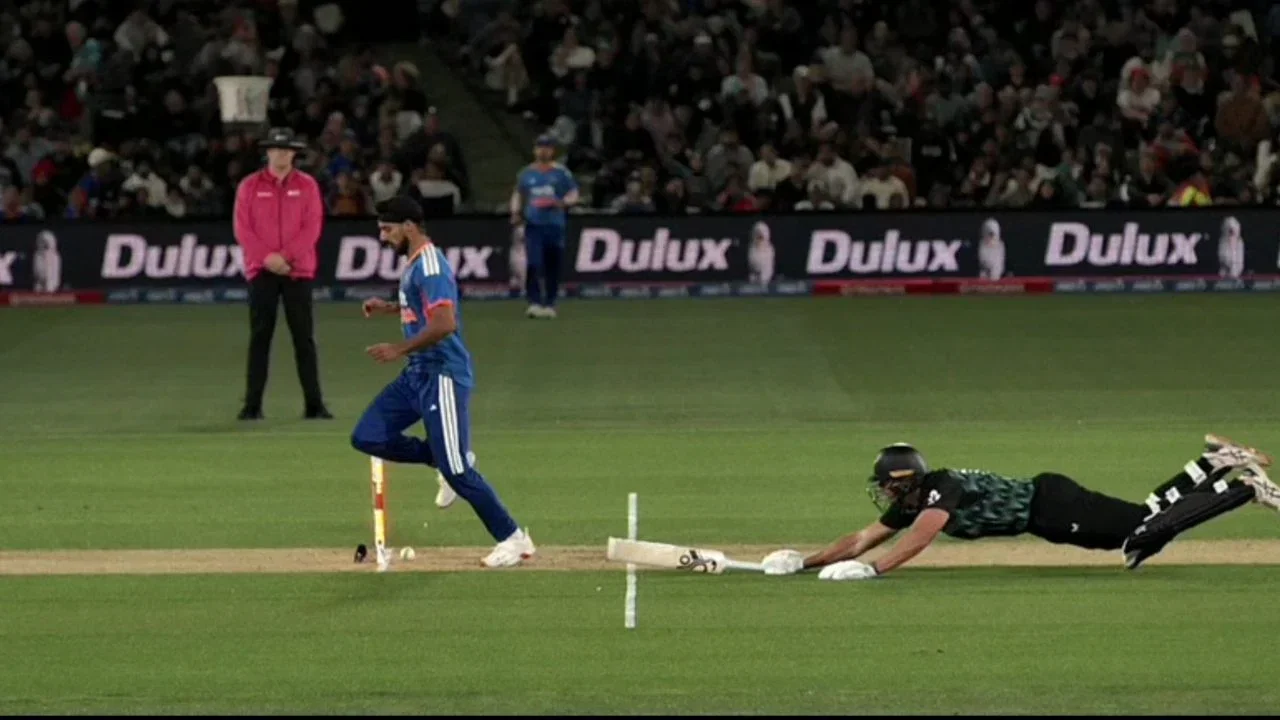
Watch: Arshdeep Singh uses football skills to run out Bevon Jacobs in 1st T20I

World record alert: Abhishek Sharma creates history with first-ball six vs New Zealand

Steve Smith injury update: Will he bat on final day of 2nd Test vs South Africa?
Hardik Pandya rejects India comeback until one condition is met
Ben Stokes eyeing Ashes 2027 comeback after snubbing IPL, PSL? England great breaks silence

Why Megan Schutt has been banned for two matches?
Not Ben Stokes! Jamie Overton open to Ashes 2027 comeback

Mumbai Indians announce multi-year kit partnership with Nike ahead of IPL 2027