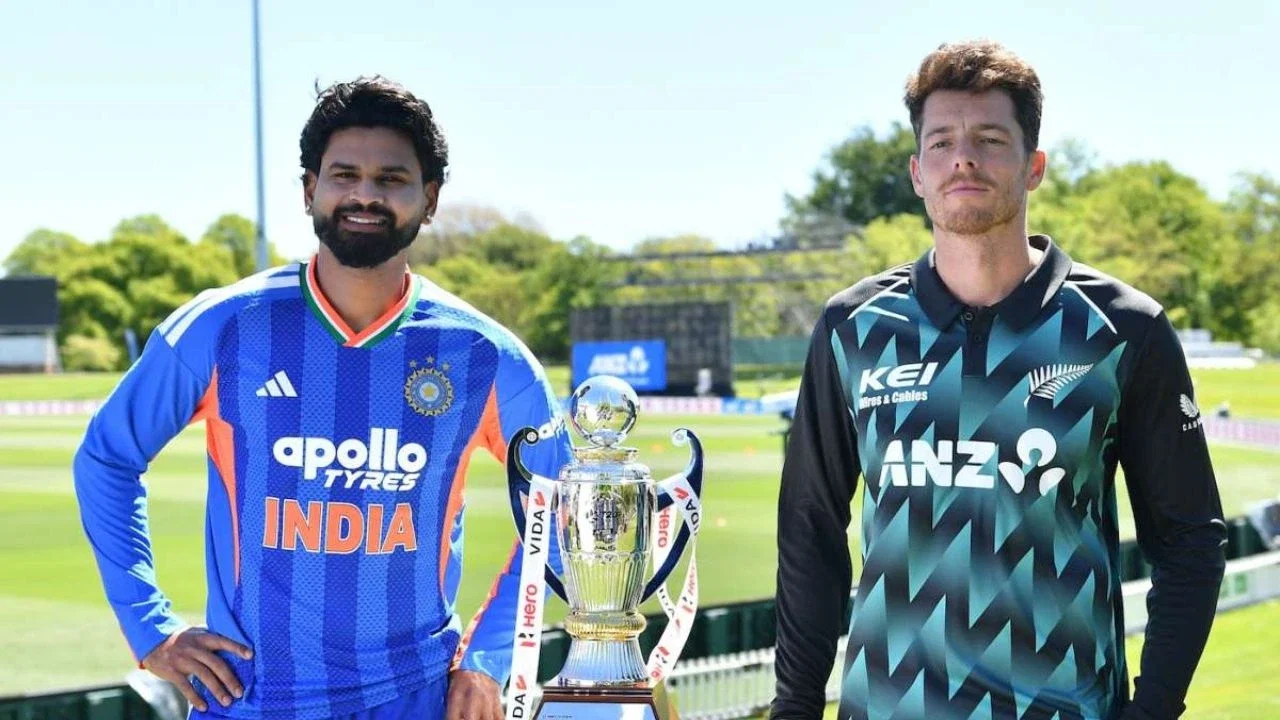
World record alert: Abhishek Sharma creates history with first-ball six vs New Zealand
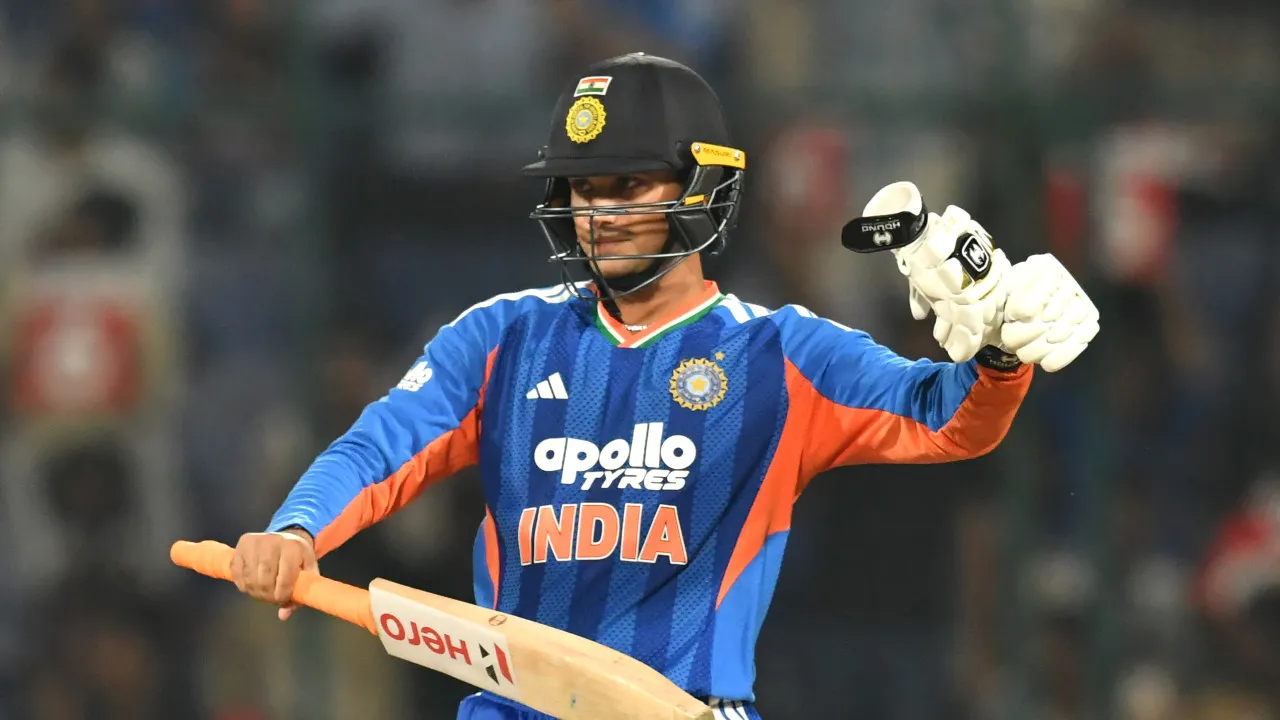
Abhishek Sharma Sets T20I Record with First-Ball Six in Christchurch
India’s opening assault against New Zealand began with a moment of history at Hagley Oval. Abhishek Sharma launched the first ball he faced for six during the visitors’ chase of a 226-run target in the first T20I in Christchurch on Thursday, October 22, becoming the first player to achieve the feat seven times in T20 internationals.
The left-handed opener’s milestone came as India raced to 94 for one in the six-over powerplay, powered by a blistering 93-run partnership with Sanju Samson. Although New Zealand eventually halted Abhishek’s innings before the end of the fielding restrictions, the pair’s explosive start put India firmly on the front foot and added another chapter to the growing record books of T20 cricket.
Abhishek Sharma’s Record-Breaking Maximum
Abhishek’s landmark six arrived from the final delivery of Matt Henry’s opening over. The New Zealand fast bowler sent down a full ball wide of off stump, and Abhishek responded with a confident inside-out drive over extra cover. The shot travelled an estimated 74 metres, clearing the rope and immediately signalling India’s attacking intent.
It was the seventh time Abhishek had hit a six from the first delivery he faced in a T20I innings. He moved past Afghanistan’s Shafiqullah Shinwari, who had recorded the achievement six times. India captain Suryakumar Yadav is next on the list with five, while Paul Stirling, Colin Munro and Mohammad Naveed of the UAE have managed it four times apiece.
The early strike also extended another of Abhishek’s records. He has now hit 16 sixes in the opening over of a T20I innings, the most by a player from a Full Member nation. Ireland’s Stirling and West Indies batter Evin Lewis have 13 each, while former India captain Rohit Sharma and New Zealand great Martin Guptill have struck 12 apiece.
A fearless approach in the powerplay
Abhishek’s record reflects a broader shift in T20 batting, where openers increasingly look to score immediately rather than spend the first few deliveries settling in. His ability to target the boundary from the outset gives India a powerful option at the top of the order, though the approach also places a premium on timing and shot selection against bowlers who vary their pace and length.
Against New Zealand, the opening over offered little sign that Abhishek intended to hold back. His first-ball six was followed by more aggressive strokeplay, helping India maintain a scoring rate that put pressure on the home side’s bowling plans from the start of the chase.
Samson’s Rapid Fifty Adds to India’s Momentum
Samson matched his partner’s urgency with an attacking innings of his own. The wicketkeeper-batter reached his half-century in just 23 balls, registering the fourth-fastest T20I fifty at Hagley Oval. His innings helped ensure that India’s chase remained on a steep upward trajectory even as New Zealand searched for a breakthrough.
Glenn Phillips holds the venue record, having reached 50 from 19 balls against Bangladesh in 2022. Australia’s Cameron White scored a 21-ball half-century against New Zealand in 2010, while England’s Harry Brook took 22 deliveries to reach the milestone at the ground in 2025. Samson’s effort placed him just behind that trio in the Hagley Oval rankings.
The partnership was significant beyond the immediate match situation. It was the fifth time in 2026 that an Indian opening pair had put together a T20I stand of at least 50 runs, equalling the national record for the most such partnerships in a calendar year. KL Rahul and Rohit Sharma reached the same mark in 2021, while Abhishek and Shubman Gill matched it in 2025. Shikhar Dhawan and Rohit recorded four 50-plus opening stands in 2018.
Bracewell Breaks the Stand, but India Finish Strong
New Zealand finally ended the opening partnership in the last over of the powerplay. Off-spinner Michael Bracewell dismissed Abhishek with a 92-kilometre-per-hour arm ball, using pace and variation to disrupt the batter’s attacking rhythm.
Abhishek made room and attempted another inside-out shot over cover, but misjudged the bounce. The ball took the bat awkwardly and looped towards short third man, where Adam Milne held the catch. Abhishek departed for 29 from 12 deliveries, having hit four sixes and one boundary.
The dismissal gave New Zealand a much-needed opening, but it did little to erase the damage already done. India ended the powerplay at 94 for one, making it the third-highest six-over total in the country’s T20I history. The two higher scores were 100 without loss against Afghanistan in Delhi in 2026 and 95 for one against England at Mumbai’s Wankhede Stadium in 2025.
What the Explosive Start Means for India’s Chase
Chasing 226 requires sustained scoring across the innings, not just a strong start. Still, India’s opening burst offered an early advantage by reducing the required run rate and forcing New Zealand to reassess its bowling strategy. With Samson scoring quickly and Abhishek attacking from his first delivery, the visitors demonstrated how quickly a large target can become manageable in modern T20 cricket.
The key question after the powerplay was whether India’s middle order could maintain the momentum once New Zealand introduced more spin and adjusted its field. A fast start can create a platform, but it can also leave a side vulnerable if wickets fall in quick succession. For New Zealand, Bracewell’s dismissal of Abhishek was therefore an important intervention, even with India already close to 100 runs.
Looking ahead, Abhishek’s record-breaking start strengthens his reputation as one of India’s most aggressive T20I openers. The performance also adds interest to the series prediction: if India can combine this kind of powerplay scoring with steady contributions through the middle overs, the team will be a serious threat in the chase. New Zealand, meanwhile, will need disciplined lengths, timely wickets and effective control of the boundary options to prevent India’s early momentum from carrying through the innings.
For fans, the Christchurch powerplay delivered both a statistical landmark and a reminder of T20 cricket’s changing tempo. Abhishek’s first-ball six made history, Samson’s quick fifty raised the pressure, and India’s 94-run start gave the chase an electrifying beginning. The partnership ended before the powerplay was over, but its impact was already clear: New Zealand had been forced to defend at full intensity from the very first ball.
Latest News
Bhuvneshwar Kumar breaks 89-match streak with first T20I no-ball against New Zealand
Bhuvneshwar Kumar sets world record on India comeback, surpasses Tim Southee
Watch: Abhishek Sharma turns Babar Azam, drops a dolly in 1st T20I vs New Zealand
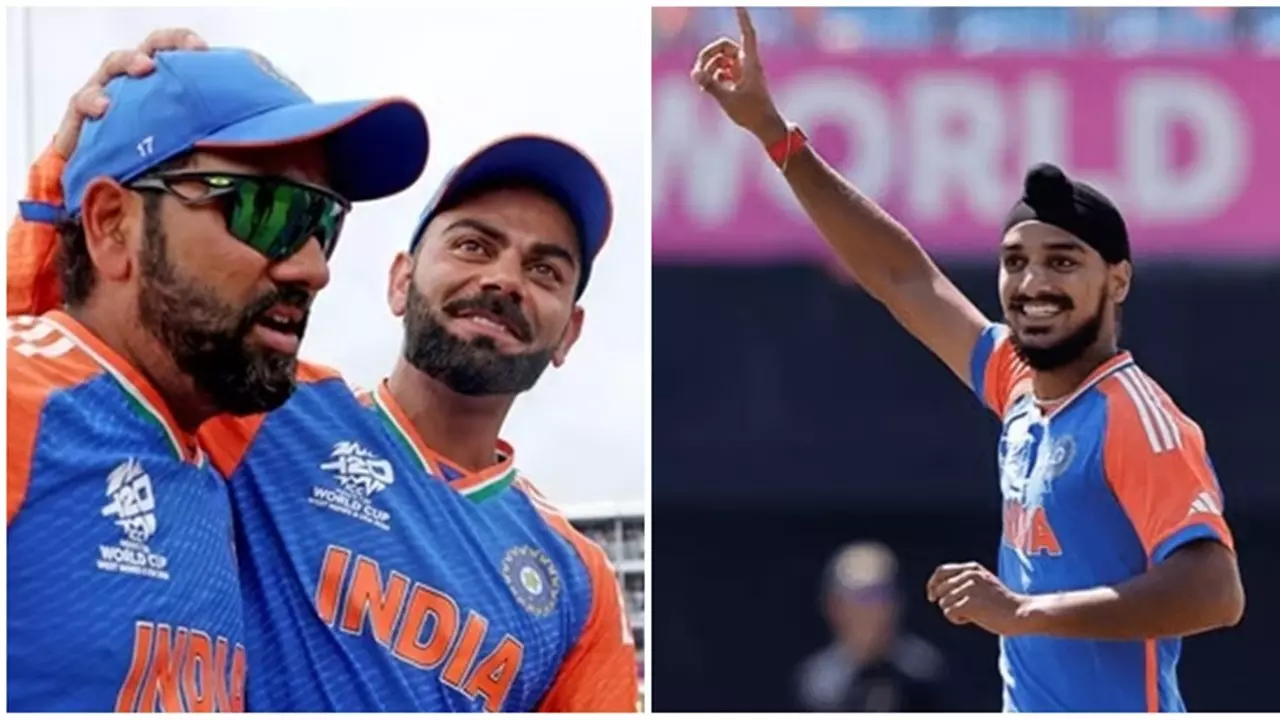
Full list of Indian cricketers with 100 T20I matches, ft Arshdeep Singh, Virat Kohli
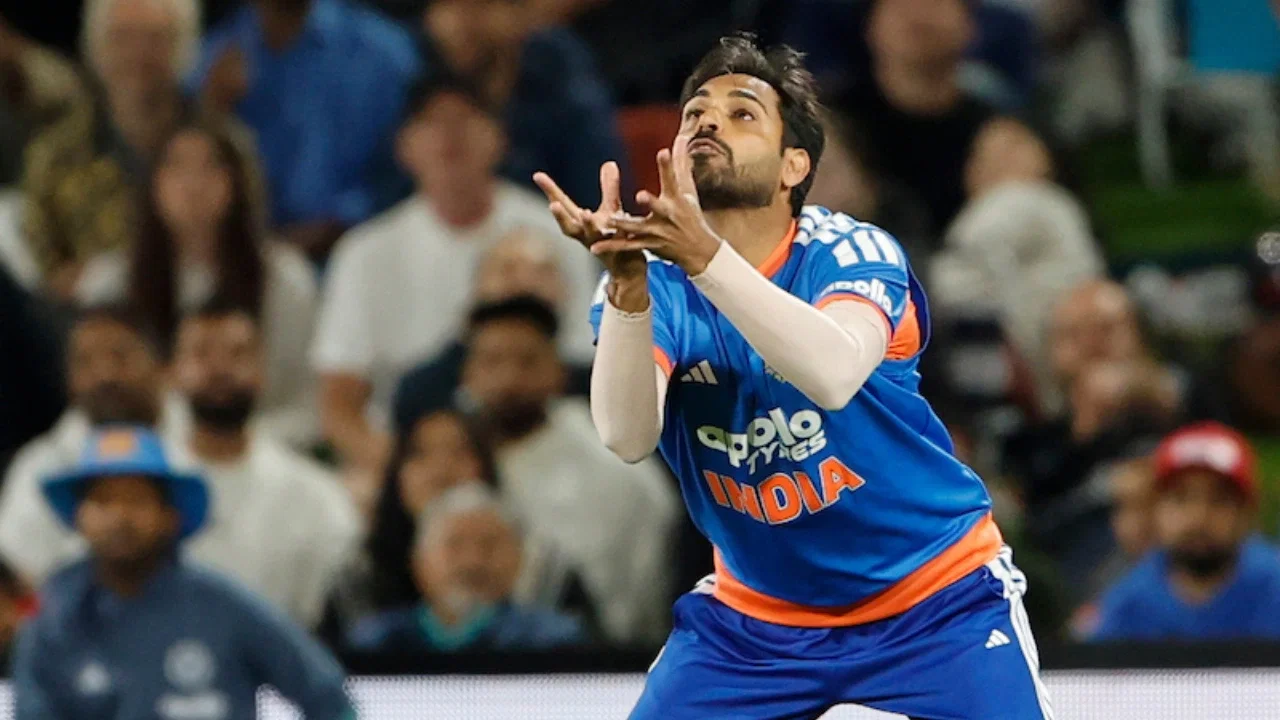
Bhuvneshwar Kumar fares worse on comeback than in last T20I 4 years ago
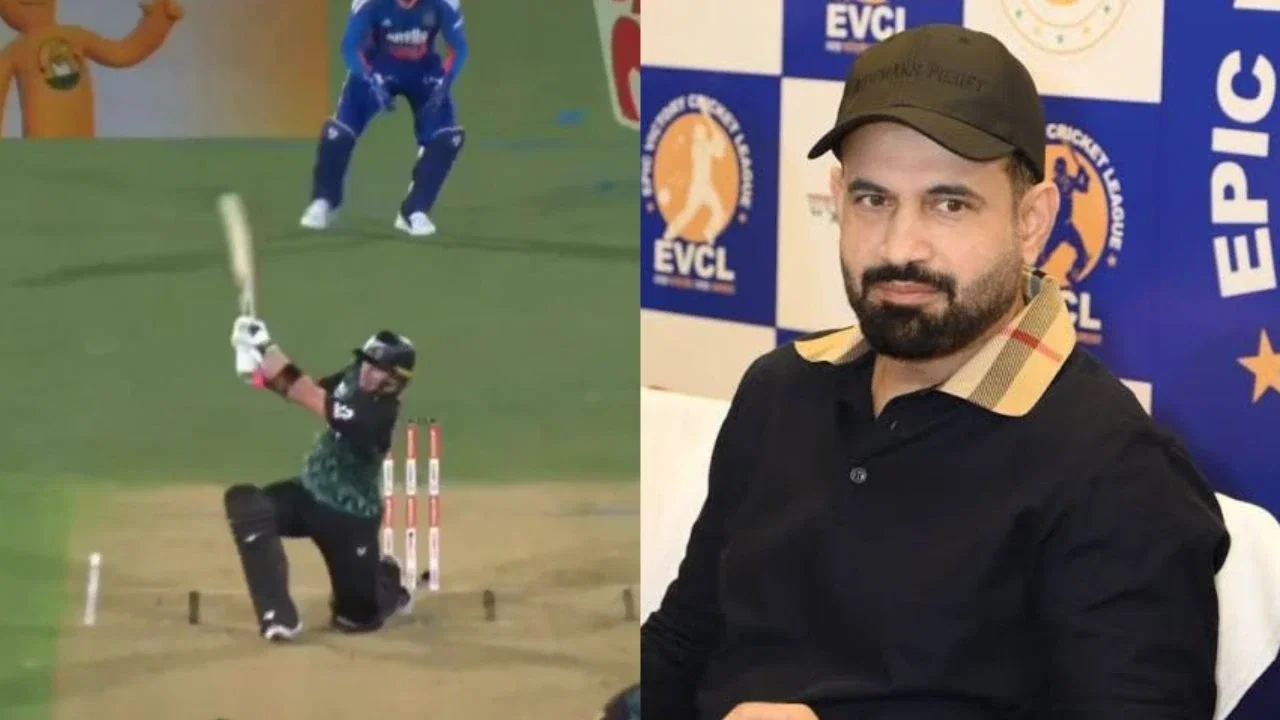
Watch: Glenn Phillips’ ‘most atrocious shot ever’ off Bhuvneshwar Kumar amazes Irfan Pathan
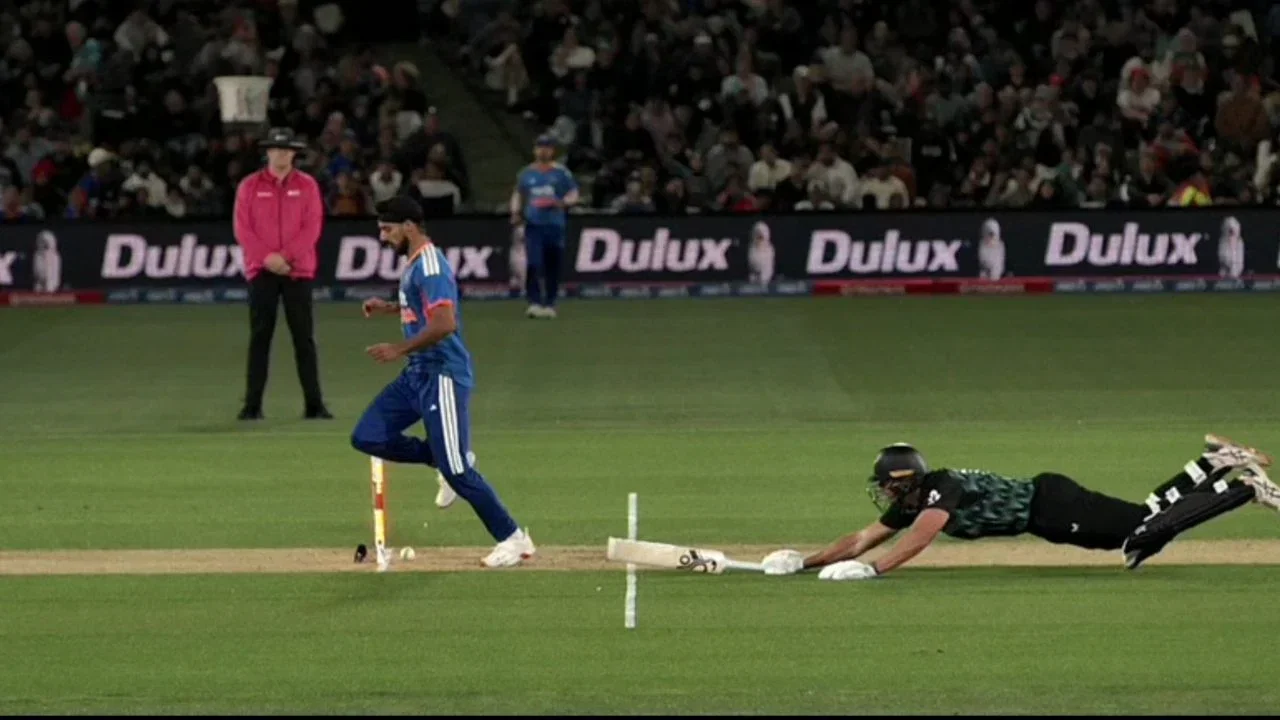
Watch: Arshdeep Singh uses football skills to run out Bevon Jacobs in 1st T20I
World record alert: Abhishek Sharma creates history with first-ball six vs New Zealand
Steve Smith injury update: Will he bat on final day of 2nd Test vs South Africa?
Hardik Pandya rejects India comeback until one condition is met
Ben Stokes eyeing Ashes 2027 comeback after snubbing IPL, PSL? England great breaks silence
Why Megan Schutt has been banned for two matches?
Not Ben Stokes! Jamie Overton open to Ashes 2027 comeback
Mumbai Indians announce multi-year kit partnership with Nike ahead of IPL 2027