

“We’re not concerned”: Kagiso Rabada reacts to Usman Khawaja’s Sandpapergate revelations
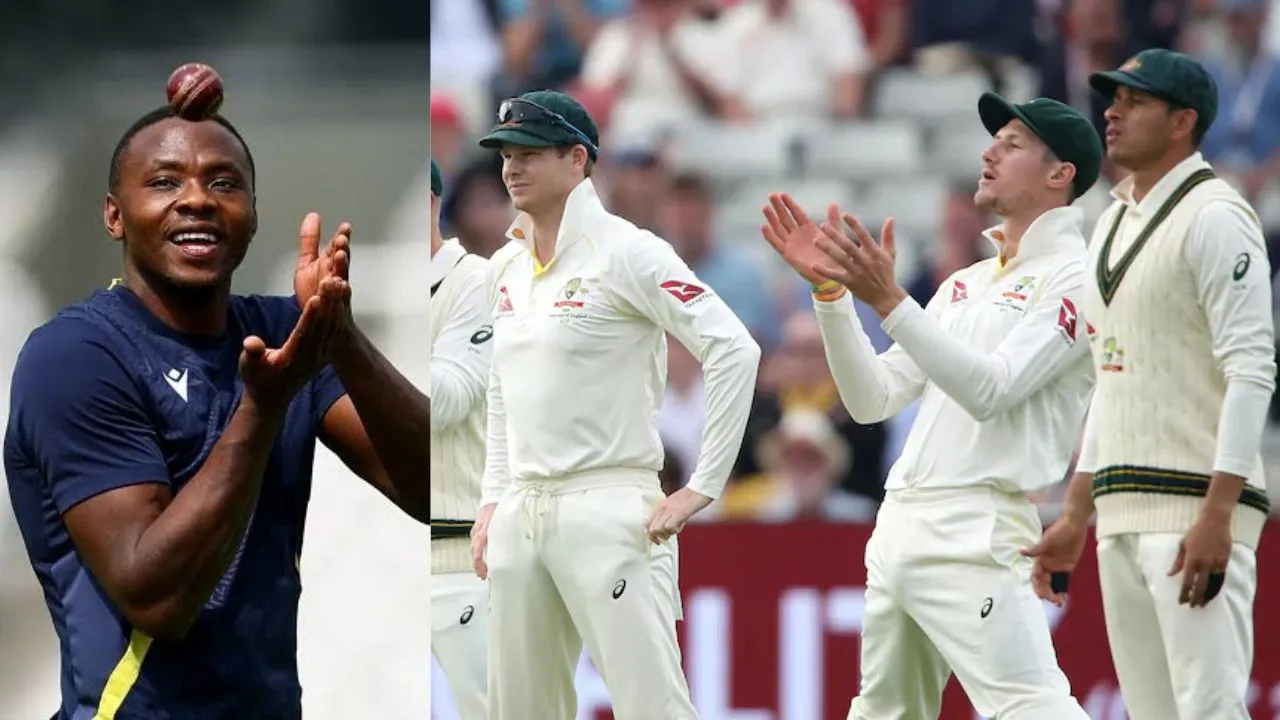
Kagiso Rabada Keeps South Africa Out of Sandpapergate Debate as Usman Khawaja’s Claims Reignite Controversy
The Sandpapergate scandal has returned to the spotlight after former Australia opener Usman Khawaja made fresh claims about the 2018 ball-tampering incident. Khawaja’s comments, published ahead of the release of his autobiography, Sabr, have prompted renewed debate among cricket fans and former players. South African fast bowler Kagiso Rabada, however, says the controversy is Australia’s to address—not South Africa’s.
Khawaja reportedly argued that knowledge of the incident extended beyond the three players who were punished: then-captain Steve Smith, vice-captain David Warner and opener Cameron Bancroft. He also suggested that ball-tampering was not an entirely unprecedented occurrence in Australian cricket. Those claims have reignited questions about accountability, the investigation that followed and whether the sanctions were applied fairly.
Rabada says the issue belongs to Australian cricket
Asked by reporters in Johannesburg for his reaction to the renewed discussion and the response it has generated in Australia, Rabada declined to weigh in on the substance of Khawaja’s allegations. He said neither he nor the South African team had a role in resolving an internal Australian cricket dispute.
“My take on it is we’re not concerned about what they have to deal with,” Rabada said, according to Cricbuzz. “It’s not our topic to deal with. It’s obviously an Australian topic. I don’t see where we get involved in that.”
Rabada’s measured response reflects the distinction between the scandal’s broader impact on cricket and the responsibility for investigating the specific claims. The episode remains a significant chapter in Australia’s cricket history, but any assessment of Khawaja’s account would require evidence and a response from the people and institutions directly involved. Rabada made clear that he would not speculate on matters outside his team’s remit.
Why Sandpapergate remains a major cricket talking point
The 2018 ball-tampering scandal erupted during a Test match between Australia and South Africa in Cape Town. Bancroft was caught using sandpaper to alter the condition of the ball, and the incident led to an investigation by Cricket Australia. Smith, Warner and Bancroft received suspensions, while the governing body also introduced measures intended to reinforce standards of conduct and protect the integrity of the game.
The affair became known as Sandpapergate and had consequences that reached well beyond the match itself. It triggered intense public criticism, leadership changes and a period of scrutiny for Australian cricket. The fact that the incident took place during a high-profile series against South Africa also ensured that it became part of the rivalry’s modern history.
Khawaja’s latest remarks have reopened familiar questions: who knew what, when they knew it and whether the punishment reflected the full extent of the events. His comments are claims, however, and should be treated as such unless corroborated by further evidence or official findings. The renewed attention demonstrates how quickly a major sporting controversy can resurface when a participant offers a new account years later.
Rabada’s standout performances against Australia
Although Rabada chose not to enter the debate, his own performances against Australia during the 2018 series remain a notable part of the contest. The South African quick finished as the series’ leading wicket-taker, claiming 23 wickets at an average of 19.26. His pace and ability to generate breakthroughs made him one of the most influential bowlers on either side.
The series was fiercely competitive, and its cricketing quality should be considered alongside the controversy that overshadowed it. Rabada’s success was built on sustained pressure and attacking spells, rather than a single moment. His record from that tour underlined his growing status as a leading Test bowler and helped South Africa maintain a potent threat with the ball.
South Africa later won another Test series against Australia 2–1 after losing the opening match. Rabada again contributed, taking 10 wickets at an average of 24.70. His ability to deliver important breakthroughs across the series reinforced his value to the Proteas, particularly in a contest where momentum shifted after the first Test.
South Africa’s No. 1 Test ranking brings a sense of reward
Rabada was also asked what it meant for South Africa to reach the top of the Test rankings. He described the achievement as deeply satisfying, especially after the team had faced setbacks and periods of uncertainty. For him, the ranking reflects the value of staying committed, continuing to represent the country and refusing to give up when results do not come easily.
“It feels really good to be the No. 1 team in the world,” Rabada said. “After going through all the ups and downs it pays off to keep at it, to keep playing for the badge and not give up. It’s not always plain sailing.”
His comments point to the work behind a ranking that can change quickly in international cricket. Test success depends on more than a handful of standout performances: it requires consistency across conditions, contributions from the entire squad and the ability to recover from difficult results. South Africa’s rise to the top is therefore both a sporting milestone and a reward for sustained effort.
Rabada also praised the level of engagement from supporters, saying the response had surprised him and that he was pleased the team could provide entertainment. The connection between players and fans, he suggested, is part of what makes international cricket meaningful beyond the results on the field.
Prediction: the debate is likely to continue
The latest Sandpapergate discussion is unlikely to disappear immediately. Khawaja’s account has revived public interest, and further responses may follow as his autobiography reaches readers. Whether the claims lead to new evidence or remain part of an ongoing debate will depend on what those directly involved choose to say and whether any additional information emerges.
For now, Rabada has kept his focus on South Africa’s achievements and his own responsibilities as a player. His position is straightforward: the controversy belongs to Australian cricket, while the Proteas’ priority is to represent their country. As the debate develops, fans will be watching both for answers about one of cricket’s most damaging scandals and for South Africa to build on its status as the world’s top Test team.
Latest News

“Haven’t spoken to my dad”: Aaryavir Sehwag’s revelation on Virender Sehwag after PoTT win in U19 Asia Cup
Who is Mohit Ulva? India bowler who pulled off a thriller in U19 Asia Cup final against Pakistan
Aaryavir Sehwag receives special congratulations from Vaibhav Sooryavanshi after U19 Asia Cup triumph
England to return to Zimbabwe for historic Test match after three decades
Vaibhav Sooryavanshi suffers Rohit Sharma-like brain-fade during toss, forgets combination
“Shreyas Iyer has to be careful”: Kris Srikkanth sounds warning to India star over poor ODI form
ICC delays decision on franchise league rules as MLC and ILT20 await clarity
Sanju Samson fails in SMAT after horror show for India
IPL 2027: Gujarat Titans set to sign Harshal Patel in all-cash deal with SRH
“I know his limitations well”: R Ashwin opens up on Ravindra Jadeja’s biggest weakness
Aakash Chopra picks India’s best ODI captain, Virat Kohli not in top three
“Mohit Ulva you freak”: Fans react as India pull off stunning win over Pakistan in U19 Asia Cup 2026 final
India U19 vs Pakistan U19: All ODI match results from 1988 to 2026

ECB declares war on YouTube show, threatens Ashes ban for popular Commentators

