Abhishek Sharma snubbed as Abhinav Mukund names India’s top 3 all-time T20I batters
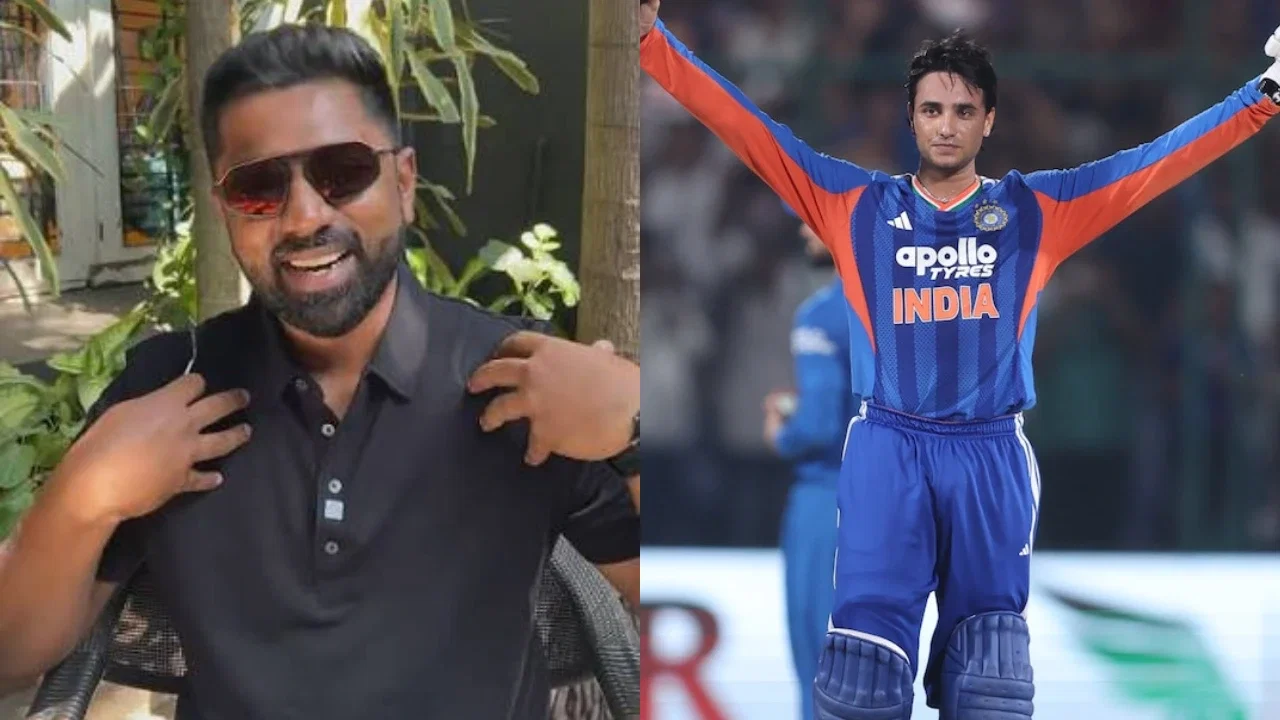
Abhinav Mukund Names His Top Five Indian T20I Batters, With Abhishek Sharma at No. 4
Former India opener Abhinav Mukund has shared his prediction of the country’s greatest T20I batters, placing current star Abhishek Sharma among his top five but just outside the leading trio. Mukund’s shortlist brings together established legends and a younger generation of explosive players, while his decision to select Hardik Pandya over Yuvraj Singh has added another talking point for cricket fans.
Abhishek’s fourth-place position reflects the impact he has made in a relatively short time. The left-handed opener has become known for attacking from the first over, using quick hands and confident stroke-making to put bowlers under pressure. Yet Mukund’s ranking suggests that, in his view, a place among India’s all-time top three T20I batters still belongs to players with longer records and a wider body of achievement in the format.
Mukund’s top five India T20I batters
Speaking on ESPNcricinfo’s Cricinfo Quick Singles, Mukund was asked to name his leading Indian batters in T20 internationals. He placed Rohit Sharma, Virat Kohli and Suryakumar Yadav in his top three, without assigning them a specific order. Abhishek came in at No. 4, followed by Hardik at No. 5.
Mukund acknowledged that the list was difficult to settle, particularly when comparing players from different eras and roles. He said Abhishek had earned a place in his top five, but stopped short of ranking him among the top three. His final selection also meant that Yuvraj Singh, the former India all-rounder renowned for his power hitting, did not make the five.
“I think he makes it to my top five,” Mukund said of Abhishek. Asked whether the young opener belonged in the top three, he replied: “Top three, no, he’s the fourth.”
Why Abhishek Sharma is already making an impact
Abhishek’s numbers underline the rapid progress of his T20I career. He has scored 2,071 runs in 67 matches, averaging 32.36 at a strike rate of 194.10. His record includes three centuries and 14 half-centuries, a return that highlights both his ability to make substantial scores and his capacity to score at an exceptional pace.
His appeal goes beyond the statistics. Abhishek looks to attack early, whether he is facing pace or spin, and his aggressive approach can change the tempo of an innings within a few overs. That style is especially valuable in modern T20 cricket, where teams often seek to maximise the powerplay rather than spend time settling in.
There is, however, a difference between being one of the most dangerous batters in the current game and ranking among the greatest T20I players in Indian history. The latter comparison considers longevity, consistency, performances under pressure and contribution across different match situations. Mukund’s ranking appears to recognise Abhishek’s extraordinary potential while leaving room for his record to grow.
Rohit, Kohli and Suryakumar occupy the top three
Mukund’s leading group features three batters whose styles and careers have helped shape India’s T20I identity. Rohit Sharma brought power and timing to the opening role, often looking to exploit the field restrictions in the first six overs. Across 159 T20Is, he scored 4,231 runs at an average of 32.05 and a strike rate of 140.89. His pull shot and ability to accelerate once set made him a formidable opponent for both fast bowlers and spinners.
Virat Kohli, who retired from T20I cricket in 2024, built his reputation on control, adaptability and composure in chases. He finished with 4,188 runs in 125 matches, averaging 48.69 at a strike rate of 137.04. While his approach was often less explosive than that of some contemporaries, Kohli’s consistency and ability to manage high-pressure situations made him one of the format’s most dependable run-scorers.
Suryakumar Yadav offers a contrasting kind of threat. His inventive shot-making allows him to target areas that many batters rarely access, including behind the wicket and over the infield. He has scored 3,272 runs in 113 T20Is, with an average of 36.35 and a strike rate of 162.94. Four centuries and 25 half-centuries further demonstrate his ability to turn a quick start into a major contribution.
Mukund did not rank the three against one another, describing them as his top group without a fixed order. That choice reflects the difficulty of comparing players whose roles and strengths differ. Rohit’s powerplay impact, Kohli’s chase management and Suryakumar’s boundary options each offer a distinct case for greatness.
Hardik Pandya gets the nod over Yuvraj Singh
The most debated part of Mukund’s selection may be his choice of Hardik over Yuvraj. Mukund said he had considered both players before settling on Hardik at No. 5. The decision places emphasis on Hardik’s record as a modern T20I all-rounder, combining middle-order batting with the ability to contribute with the ball.
Hardik has made 2,288 runs in 138 T20I matches, averaging 28.25 at a strike rate of 145.92, with nine half-centuries. His strength through the line and ability to clear the boundary make him a valuable finisher, particularly when an innings needs a late surge. His all-round role also gives a team greater flexibility in its bowling and batting combinations.
Yuvraj’s omission is notable because of his lasting influence on Indian limited-overs cricket and his reputation as a powerful hitter. But Mukund’s list is specifically a ranking of T20I batters, and comparisons across eras can be complicated by changes in playing conditions, team roles and the evolution of T20 strategy.
Can Abhishek break into the top three?
For now, Mukund’s answer is clear: Abhishek is fourth, with Rohit, Kohli and Suryakumar ahead of him. That ranking is not necessarily a final verdict on the opener’s place in India’s T20I history. At this stage of his career, Abhishek has time to build the consistency and big-match record that could strengthen his case.
His aggressive approach already gives India a distinctive option at the top of the order. If he can continue converting fast starts into match-winning innings, while maintaining his scoring rate against varied bowling attacks, discussion about his all-time standing is likely to intensify. For fans, Mukund’s top-five list offers a useful snapshot of how one former international views the balance between proven achievement and emerging potential in Indian T20I cricket.
Latest News
Fakhar Zaman admits extreme pressure on Pakistan to end ICC trophy drought
Australia drop Nathan Lyon vs South Africa, marking third omission in 14 months
Tim Southee says New Zealand are not scared of Jasprit Bumrah
Ravichandran Ashwin fears the worst for Kuldeep Yadav under Gautam Gambhir
Abhishek Sharma snubbed as Abhinav Mukund names India’s top 3 all-time T20I batters

Sunil Gavaskar says Hardik Pandya is irreplaceable, urges India to build different combination
Babar Azam reaches 16,000 international runs during Pakistan vs Sri Lanka 1st ODI

South Africa vs Australia 2nd Test creates 100-year record with 19 players aged 30 or above
AFG vs ZIM Playing 11 Today, Live Streaming, Pitch & Weather: Afghanistan vs Zimbabwe 2nd ODI, Tri-Series 2026
Rinku Singh makes strong case for India comeback with back-to-back Ranji Trophy centuries
Chris Woakes reveals how Rob Key hurt him before retirement
Mohammad Rizwan gets PCB clearance to return to domestic cricket amid betting probe
Mohammed Shami suffers injury amid India comeback talks, misses Ranji match
Shoaib Akhtar warns Babar Azam could be dropped from Pakistan’s ODI team