Sunil Gavaskar says Hardik Pandya is irreplaceable, urges India to build different combination
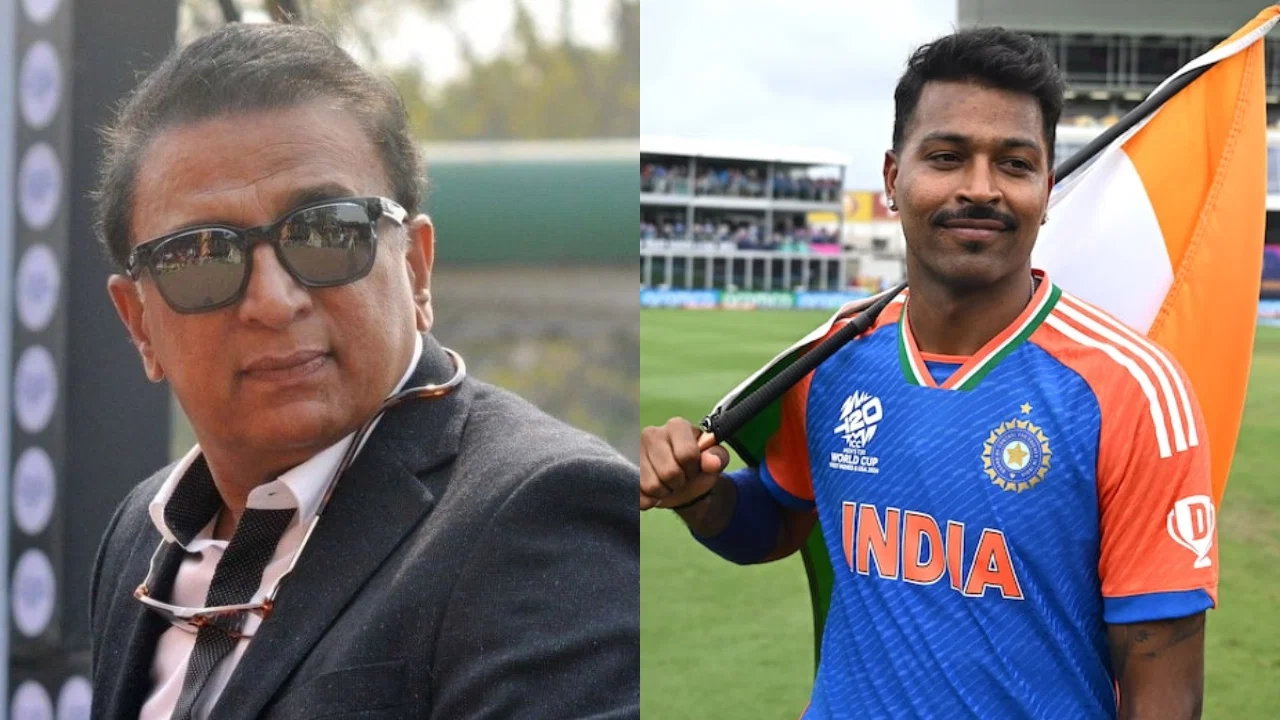
Sunil Gavaskar Urges India to Build a Balanced Team Instead of Seeking a Hardik Pandya Replacement
India should stop looking for a like-for-like replacement for Hardik Pandya and focus instead on building a well-balanced side, former captain Sunil Gavaskar has advised. The legendary batter believes Pandya’s rare combination of explosive batting and reliable seam bowling cannot be easily replicated—and that trying to find another player with the same skill set could lead India to compromise elsewhere in the team.
Gavaskar’s comments come as questions persist about India’s options when Pandya is unavailable. The all-rounder’s recurring fitness concerns have made his availability an important consideration in team planning, particularly with major international tournaments on the horizon. But, in Gavaskar’s view, the answer is not to search endlessly for a second Pandya. India should select specialist bowlers, then use capable all-rounders to provide additional overs and batting depth.
Gavaskar’s Team-Building Advice After the T20I Series
Gavaskar shared his assessment after India’s five-match T20I series against the West Indies finished 2-2. The fifth match, scheduled to be played in Bengaluru on October 17, was abandoned because of rain. As a result, India missed the chance to test its bowling combinations in the shortened contest.
While the final game offered little opportunity to judge the attack, Gavaskar said the broader lesson was clear: India should begin with at least four specialist bowlers. The fifth and sixth bowling options, he argued, can come from players who also make a meaningful contribution with the bat.
“The takeaway from the series is that, in their bowling, they have to play with at least four regular bowlers,” Gavaskar said on JioStar. “A fifth bowler and a sixth can be your all-rounders, somebody who can bat as well.”
The approach would give the captain a dependable core of frontline bowling options while preserving flexibility. Rather than expecting one player to cover every role, India could spread responsibility across the lineup—an especially useful strategy in T20 cricket, where match-ups, conditions and changing momentum can quickly alter a bowling plan.
Naman Dhir Could Offer India a Flexible Option
Gavaskar pointed to Naman Dhir as a potential example of the kind of player who could strengthen India’s balance. Dhir is primarily a batter, but he can also contribute a few overs, giving the team another option without requiring it to select a specialist batter solely for depth.
The young player made an impression in the rain-affected final T20I, striking an unbeaten 24 from just six deliveries. The brief innings was a striking display of his power-hitting ability, although it came in a limited sample and should not, by itself, be treated as proof of long-term readiness. His potential value, according to Gavaskar’s broader argument, lies in offering more than one skill to the team.
Gavaskar also highlighted Axar Patel, whose ability to bowl a full quota of overs while contributing with the bat gives India a different kind of balance. “Somebody like Naman Dhir, who’s more of a batter but who can come in and bowl two or three overs. Axar Patel, who can bowl his four overs,” he said.
These examples underline an important distinction in selection: not every all-rounder has to perform the same job. A player who can provide two or three overs may be useful alongside a specialist spinner or seam bowler, while a more established bowling all-rounder can shoulder a larger workload. The best combination will depend on the conditions, opposition and format.
Why Gavaskar Says Hardik Pandya Is Irreplaceable
Pandya’s value comes from the way he can influence several phases of a match. He can accelerate the scoring rate in the middle and lower order, finish an innings with powerful hitting and offer seam-bowling overs when required. That blend gives the captain options that are difficult to reproduce through a single alternative.
Gavaskar warned against treating the search for a replacement as if India could simply find another player with the same profile. “We sometimes get a little bit carried away with trying to find a replacement for Hardik Pandya. Hardik Pandya is irreplaceable. If you can’t find somebody of his calibre, then go with somebody who will do a slightly different job,” he said.
That advice encourages a more practical selection strategy. Instead of asking whether one player can match Pandya in every department, selectors can assess what the team needs most in a particular match. If the priority is batting power, India may choose a batter who can bowl occasional overs. If the conditions demand control, a specialist bowler could be the better choice, with batting depth supplied elsewhere.
Fitness Management and India’s Long-Term Plans
Pandya’s fitness remains central to India’s planning. The all-rounder is set to miss the upcoming white-ball series against New Zealand, beginning on October 22, because of recurring fitness issues. With the 2027 ICC ODI World Cup in mind, he has moved his training base to Bengaluru and is working under the medical supervision of the BCCI’s Centre of Excellence.
The focus is on managing his recovery and workload while improving his long-term fitness. For India, that makes it important to have contingency plans without placing undue pressure on Pandya to return before he is ready. A clear division of responsibilities could help the team remain competitive during his absence and reduce the risk of overworking other players who are asked to fill multiple roles.
Gavaskar Warns Against Batting Depth at the Expense of Bowling
Gavaskar also cautioned India against selecting a lineup that bats down to No. 8 if doing so weakens the bowling attack. A deep batting order can look reassuring, particularly in T20 cricket, but it may leave the captain short of reliable options when defending a total or trying to control a strong batting side.
“The moment you go with batting up to number eight, you weaken your bowling, and that’s where you get beaten,” Gavaskar said. He urged India to keep backing its spin bowlers and maintain their confidence, even when they are not regular members of the playing XI.
His message is not that batting depth has no value. Rather, the team must avoid adding batters simply for the sake of extending the lineup if that choice comes at the cost of specialist bowling. In a close T20 match, four dependable bowlers supported by two flexible part-time options may offer a stronger structure than a batting-heavy side with too few reliable overs.
India’s Selection Prediction: Flexibility Over a Like-for-Like Replacement
Gavaskar’s prediction for India’s best path forward is less about identifying one successor to Pandya and more about creating a lineup capable of adapting. Specialist bowlers should form the foundation, while all-rounders such as Axar Patel and emerging options like Naman Dhir can provide additional flexibility when their skills suit the team’s needs.
That approach could help India manage Pandya’s absence without asking another player to imitate his entire role. It also gives selectors a clearer framework: prioritise a balanced attack, use all-rounders strategically and choose combinations according to conditions rather than chasing an exact replacement. Pandya may remain unique, but India can still build a strong team by distributing his responsibilities more thoughtfully.
Latest News
Fakhar Zaman admits extreme pressure on Pakistan to end ICC trophy drought
Australia drop Nathan Lyon vs South Africa, marking third omission in 14 months
Tim Southee says New Zealand are not scared of Jasprit Bumrah
Ravichandran Ashwin fears the worst for Kuldeep Yadav under Gautam Gambhir
Abhishek Sharma snubbed as Abhinav Mukund names India’s top 3 all-time T20I batters
Sunil Gavaskar says Hardik Pandya is irreplaceable, urges India to build different combination
Babar Azam reaches 16,000 international runs during Pakistan vs Sri Lanka 1st ODI
South Africa vs Australia 2nd Test creates 100-year record with 19 players aged 30 or above
AFG vs ZIM Playing 11 Today, Live Streaming, Pitch & Weather: Afghanistan vs Zimbabwe 2nd ODI, Tri-Series 2026
Rinku Singh makes strong case for India comeback with back-to-back Ranji Trophy centuries
Chris Woakes reveals how Rob Key hurt him before retirement
Mohammad Rizwan gets PCB clearance to return to domestic cricket amid betting probe
Mohammed Shami suffers injury amid India comeback talks, misses Ranji match
Shoaib Akhtar warns Babar Azam could be dropped from Pakistan’s ODI team