Arshdeep Singh gets hammered as Blair Tickner creates special ODI records in Auckland
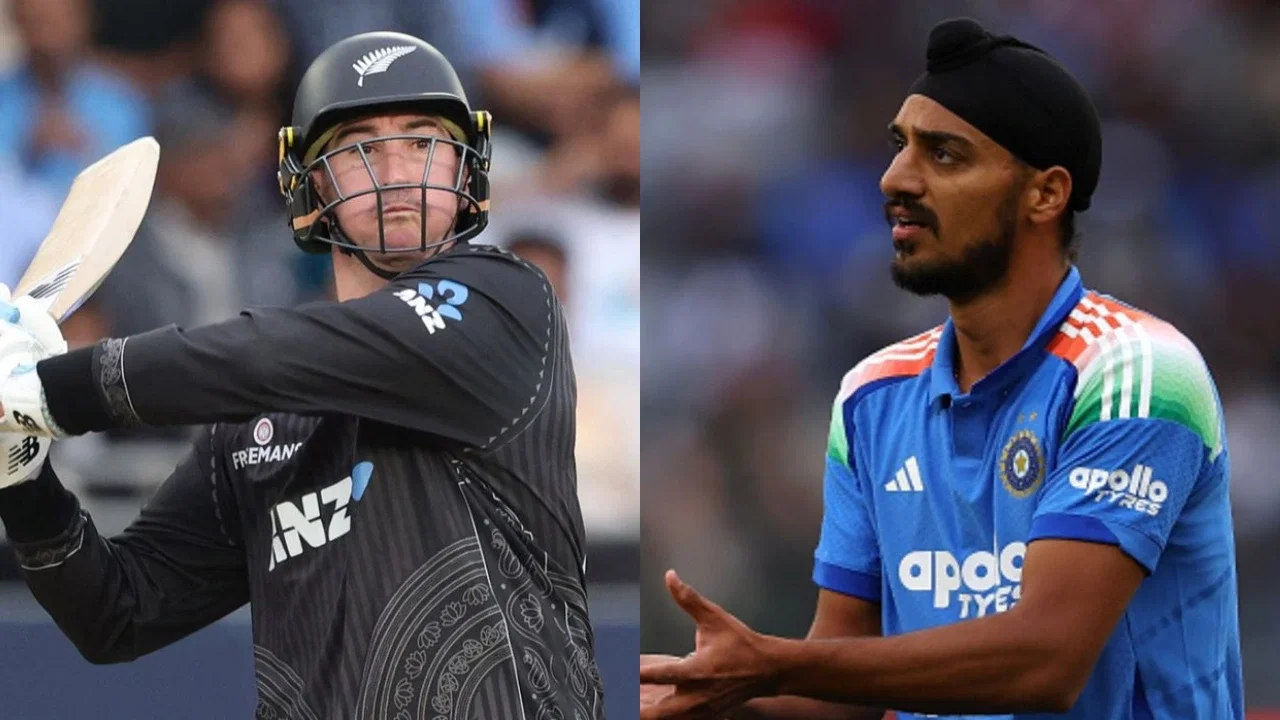
Blair Tickner’s late fireworks light up New Zealand’s ODI clash with India
New Zealand’s lower order delivered an unexpected burst of power at Eden Park, where number 11 batter Blair Tickner turned a routine end to the innings into one of the most memorable passages of the opening ODI against India. Facing a disciplined attack and with India eager to wrap up the innings, Tickner struck four sixes in a rapid 34-run cameo, including three maximums in one over from Arshdeep Singh.
Tickner’s assault gave New Zealand valuable late runs and briefly shifted the mood in Auckland. The right-hander eventually fell to Gurnoor Brar, but not before rewriting a small piece of ODI history. His performance offered a reminder that tailenders can still change the complexion of a match—and that a single over can reshape a game’s momentum.
Three sixes turn Arshdeep Singh’s over into a costly one
The defining sequence arrived in the 38th over, when Tickner took on Arshdeep. The Indian left-arm seamer looked to attack with full deliveries, but Tickner was ready to clear the boundary. He launched the first full ball over long-on, then sent another soaring over long-off. A third six followed, again over long-on, as the New Zealand batter made the most of the pace and length on offer.
Arshdeep also bowled two wides during the over, adding to India’s frustration. Tickner collected 19 runs from his deliveries, while Jacob Duffy added two from the final ball. The over therefore cost India 23 runs, providing New Zealand with a late scoring surge at a time when the visitors were trying to close out the innings.
The burst was particularly striking because Tickner entered the contest as a number 11 batter, a position usually associated with survival rather than boundary-hitting. His clean striking changed that expectation, forcing India’s bowlers to adjust their plans and giving the crowd at Eden Park a lively finish to the innings.
Tickner joins an exclusive list of number 11 power-hitters
Tickner’s 19 runs in the over rank as the third-highest total scored by a number 11 batter in a single ODI over, according to the records cited for the match. Shoaib Akhtar holds the benchmark, having scored 21 runs from an over bowled by Craig White in Cape Town in 2003. Brian Vitori is next on the list, with 20 runs against JP Duminy in Bulawayo in 2014.
Most runs by a number 11 batter in one ODI over:
- Shoaib Akhtar: 21 runs off Craig White, Cape Town, 2003
- Brian Vitori: 20 runs off JP Duminy, Bulawayo, 2014
- Blair Tickner: 19 runs off Arshdeep Singh, Auckland, 2026
Tickner also became only the third number 11 batter to hit four sixes in an ODI innings. Mohammad Amir was the first, against England in Nottingham in 2016, while Naseem Shah matched the feat against New Zealand in Hamilton in 2025. Tickner’s achievement places him alongside two Pakistan fast bowlers whose lower-order hitting has also attracted attention.
Number 11 batters to hit four sixes in an ODI innings:
- Mohammad Amir against England, Nottingham, 2016
- Naseem Shah against New Zealand, Hamilton, 2025
- Blair Tickner against India, Auckland, 2026
Gurnoor Brar ends the entertaining innings
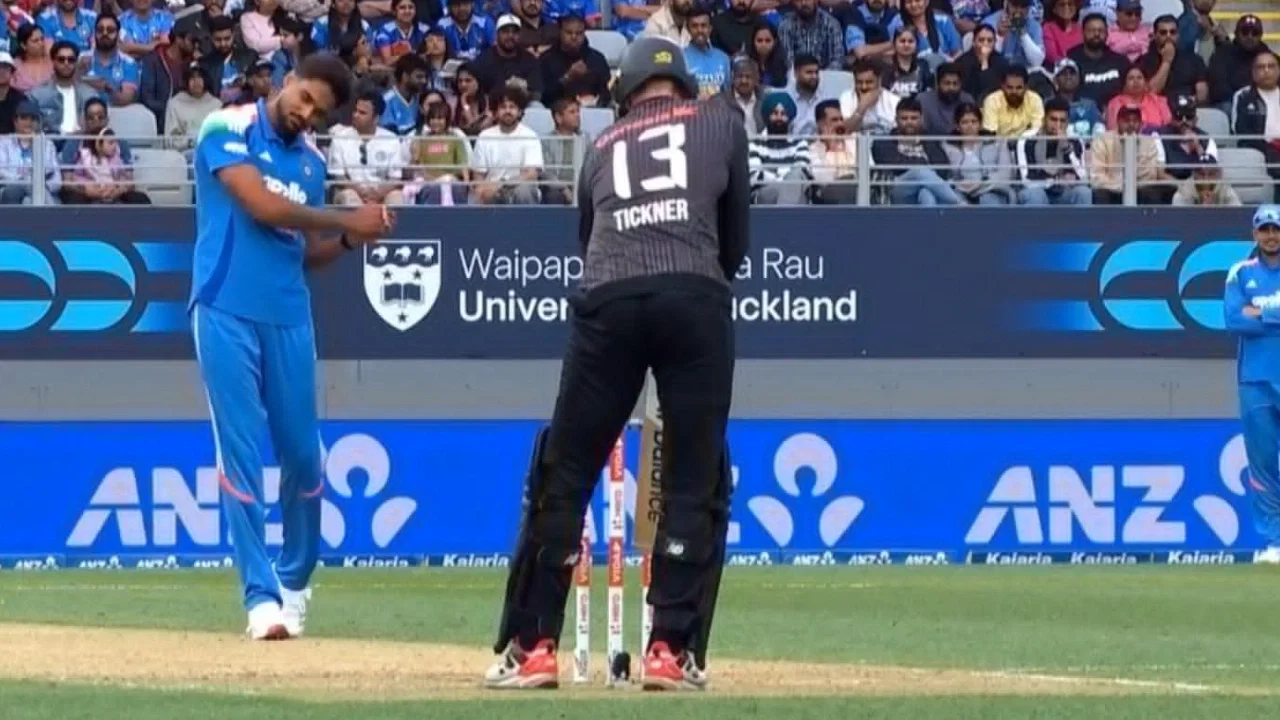
India eventually found a way to stop Tickner’s charge. Brar continued with a short-ball approach, and Tickner tried to move away and attack again. This time, however, he could not control the shot. The ball took a top edge and travelled towards wicketkeeper KL Rahul, who moved to his left and completed the catch.
Tickner walked off after scoring 34 from 23 deliveries, with one four and four sixes. His innings was brief, but its impact was clear: New Zealand had added a rapid injection of runs, and India’s bowlers had been denied a straightforward finish. The dismissal also ended Tickner’s bid to extend his remarkable late-innings contribution.
Arshdeep sets a New Zealand milestone despite the expensive over
Although Tickner’s assault made Arshdeep’s final over an uncomfortable one, the Indian pacer still finished with figures of 4 for 70. Those numbers were reported as the best ODI figures by an Indian fast bowler in New Zealand, surpassing Mohammed Shami’s 4 for 55 in Napier in 2014. Javagal Srinath had also claimed four wickets in New Zealand, taking 4 for 23 in Auckland in 2003 and 4 for 52 in Napier in 1995.
The figures underline the contrast in Arshdeep’s outing: he was among India’s most effective wicket-takers, yet Tickner’s late counterattack ensured that his spell would also be remembered for a costly over. The effort cost Arshdeep the chance to claim a fifth wicket, but it did not erase the significance of his four-wicket haul.
What Tickner’s cameo could mean for the series
Late-order hitting is often treated as a bonus, but innings such as Tickner’s can influence a team’s confidence and the pressure surrounding a chase. A handful of extra runs may affect how a captain sets fields, how a bowling side manages its final overs, and how batters assess the required pace later in the match. Tickner’s display also gives New Zealand a useful reminder of the value of staying aggressive, even when wickets are running out.
For India, the episode offers a practical lesson in execution at the death. Full deliveries can be an effective option against tailenders, but missed yorker lengths leave little margin for error—especially on a ground where a clean strike can travel. The prediction for the remaining matches is that both teams will pay close attention to their lower-order plans, with bowlers seeking tighter control and batters looking for opportunities to add quick runs.
Tickner’s innings did not last long, but it gave the ODI opener a memorable twist. Three sixes in one over, four maximums overall, and a place among the most productive number 11 batters in ODI history turned a late cameo into a standout moment at Eden Park.
Latest News
Suresh Raina announces willingness to become CSK coach
Watch: Virat Kohli takes one-handed blinder before breaking into Bow and Arrow celebration vs NZ
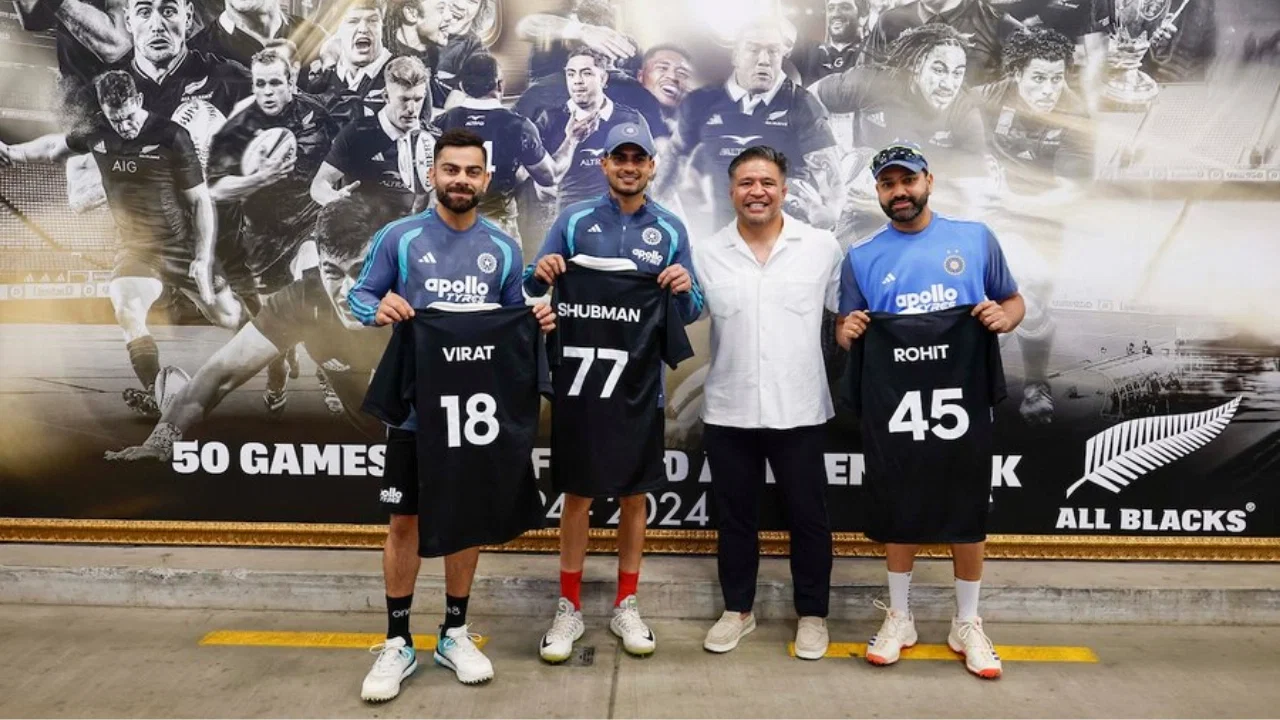
Virat Kohli, Rohit Sharma and Shubman Gill receive personalized All Blacks jerseys ahead of 1st ODI
“The celebration was for my girlfriend”: Arshdeep Singh on gesture after Kyle Jamieson’s dismissal
Rohit Sharma bags first-ever ODI duck against New Zealand in bizarre start to tour
Watch: Virat Kohli teases Glenn Phillips with John Cena’s ‘You Can’t See Me’ celebration
Arshdeep Singh gets hammered as Blair Tickner creates special ODI records in Auckland
Mike Hesson asks Pakistan ground staff to prepare pace-friendly pitches for Sri Lanka Tests
Anshul Kamboj, Arshdeep Singh create history as India dominate New Zealand in 1st ODI
Watch: Gurnoor Brar’s reverse mind game forces Blair Tickner into a mistake in epic banter
Watch: Gurnoor Brar takes one-handed blinder to dismiss Tom Latham in IND vs NZ 1st ODI
Watch: ‘Flying’ Rohit Sharma’s fielding brilliance sends Daryl Mitchell packing in 1st ODI
Simon Harmer reveals why Jack Leach should be picked for the SA vs ENG Test series
Sadagopan Ramesh questions CSK’s decision to not appoint a batting coach