“The celebration was for my girlfriend”: Arshdeep Singh on gesture after Kyle Jamieson’s dismissal
Arshdeep Singh Reveals the Personal Story Behind His Celebration Against New Zealand
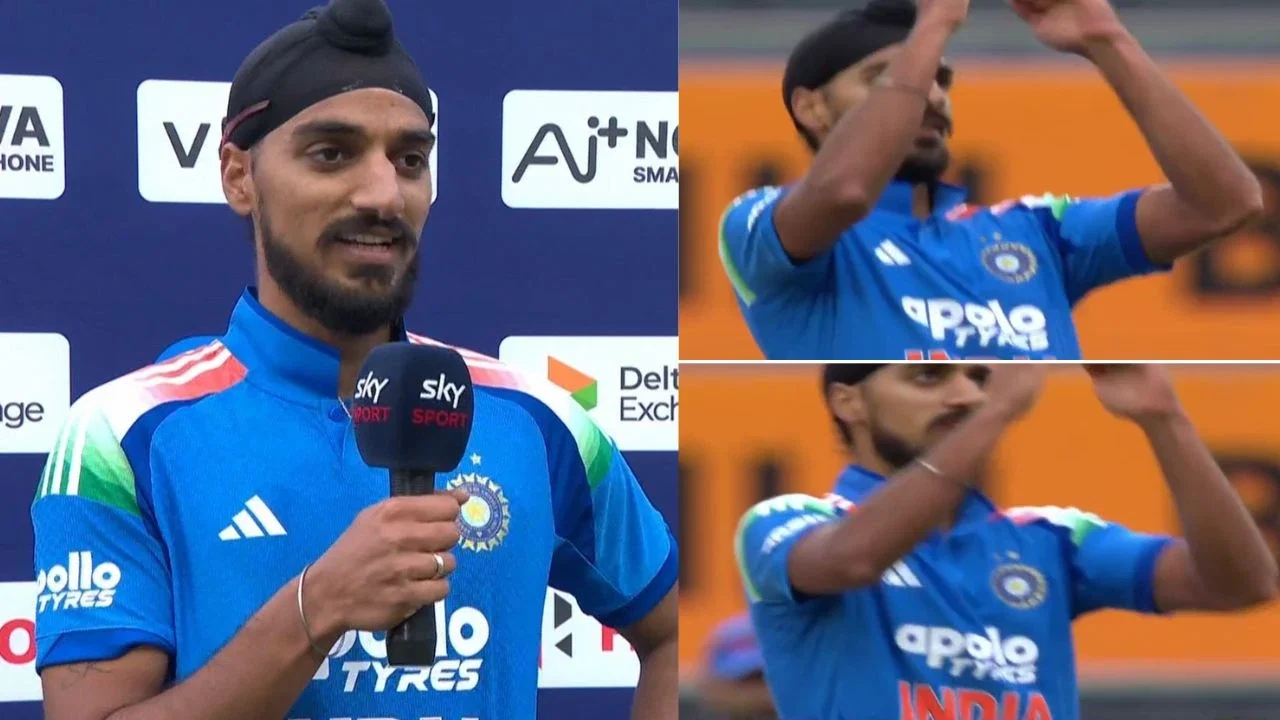
Indian left-arm fast bowler Arshdeep Singh added a personal touch to a strong performance in the first ODI against New Zealand, explaining that his playful celebration after dismissing Kyle Jamieson was a small gesture shared with his girlfriend. The moment came during an eventful innings at Eden Park, where Arshdeep claimed four wickets as India bowled the hosts out for 185.
Speaking to broadcasters during the innings break in Auckland, Arshdeep said the dance was part of a routine the couple uses to lift each other’s spirits. The light-hearted explanation offered a glimpse into the person behind the competitive edge—and quickly became one of the match’s most memorable talking points.
A wicket, a dance and a message for his girlfriend
Arshdeep removed Jamieson in the 32nd over, taking New Zealand’s eighth wicket. He bowled a hard-length delivery that angled towards middle stump. Jamieson moved forward and tried to drive, but the ball caught the outside of his bat and travelled towards extra cover, where the Indian fielder completed a straightforward catch. Jamieson made one run from six balls.
After the dismissal, Arshdeep marked the moment with a cheeky dance. Asked about the celebration, he explained that it was not a rehearsed routine for the cameras but a familiar gesture between him and his girlfriend.
“That was for my girlfriend,” Arshdeep said. He described it as a little dance step they do when spending time together, adding that they use it to cheer one another up whenever either is feeling low. In a high-pressure international match, the brief celebration served as a warm reminder that sporting moments can carry personal meaning beyond the scorecard.
Arshdeep also joked about the wicket he most wanted to claim. When asked to name his favourite dismissal of the day, he said it would have been the fifth one—though he had not managed to take it. The comment reflected the competitive ambition of a bowler who had already enjoyed a productive spell.
India’s seamers make the most of Auckland conditions
India captain Shubman Gill chose to bowl after rain delayed the toss by around 20 minutes. Play began 10 minutes later than scheduled, and India fielded four specialist fast bowlers, including Arshdeep and Gurnoor Brar. The decision gave the visitors a chance to exploit conditions that offered movement and bounce.
Arshdeep said he enjoyed bowling at Eden Park after playing on the generally flatter pitches of the subcontinent. He pointed to assistance from the surface and the wind, which helped the seamers find rhythm and generate movement. Rather than relying only on pace, India’s bowlers focused on hitting the seam and making the pitch do some of the work.
“It’s always a pleasure to bowl when there’s some life in the wicket,” Arshdeep said, describing the Auckland conditions as helpful for the attack. He added that the bowlers tried to make use of the surface and experimented with deliveries aimed at drawing batters into shots. That approach contributed to New Zealand’s regular loss of wickets through the middle overs.
The conditions also gave India’s quicks a useful test of control. On a lively surface, disciplined lengths can create uncertainty, while even small changes in line or pace may encourage a false shot. Arshdeep’s dismissal of Jamieson was one example: the delivery was not an extravagant swing, but its angle and length prompted an attempted drive that ended in a catch.
Arshdeep’s four-wicket haul puts New Zealand under pressure
New Zealand struggled to build a sustained innings as India kept taking wickets. Glenn Phillips made 30 from 51 deliveries at No. 6 but found it difficult to accelerate or establish a substantial partnership. Arshdeep dismissed him in the 36th over, claiming his fourth wicket and leaving the home side in deeper trouble.
Arshdeep finished with figures of 4/70, a return that made him one of India’s leading performers with the ball. His wickets came at important stages, helping prevent New Zealand’s middle order from turning a difficult start into a competitive total.
The hosts’ final push came from No. 11 Blair Tickner, who scored an aggressive 34 from 23 balls, including four sixes. Tickner and Jacob Duffy added 39 runs for the last wicket, giving New Zealand valuable late runs and lifting the total to 185 before Brar dismissed Tickner. KL Rahul completed the catch behind the stumps as the innings ended.
India acknowledge they became too aggressive at the end
Although India had controlled much of the innings, the late partnership frustrated the bowlers and added momentum for New Zealand. Arshdeep admitted that the attack became too focused on taking the final wickets, rather than continuing with the plans that had worked earlier in the innings.
“We were a little greedy and were trying too hard to get wickets,” he said. In his view, India could have trusted their established approach and allowed pressure to create opportunities. The assessment was a candid one: even when a batting side is nine wickets down, forcing the finish can offer the tailenders chances to attack.
Arshdeep considered 185 a manageable but respectable target, especially given the assistance available to the bowlers. He said India would need to bat according to the conditions and approach the chase with care, rather than assume that the total would be easy to reach.
Why the moment resonated with fans
Arshdeep’s celebration drew attention because it combined a major wicket with an affectionate personal story. Fast bowlers are often judged by their pace, accuracy and ability to deliver under pressure, but moments like this show how players bring their own personalities and routines onto the field. His explanation also transformed a brief dance into a relatable detail about how couples encourage each other.
For India, the first innings offered several useful signs: the seamers found assistance, wickets were shared across the attack, and Arshdeep demonstrated his value as a strike bowler. The late stand from Tickner and Duffy also provided a reminder that New Zealand could still score quickly at the bottom of the order—a factor India would need to consider in the chase.
With four wickets, a memorable celebration and an honest assessment of the closing overs, Arshdeep’s contribution shaped both the cricket and the conversation around the match. His playful tribute to his girlfriend may have been brief, but it added a human note to an innings defined by disciplined fast bowling and a lively Auckland pitch.
Latest News

Suresh Raina announces willingness to become CSK coach
Watch: Virat Kohli takes one-handed blinder before breaking into Bow and Arrow celebration vs NZ
Virat Kohli, Rohit Sharma and Shubman Gill receive personalized All Blacks jerseys ahead of 1st ODI
“The celebration was for my girlfriend”: Arshdeep Singh on gesture after Kyle Jamieson’s dismissal
Rohit Sharma bags first-ever ODI duck against New Zealand in bizarre start to tour
Watch: Virat Kohli teases Glenn Phillips with John Cena’s ‘You Can’t See Me’ celebration

Arshdeep Singh gets hammered as Blair Tickner creates special ODI records in Auckland

Mike Hesson asks Pakistan ground staff to prepare pace-friendly pitches for Sri Lanka Tests
Anshul Kamboj, Arshdeep Singh create history as India dominate New Zealand in 1st ODI
Watch: Gurnoor Brar’s reverse mind game forces Blair Tickner into a mistake in epic banter
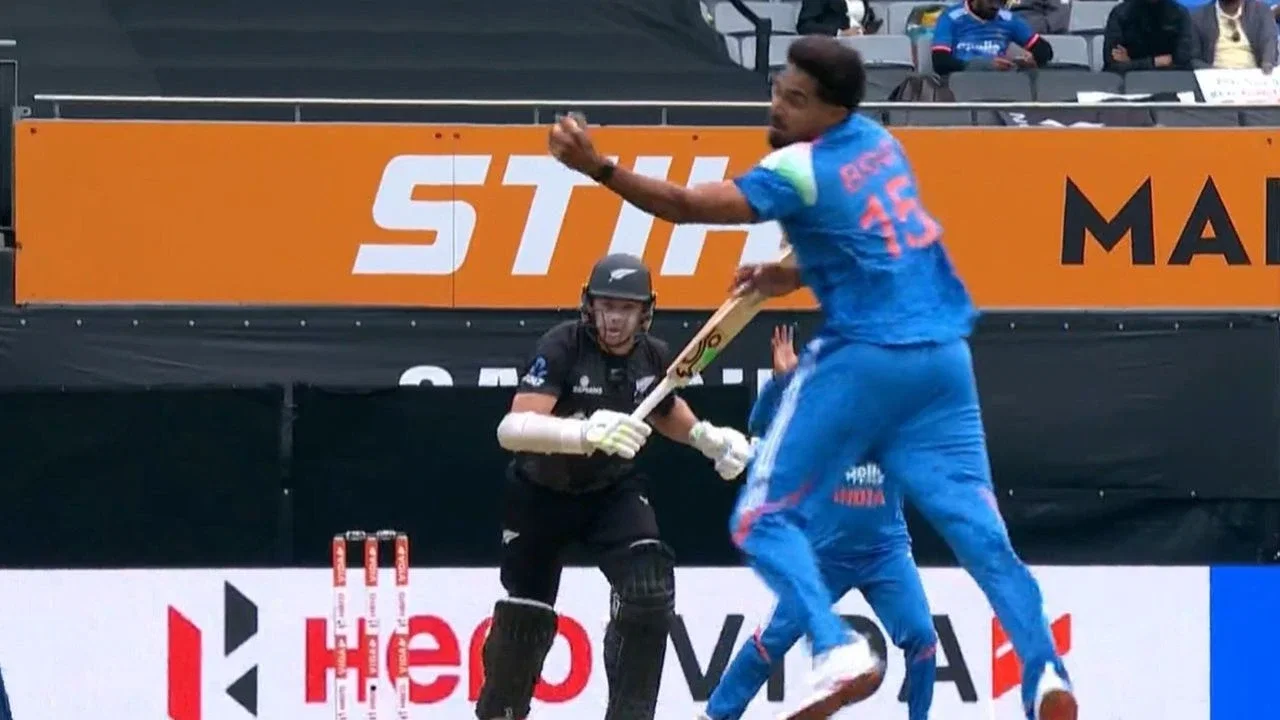
Watch: Gurnoor Brar takes one-handed blinder to dismiss Tom Latham in IND vs NZ 1st ODI
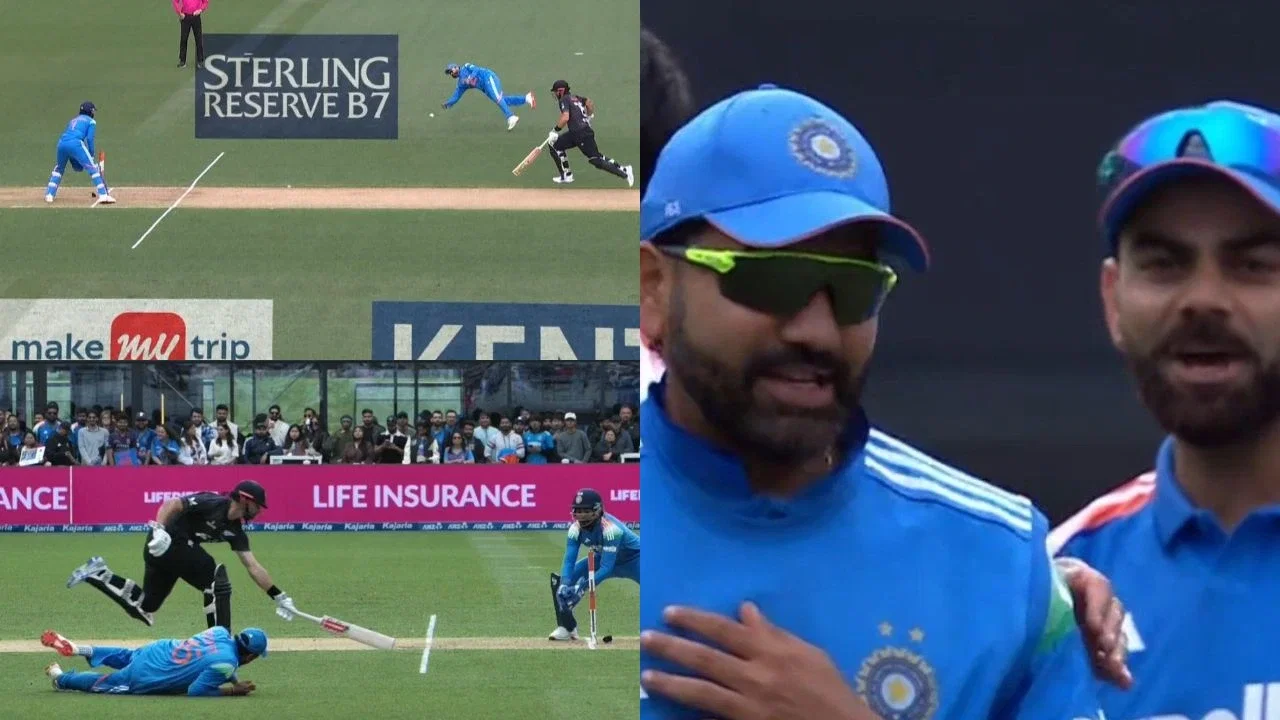
Watch: ‘Flying’ Rohit Sharma’s fielding brilliance sends Daryl Mitchell packing in 1st ODI

Simon Harmer reveals why Jack Leach should be picked for the SA vs ENG Test series
Sadagopan Ramesh questions CSK’s decision to not appoint a batting coach