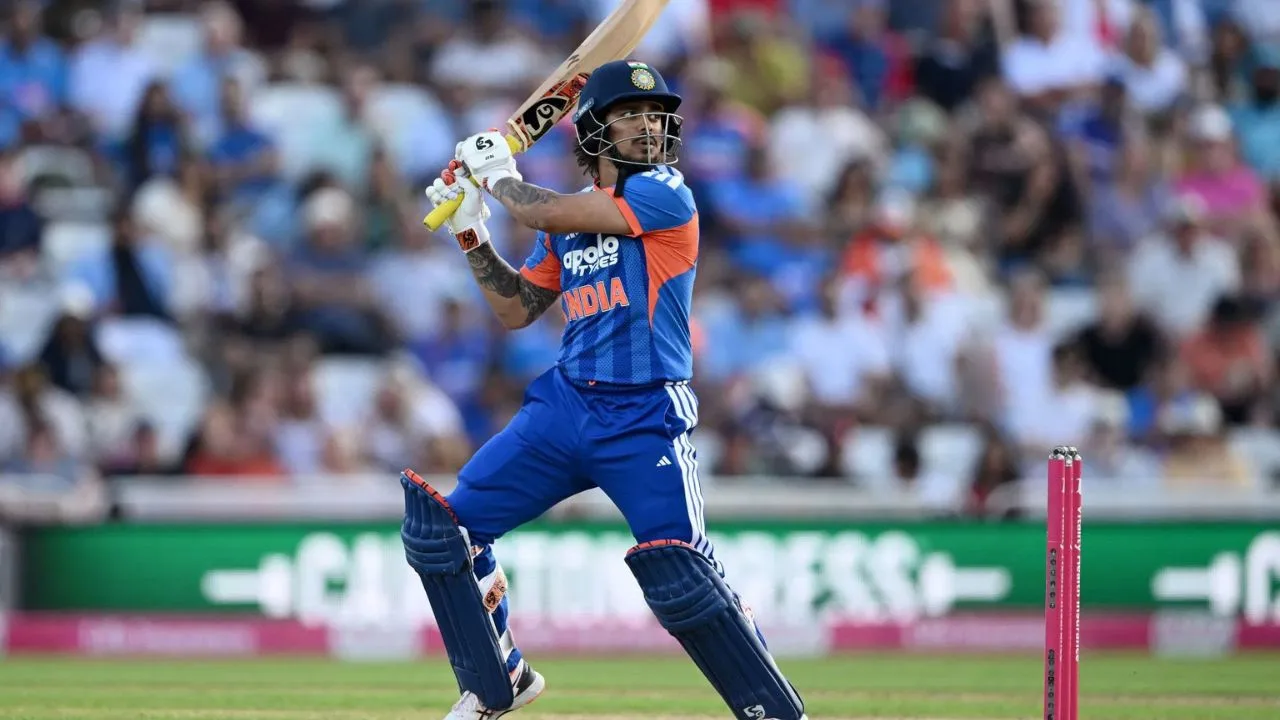
Glenn Phillips sets world record for most runs in a bilateral T20I series

Glenn Phillips Sets T20I Record as New Zealand Beat India in Series Finale
Glenn Phillips produced a record-breaking performance in the five-match T20I series between New Zealand and India, finishing with a remarkable 341 runs and helping the Black Caps close the contest with a seven-wicket victory. His unbeaten half-century in the final match at Seddon Park, Hamilton, capped a series in which he repeatedly challenged India’s bowling attack and established himself as one of the tour’s standout players.
New Zealand reached India’s target of 192 in just 18 overs on Sunday, November 1. Phillips made an unbeaten 65 from 38 deliveries, while Tim Seifert came close to a century with a rapid 93. India had earlier posted 191 for eight, powered by a brisk partnership between Shreyas Iyer and Ishan Kishan. The result gave New Zealand a win in the final two matches, but India still claimed the series 3-2.
Phillips Breaks the Bilateral T20I Series Run Record
Phillips’ 65 not out in Hamilton took his series tally to 341 runs, making him the highest run-scorer in a bilateral T20I series, according to the figures provided. The achievement reflects not just one exceptional innings, but sustained production across five matches against a high-quality international attack.
The New Zealand batter found ways to keep the scoreboard moving throughout the series, combining calculated aggression with the ability to accelerate when the situation demanded it. His consistency placed India under pressure: bowlers had to account for his power, while also managing the risk of conceding boundaries when they missed their lengths.
The record-breaking total moved Phillips past several notable performances in bilateral T20I cricket. The leading scores listed for the format include:
- Glenn Phillips (New Zealand): 341 runs against India in 2026
- Phil Salt (England): 331 runs against West Indies in 2023
- Mohammad Rizwan (Pakistan): 316 runs against England in 2022
- Sahil Chauhan (Estonia): 297 runs against Cyprus in 2024
- Mark Chapman (New Zealand): 290 runs against Pakistan in 2023
Phillips’ position at the top of that list gives the series an added historical dimension. For New Zealand, his performance offered a major positive despite the overall series defeat. For India, it highlighted the challenge of containing a batter capable of scoring quickly without appearing rushed.
Four Half-Centuries Underline Phillips’ Consistency
The series record was only one part of Phillips’ achievement. He also registered four scores of 50 or more across the five matches, joining a select group of players to reach that mark in a bilateral T20I series.
Four half-centuries in a short contest are especially significant in T20 cricket, where a single early dismissal can sharply reduce a batter’s opportunities. Phillips’ repeated contributions gave New Zealand a reliable source of runs and helped the side remain competitive even when other parts of the batting order were under pressure.
The list of players credited with four 50-plus scores in a bilateral T20I series includes Mohammad Rizwan against England in 2022, S. Ravichandran against Mongolia in 2024, and Phillips against India in 2026. His place among them further illustrates how consistently he performed throughout the series.
Another Milestone: Most T20I Runs Against One Opponent in a Year
Phillips also reached a separate calendar-year milestone during the Hamilton match. His series-ending performance took his 2026 total against India to 522 T20I runs, the highest figure listed for runs scored against a single opponent in one calendar year.
That total placed him ahead of Abhishek Sharma, who scored 431 runs against New Zealand in 2026, and Sahibzada Farhan, who made 398 against Sri Lanka in 2026. The record adds context to Phillips’ broader impact: his success was not limited to the five-match series, but formed part of an unusually productive year against India.
Such head-to-head records can be a useful measure of a player’s ability to adapt to a particular opposition. Bowlers and coaches typically adjust plans from match to match, but Phillips continued to find scoring options. His ability to respond to those tactical changes was central to his run accumulation.
Seifert and Phillips Power New Zealand’s Hamilton Chase
New Zealand’s final-match victory was built on an aggressive chase. Seifert set the tone with 93 from 50 balls, attacking the Indian attack and keeping the required rate within reach. He fell just seven runs short of a century, bowled by Nitish Kumar Reddy, but had already given the hosts a strong platform.
Phillips then ensured the chase remained on course. His unbeaten 65 combined boundary-hitting with sensible strike rotation, allowing New Zealand to finish the job with two overs to spare. The quick finish demonstrated how effectively the pair converted a challenging target into a manageable pursuit.
India had earlier recovered from a difficult position through an explosive partnership between Iyer and Kishan. The pair added 93 runs from just 43 deliveries, lifting the total to 191 for eight and giving their bowlers a competitive score to defend. However, New Zealand’s top-order response left India with little room to regain control.
India Take the Series, but Phillips Shapes the Final Narrative
Although New Zealand won the last two matches and finished strongly, India emerged as series winners with a 3-2 result. The finale therefore delivered a split outcome: India secured the trophy, while New Zealand ended the campaign with momentum and a record-setting individual performance.
Phillips’ showing is likely to influence discussion around future T20I matchups between the teams. Any prediction for a rematch will need to account for his form, New Zealand’s ability to chase aggressively, and India’s capacity to respond after a late series setback. India will take confidence from winning the contest overall, but the final match offered clear evidence that New Zealand can be dangerous when its leading batters build partnerships.
For Phillips, the Hamilton innings was a fitting finish to a remarkable series. His 341 runs, four half-centuries and calendar-year record against India made him the defining batter of the contest. New Zealand may not have lifted the series trophy, but Phillips gave the hosts a historic performance—and a powerful platform to build on in their next T20I campaign.
Latest News

Mark Chapman, Rachin Ravindra ruled out of India ODIs; New Zealand name replacements
Virat Kohli is on the verge of breaking multiple records against New Zealand

Tamil Nadu reveal full squad for SMAT 2026-27, Sai Kishore named captain

Pakistan set for central contract changes as Mikes Hesson urges investment in young players: Report

Jacob Duffy calls Virat Kohli a “religious figure” in India, praises his humility

Aakash Chopra names 5 players RCB must retain and 1 star they should release ahead of IPL 2027 Auction
Glenn Phillips sets world record for most runs in a bilateral T20I series

“Could’ve been the other way”: Mitchell Santner reflects on New Zealand’s 3-2 series loss to India
Bhuvneshwar Kumar to be dropped from India T20I squad after New Zealand series?
Glenn Phillips shares key to his success after winning Player of the Series against India

“Ready to take the bullet”: Gautam Gambhir takes responsibility after India’s consecutive defeats vs New Zealand
“I don’t have an update yet”: Gautam Gambhir shares latest update on Rishabh Pant’s availability

Shreyas Iyer brings New Zealand’s famous Mana Wave celebration after quickfire fifty vs New Zealand

Mohammad Yousaf asks PCB to send Babar Azam back ‘to an academy in England or Australia’