Watch: Gus Atkinson bowls a peach to dismiss Babar Azam
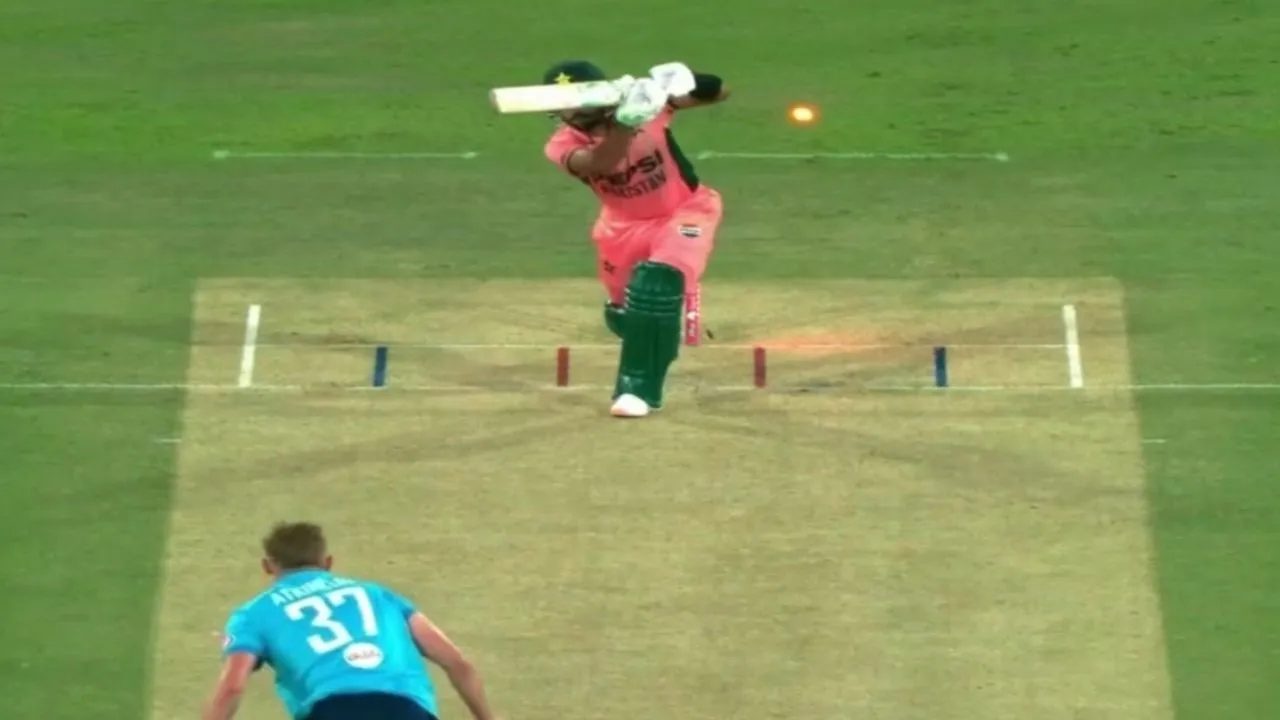
Gus Atkinson’s “Peach” Sends Babar Azam Back as Pakistan Chase England’s 242
Gus Atkinson produced a superb delivery to bowl Babar Azam during Pakistan’s fourth match of the tri-series against England at Lahore’s Gaddafi Stadium. The dismissal came at a crucial moment in the chase, adding pressure to a Pakistan side already looking to recover after losing early wickets.
England arrived needing a win after defeats to Pakistan and Sri Lanka in their opening two matches. The result was especially important for Harry Brook’s team, who had entered the series with strong expectations but were still searching for a complete performance. Pakistan, meanwhile, were aiming to turn a difficult start to their chase into a competitive response to England’s total of 241.
Atkinson Strikes Immediately After Babar’s Boundary
The key moment came in the sixth over. Babar had struck Atkinson for four on the previous delivery, but the England fast bowler responded with a ball that sharply changed direction as it approached the batter.
Babar attempted to drive, but his front foot remained planted and he did not get fully in line with the delivery. The ball moved in through the gap between bat and pad and struck the stumps. It was a clean bowled dismissal, and a reminder of how quickly a promising-looking over can turn in a one-day international.
Atkinson celebrated the wicket with a brief send-off, while Babar departed for 10 from 12 balls. The dismissal drew attention from fans online, with many describing the delivery as a “peach”—a cricketing term for a particularly well-pitched and difficult ball that beats the batter.
Why the Delivery Was So Effective
Atkinson’s success came from a combination of accuracy, movement and smart timing. After being hit for a boundary, he did not overcorrect by bowling too short or too wide. Instead, he landed the ball in a threatening area and allowed its inward movement to create doubt.
Babar’s attempted drive left him vulnerable because his body and bat were not positioned behind the ball. Against a delivery that nips back, even a small gap between bat and pad can be decisive. Atkinson found that opening and made no mistake.
Babar’s Recent ODI Form Under the Spotlight
The early dismissal will add to scrutiny of Babar’s recent one-day form. He has not registered a half-century in his last five ODI innings, extending a lean stretch for a batter who has often been central to Pakistan’s middle order. His last half-century came against Australia in May, while his most recent outing ended after only 10 runs.
Across the 2025/26 season to date, Babar has scored 424 runs in 12 innings at an average of 35.33. His highest score is an unbeaten 102, and his record includes one century and one half-century, with a strike rate of about 71.31. Those figures still reflect the capacity to produce a major innings, but Pakistan will want greater consistency from one of their most experienced batters.
For Babar, the challenge is not simply to score quickly. He will also be looking to settle at the crease, trust his footwork and convert starts into substantial contributions. A strong innings in the remainder of the series could provide a timely response and restore confidence ahead of future assignments.
England Recover After Early Wickets
Earlier in the match, Pakistan won the toss and chose to bowl. Captain Shaheen Afridi made the decision count by removing key England batters during a top-order collapse. Afridi finished with four wickets, giving Pakistan control during the opening stages and leaving England in need of a stabilising partnership.
Ben Duckett supplied that resistance. The left-hander scored a valuable century, holding the innings together while wickets fell around him. His contribution helped England reach 241—a total built less on a smooth batting display than on one batter’s ability to absorb pressure and keep the scoreboard moving.
Duckett’s innings gave England something to defend, but the total was far from beyond Pakistan’s reach. On a surface where partnerships could prove more important than individual bursts of scoring, the contest remained open as Pakistan began their reply.
Pakistan’s Chase Hinges on a Partnership
Pakistan’s top order also struggled, mirroring England’s earlier difficulties. With the score at 96 for four, Salman Ali Agha and Hasan Nawaz were at the crease and tasked with rebuilding the innings. Their immediate priority was to avoid another quick wicket, settle into a partnership and keep the required run rate within reach.
At that stage, Pakistan needed composure as much as aggression. Agha and Nawaz could not afford to let England’s bowlers dictate the tempo, but taking unnecessary risks would give Atkinson and his teammates further opportunities to break through. A sustained stand would not only move Pakistan closer to the target but also shift pressure back onto England.
Match Prediction: The Next Partnership Could Decide the Contest
With England defending 241 and Pakistan four wickets down, the match remained finely balanced. England had the advantage of momentum after Atkinson’s dismissal of Babar, while Pakistan still had time and batting resources to recover. The prediction at that point depended heavily on whether Agha and Nawaz could build a substantial partnership without allowing the required rate to climb sharply.
If Pakistan’s middle order settled in, the target appeared achievable. But another cluster of wickets would leave the visitors in a strong position to claim their first win of the tri-series. For England, Atkinson’s breakthrough was a major step; for Pakistan, the response from the batters at the crease would determine whether the chase could be rescued.
The match also highlighted a broader theme of the series: both teams have shown they can create pressure with the ball, but converting that pressure into a complete performance has been the challenge. Atkinson’s delivery was a standout moment, yet the final result would depend on the partnerships, decisions and discipline that followed.
Latest News

Mumbai Indians break silence on Kieron Pollard ditching Joburg Super Kings
Ishan Kishan likely to replace Vaibhav Sooryavanshi in 4th T20I vs New Zealand

TOR vs MON Dream11 Prediction Today Match, My11Circle Prediction, Dream11 Team Today, Fantasy Cricket Tips, Playing XI, Pitch Report, Injury Update- Global Canada T20 2026, Match 6
Watch: Gus Atkinson bowls a peach to dismiss Babar Azam
Alex Carey reveals Steve Smith’s fitness status ahead of series-deciding Test vs South Africa
Tim Southee backs Bhuvneshwar Kumar to make an impact in IND vs NZ T20I series

Navdeep Saini set to miss Ranji Trophy 2026-27 match for Delhi; KKR pacer named as replacement
“Give him some time”: Mohammad Kaif backs Bhuvneshwar Kumar after back-to-back expensive spells
Ravichandran Ashwin raises concerns over Bhuvneshwar Kumar after IND vs NZ 2nd T20I
Shaheen Afridi matches Mohammed Shami’s record with 150th ODI wicket against England
Abhimanyu Easwaran reveals Tilak Varma’s secret to thriving under pressure after POTM performance

James Anderson confirms Lancashire exit after county club decides against new contract
Rohit Sharma dismisses retirement rumours, hints at continuing in ODIs
Mohammad Kaif sends clear message on Vaibhav Sooryavanshi after 2nd T20I setback